Rodrigo Paz marks one year in office: crime fighting and economic crisis his priorities
Bolivian President Rodrigo Paz assessed his first year in office in an interview with EFE in Madrid, highlighting the fight against organised crime and economic restructuring.
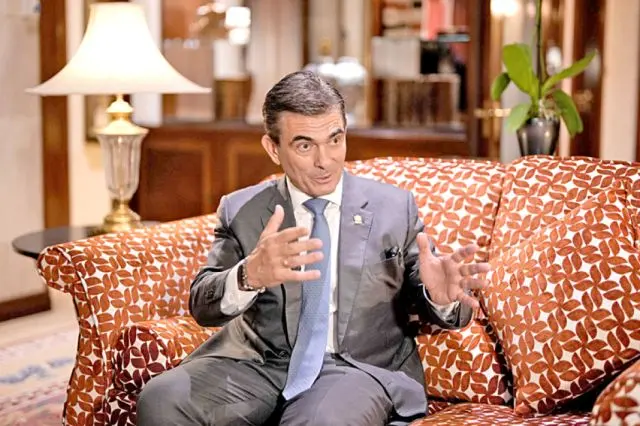
Paz assesses his first year: institutional reform, organised crime and pragmatic diplomacy
Bolivian President Rodrigo Paz stated that his first year in office, which is marked this Sunday, was focused on "putting the house in order" in economic and institutional matters and confronting organised crime. According to correodelsur.com, the president made these statements in an interview with the EFE news agency in Madrid, where he participated in the XXX Iberoamerican Summit.
Paz acknowledged that the transition following two decades of MAS governments is not straightforward. It is "not easy" to lead the country towards "the vision of the future" that his administration pursues, he said.
Institutional crisis: the prosecutor and the Supreme Court president
The president made direct reference to two cases that, in his view, demonstrate inherited institutional deterioration. "When your attorney general falls linked to organised crime and your president of the Supreme Court of Justice is under investigation, that is a sign that something is not well with institutional arrangements as a whole," he said.
The former attorney general of the State, Roger Mariaca, was arrested and removed from office after being accused by the Government of leading a criminal organisation providing protection to "narco-terrorism". The president of the Supreme Court of Justice (TSJ), Romer Saucedo, announced this week that he is leaving the country, claiming that his life and that of his family "are in danger".
Cross-border cooperation against crime
Paz advocated for a regional approach to combating organised crime, backing the "Shield of the Americas" promoted by Donald Trump, of which Argentina, Colombia, Peru, Chile and El Salvador are part, among others. At the same time, he emphasised the importance of cooperation with Bolivia's neighbouring countries.
"If our neighbours are doing well, we are doing well," the president said, and warned about the global connectivity of crime: "Don't forget about the connectivity of organised crime: it leaves Bolivia, can pass through Brazil and reach Spain".
Economic crisis and social conflicts
Over these twelve months, the Government had to manage an acute economic crisis marked by a shortage of dollars and fuel shortages. Measures adopted include the shift to a flexible exchange-rate regime, an agreement with the International Monetary Fund (IMF) and partial elimination of fuel subsidies.
These reforms triggered several social conflicts, including road blockades in May and June that lasted for 53 days and caused losses exceeding 3,000 million dollars. "This year we thought we would have at least some small growth. That would have been extraordinary," Paz lamented, linking those blockades to "visions of organised crime".
The president also pointed to a lack of investment by previous governments as one of the factors limiting growth. His administration is driving the exploitation of natural resources to diversify production and has presented to Parliament laws aimed at attracting foreign investment, such as legislation on mining investments, with the aim of offering "new rules of the game" to international investors.
Pragmatic diplomacy: "I sit with Trump and tomorrow with Lula"
In foreign policy, Paz defended a "pragmatic diplomacy" based on the principle that "ideology does not put food on the table". He summed it up with a direct phrase: "I sit with Trump and tomorrow I sit with a great friend like Lula".
Regarding the political shift in the United States, where the Democrats regained control of Congress and the Senate in the midterm elections, Paz does not anticipate that this change will affect bilateral cooperation "in the fight against organised crime", given that both countries share "a series of joint needs", particularly in matters of national security.
The Cerimedo case: "Let justice investigate everything"
Asked about Fernando Cerimedo, an Argentine consultant who is being held in preventive detention in Bolivia, the president urged justice to investigate "everything that needs investigating". The statement comes following the creation of a commission intended to clarify the authenticity of recordings that allegedly link Cerimedo to members of the Government.
"Let justice investigate everything that needs investigating. That is the best answer and I think it is what is appropriate," Paz told EFE.
Cerimedo, detained since August, faces charges of attempted feminicide against his ex-partner, Nadia Beller, and illicit enrichment. Paz acknowledged that the consultant "had a job and he did it in the media matter", but added: "Everything else needs to be investigated, that is clear".
Bolivia's interim attorney general, José Armando Urioste, announced this week the formation of the commission that will analyse the veracity of recordings in which Cerimedo allegedly conversed with ministers and relatives of the president.
Source: Google News BO — La Paz