Senate candidates in SP debate PCC and militia infiltration of public institutions
At a debate hosted by g1, Senate candidates for São Paulo discussed the advance of the PCC, militias and organised crime in public institutions.
PCC, militias and institutional corruption dominate SP Senate debate
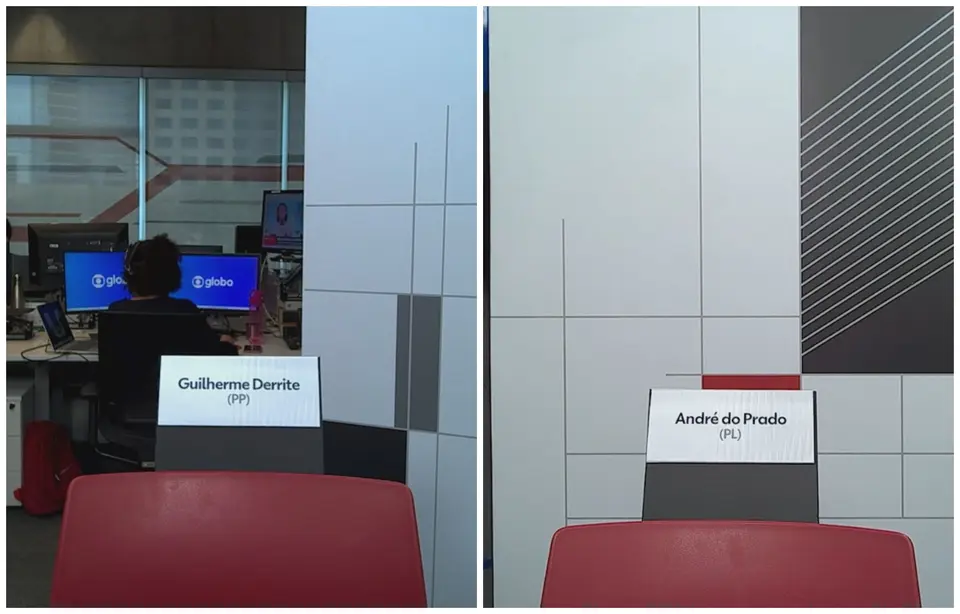
At a debate hosted by g1.globo.com on Friday (25), Senate candidates for São Paulo confronted proposals to contain the expansion of the PCC, militias and the infiltration of organised crime into public bodies. Guilherme Derrite (PP) and André do Prado did not attend the event.
Tebet: "The PCC is already inside City Hall"
Simone Tebet (PSB) was the candidate who made the most direct statements. She declared that the Primeiro Comando da Capital had already infiltrated the public transport system of São Paulo's capital and raised suspicions of involvement of members of the Public Security Secretariat with the faction — a link she associated with a former commander under Derrite's administration.
"São Paulo cannot become a Rio de Janeiro. The PCC is already here, it is already inside City Hall, in public transport," Tebet stated.
The candidate also cited the presence of Comando Vermelho in the interior of the state and warned of the advance of militias in São Paulo, describing their operations through territorial control and illegal collection of services.
For Tebet, the penetration of criminal organisations has already reached municipal chambers, state legislatures and the National Congress. "Organised crime and militias have already reached the powers of the Republic. Here in São Paulo and in Brasília," she declared. She then added: "The militia cannot enter through the front door of the Government Palace."
Tebet advocated for integration between security forces and bodies such as the Federal Revenue Service, with a focus on arresting the leaders of the organisations and blocking their sources of funding. She also criticised mental health problems among military police and the shortage of personnel in the São Paulo Civil Police.
Marina Silva prioritises asset blocking
Marina Silva (Rede) characterised organised crime as a transnational phenomenon and advocated for an integrated response between the Union, states, municipalities and different control bodies.
The candidate cited the infiltration of factions into companies, fintechs and petrol stations, pointing to Operation Carbono Oculto as an example of coordinated action to attack criminal financing.
"Organised crime requires us to block assets, to dismantle criminal companies and to reach the top level," Marina stated.
She also described how organisations expand their influence in the peripheries: recruiting young people and adolescents and taking control of services such as internet and gas in areas under their domain. At the end of the section, Marina emphasised the risk of institutional complicity.
"Especially when there is this promiscuity between public power and criminals," the candidate said, advocating for the removal of public officials with criminal ties and support for mayors who confront factions in their municipalities.
Soninha bets on intelligence and police integration
Soninha Francine (Cidadania) advocated for technology, intelligence and integration between police forces, the Public Prosecutor's Office and other investigative bodies as the central axis for combating criminal organisations.
The candidate cited joint operations by state police forces with the Federal Police and the Gaeco that resulted in the dismantling of criminal structures without armed confrontations, arguing that intelligence reduces the risk to residents of areas dominated by factions.
Soninha also pointed to the infiltration of crime in sectors of the formal economy — public transport, rubbish collection, fuels and fintechs used for money laundering — and stated that corruption within the Judiciary, the Public Prosecutor's Office and the Legislature makes it difficult to confront factions.
According to her, it is necessary to "combat corruption at all levels of public administration".
Rufino: State must reach communities before crime
Geraldo Rufino (Podemos) proposed two simultaneous fronts: to financially asphyxiate criminal organisations and to prevent them from renewing their ranks through the recruitment of young people in the peripheries.
The candidate stated that the State needs to provide vocational schools, sports and employment opportunities for adolescents in situations of vulnerability. "We need to reach the community, the slums, the peripheries, before crime does," Rufino declared.
Absences marked the debate
The non-participation of Derrite and André do Prado was highlighted by g1.globo.com during coverage of the event. Derrite, former Public Security Secretary of São Paulo, was cited by name by Tebet in reference to suspicions of involvement of members of his administration with the PCC.
Source: Google News BR — São Paulo