Tunisian reports international drug trafficking between SP and justice requests deportation of suspects
A Tunisian reported to São Paulo's Civil Police that he was assaulted and had his passport stolen after refusing to transport drugs. Two compatriots were arrested and the court requested evaluation of their deportation.
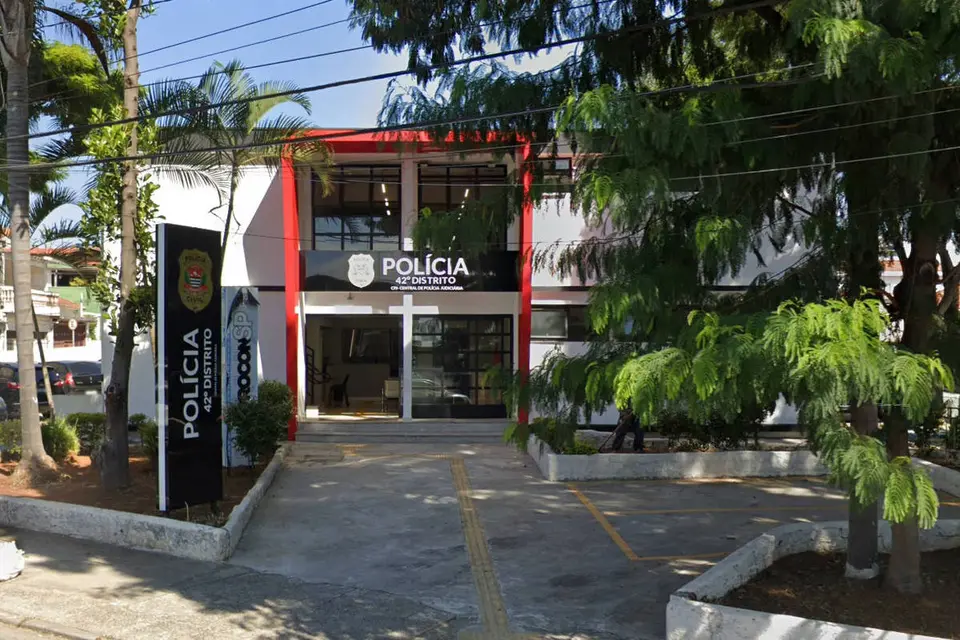
Tunisian assaulted and with passport retained after refusing to join drug trafficking scheme in São Paulo
A Tunisian man went to the 42nd Police District (Parque São Lucas), in the east zone of São Paulo, on Thursday (24), to report that he had been assaulted and had his passport taken by two compatriots after refusing to participate in an alleged international drug trafficking scheme. The case is reported by www1.folha.uol.com.br.
Two suspects were arrested for assault and threat. On Friday (25), they attended a custody hearing, and the judge in charge issued an official communication to the Ministry of Justice for evaluation of the feasibility of deportation or expulsion of both from Brazilian territory.
International drug route between Morocco, Europe and Brazil
The victim, who does not speak Portuguese — making it necessary to use a translation application during the police statement — told the Civil Police that he had been in Brazil for three months. He came to the country with the intention of working as a general helper at a snack bar in the Liberdade neighbourhood, in central São Paulo, where two compatriots already worked.
Over time, he began sharing housing with the two men and another person. According to his account, he discovered that his compatriots were involved in drug trafficking, particularly cannabis, through an international route that passed through Morocco, European countries and Brazil. In national territory, the route operated between São Paulo and Rio de Janeiro.
The Tunisian stated that he had witnessed the use and distribution of drugs at the property. Some of those involved were recruited to transport narcotics by ingestion or introduction of the substances into their own body — a practice known as being a "mule". The other participants were also foreign nationals, according to police.
Refusal to transport material triggered death threats
About a week before the police report was filed, the man reported being asked to transport material whose contents he could not identify. Upon refusing, he began to receive death threats and intimidation. The suspects even showed him images in which they appeared carrying firearms, which intensified the victim's fear. Facing this, he left the residence and began planning his return to Tunisia.
On Wednesday (23), he went to the snack bar to receive payment for time worked — money he intended to use to buy his return ticket. At the location, he encountered three men, two of whom he had shared housing with. According to his report to police, he was assaulted with punches, kicks and a device that emits electric shocks.
During the assault, the victim's passport was taken by the trio. Taking advantage of a moment of distraction by the suspects, the Tunisian managed to flee and board a bus. One of the assailants pursued him and even boarded the vehicle, but had to get off as he had no money to pay the fare.
The victim attempted to contact two of the assailants to recover the document, without success.
Passports seized; drugs and weapons were not found
After learning of the case, civil police officers arrested two of the three men identified as responsible for the assaults and threats. Investigators went to the property, but found no drugs or weapons at the location.
The passports of the two detainees were seized, as well as the passport of the snack bar owner — not named as an aggressor. The police also collected a credit card machine, a portion of substance with apparent characteristics of cannabis, two mobile phones and a notebook.
The victim, who had expressed intention to seek asylum in Brazil, stated that he now plans to return to Tunisia as soon as possible, as recorded in the police report.
The case was registered by the Civil Police as association for trafficking, resistance, disobedience, threat, illegal coercion and bodily injury.
Source: Google News BR — São Paulo