Supreme Court: Justice Moraes denounces failure to comply with ruling on cannabis possession
Justice Moraes of Brazil's Supreme Court has stated that police are flouting the Court's decision and arresting cannabis users as if they were traffickers.
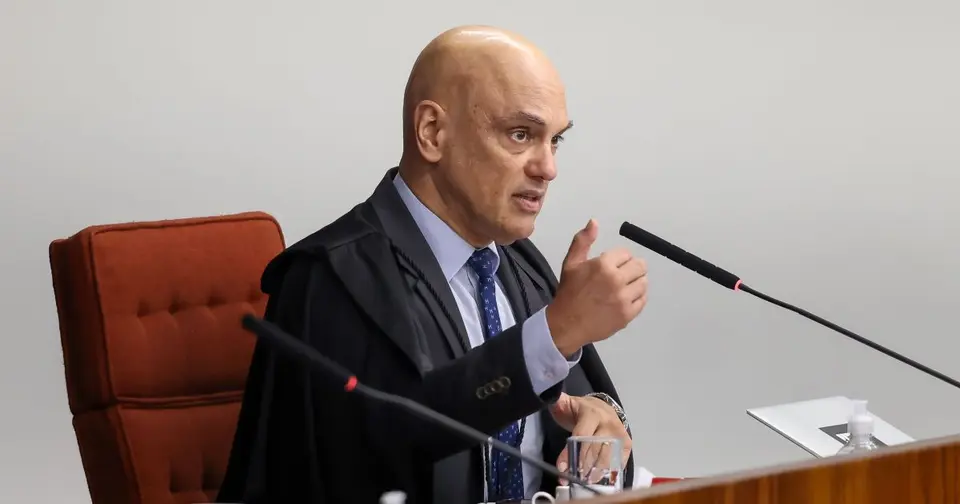
Supreme Court: Justice Moraes denounces failure to comply with ruling on cannabis possession
Justice Alexandre de Moraes of Brazil's Supreme Court (STF) stated on Tuesday (27) that police are failing to comply with the Court's decision regarding cannabis possession for personal use. According to cnnbrasil.com.br, Moraes declared that users are being arrested as if they were traffickers.
The statement was made during the trial of an appeal in the First Panel. "The police have been ignoring the STF's decision. If the STF said it is not a crime, under those specific conditions, a person cannot be taken to a police station, cannot be arrested flagrante delicto, to later obtain a writ of habeas corpus," the justice said.
In 2024, when ruling on Theme 506 of general repercussion, the Supreme Court decided that it is not a criminal offence for someone to acquire, hold, transport or carry cannabis for personal consumption. The conduct continues to be considered illicit, but does not result in criminal consequences.
The Court also established a presumption of personal use for anyone caught with up to 40 grammes of cannabis or six female plants. This presumption, however, is not absolute: police may make an arrest for trafficking even with a smaller quantity, provided there are concrete elements of commercialisation, such as the way the drug is packaged, seizure of scales or sales records.
During the session, Moraes recalled a survey he presented during the ruling on the theme, which pointed to differences in criminal charges according to age, race and education. "A person up to 22 years old, black, with only primary school education, with 10 grammes was considered a trafficker, whereas a person over 35 years old, white and with university education, was not considered a trafficker," he declared.
The justice also expressed concern over arrests related to cannabis cultivation for medicinal purposes. According to him, doctors and members of associations have been charged as traffickers and, in some cases, remain detained for days until the courts rule on the matter.
The appeal analysed by the First Panel was filed by the Institute for the Articulation of Social Technologies and Educational Actions, which sought safe passage to cultivate cannabis and supply derivatives to members undergoing health treatment. The authorisation had been granted at first instance but was overturned by the Court of Justice of São Paulo (TJ-SP).
The justices unanimously rejected the appeal. The rapporteur, Flávio Dino, held that the STF could not examine the request because doing so would require re-examining facts and evidence and interpreting sub-constitutional legislation. As a result, the Panel did not rule on the merits of cannabis cultivation and distribution for medicinal purposes by the entity. Moraes, despite the caveats he made during the session, followed the rapporteur's vote.
Source: Google News BR — Crime