Quintuple murder in Seewen: murder weapon found, perpetrator vanished – case expired
Fifty years ago, five family members were shot in a Swiss village. The principal suspect has disappeared without trace, and the case has been permanently closed since 2010.
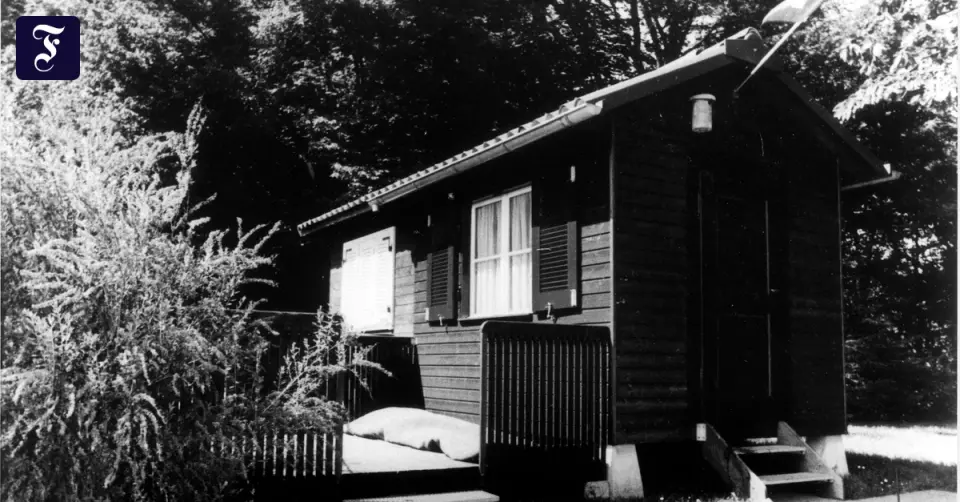
Five headshots, no conviction: the Seewen murder case remains unsolved
Whitsunday 1976, a small village in the canton of Solothurn: Esther Siegrist is puzzled that her parents have not returned to Basel as arranged. She drives to the garden house "Waldeggli" in Seewen – and finds her mother Elsa, 62 years old, wrapped in a carpet on the terrace. Inside the house and the adjoining tool shed lie four more bodies. According to the Frankfurter Allgemeine Zeitung, the case is considered to this day the worst violent crime in Swiss criminal history.
All five family members had been shot – with a total of 13 bullets, eleven of them headshots, all at close range. The victims were Eugen Siegrist, 63 years old and an employee of the chemical company Ciba in Basel, his wife Elsa, his sister Anna Westhäuser and her sons Emanuel and Max. A murder weapon was missing, as was Eugen Siegrist's green Opel Ascona. Nothing else had been stolen.
The police found the car the same day, around 15 kilometres away, shortly before Basel. The investigators thus had one of the few tangible leads – and yet faced a puzzle.
More than 9,000 clues, no solution
Robert Siegrist, the family's 21-year-old son, quickly came under suspicion. He was said to have had a quarrel with his father. Together with his girlfriend Anita, he was briefly arrested – but both were able to provide an alibi and were released.
Over the following years, the police pursued more than 9,000 clues. Had Eugen Siegrist passed on industrial secrets at Ciba? Did a possible Nazi past of the family play a role? NS memorabilia was found in the "Waldeggli"; Siegrist's sister Anna Westhäuser had been married to a German Nazi and still had a portrait of Adolf Hitler hanging above her bed at the time of her death. An attack by the Red Army Faction or the East German secret service Stasi was also considered. None of the theories could be substantiated.
The search for the suspected murder weapon – a Winchester imitation with a shortened barrel – also remained unsuccessful. The quintuple murder was regarded as unsolvable for decades.
Tradesman finds weapon behind kitchen counter
It was not until twenty years after the deed that a chance find brought movement to the case. A tradesman discovered a rifle in a plastic bag in Olten, around 40 minutes' drive from Seewen, behind a kitchen counter. Tests confirmed: it was the murder weapon. And it belonged to a man who had already been questioned about this exact weapon in 1976 – Carl Doser, born 1947.
Doser was one of more than 3,000 people questioned in the course of the investigation about a Winchester imitation. Around 30 of them had been unable to give precise information about the whereabouts of their weapon. Doser had told the police at the time that he had sold the rifle on a flea market to an unknown person before the deed because it was unusable. A direct connection between him and the murder victims had not been established at that time.
It now emerged: Carl Doser had disappeared without trace a year after the murders. The authorities do not rule out the possibility that he went to South Africa as a mercenary in 1977 and never returned from there.
A possible illegitimate son as motive
Robert Siegrist, the surviving son, published the book "Der Mordfall Seewen" in 2001. In it, he describes – in agreement with the Solothurn authorities – a theory that could explain the motive for the crime: Carl Doser may have been Eugen Siegrist's illegitimate son, whom the father rejected and kept away from his family.
This hypothesis is supported by several pieces of evidence. Eugen Siegrist was said to have been a notorious philanderer. Siegrist's Ciba colleagues reported an agitated telephone call he had made the day before the murders – to a person named Claire or Clara, although much suggests that the person on the other end of the line was a man named Carl. Furthermore, Siegrist regularly disappeared on Saturdays for a few hours – encounters that in retrospect could be interpreted as possible meetings with an illegitimate son.
Whether Doser was actually Siegrist's son and whether he acted for that reason could never be proven.
Proceedings permanently discontinued since 2010
The case is closed – legally and criminally. In Switzerland, murder cases expire after 30 years. The Solothurn prosecutor's office permanently discontinued proceedings on 1 October 2010. Since then, Carl Doser has not been sought internationally either.
A parliamentary initiative to change the statutes of limitations in the penal code was rejected. The Federal Council wrote in 2016 that the criminal statute of limitations was based "primarily on the right to forgiveness and forgetfulness and on the healing effect of the passage of time". The state's interest in criminal prosecution diminishes over time, the desire for retribution decreases.
Had Carl Doser given himself up to the police twenty years earlier, he would have remained unpunished. The Solothurn cantonal police are left with the murder weapon in the evidence store – and 18 linear metres of files.
Source: Frankfurter Allgemeine Zeitung