Maghreb repeat offenders strain Swiss police: taskforce reports first results
Approximately 1,000 offences were committed in Thurgau canton in 2025, mostly by young men from the Maghreb. A federal taskforce reports initial successes.
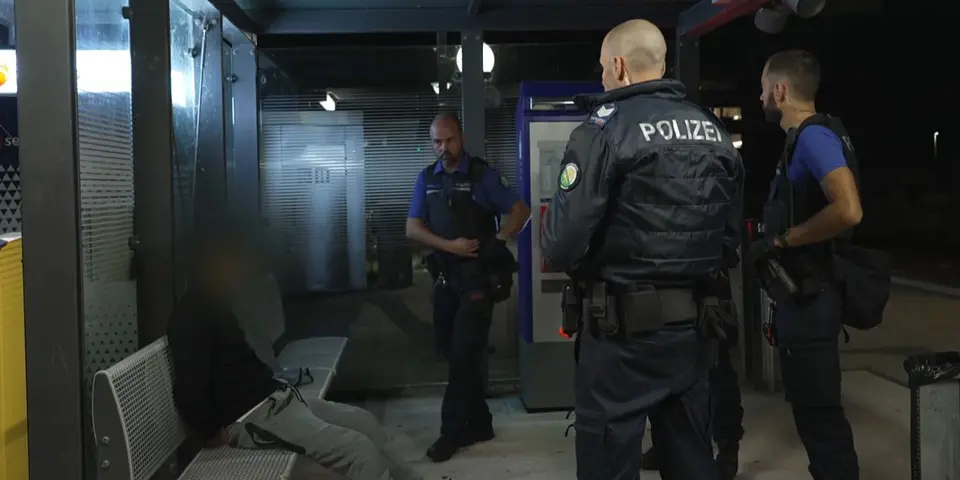
Nearly 900 offences and a 19-year-old Algerian in custody pending trial
Shortly after 9 p.m., a house was burgled in Kreuzlingen TG. Thurgau cantonal police found a broken window; colleagues stopped a man with cuts to his hands near the nearby railway station shortly afterwards. The arrested man is a 19-year-old Algerian with asylum status, who faces around a dozen offences within a matter of weeks. He is now in custody pending trial; proceedings are being conducted by the St. Gallen prosecutor's office, as he is also alleged to have committed offences there.
The case, which nau.ch describes citing SRF's "Rundschau", exemplifies a problem that has preoccupied the authorities for years. According to media spokesman Matthias Graf, approximately 1,000 offences were registered in Thurgau canton throughout 2025, mostly committed by young men from the Maghreb. "This year it is already nearly 900 again," Graf says.
Police report hours of deployment per operation
These offences are principally property crimes, committed by young men from Morocco, Tunisia and Algeria, Graf explains to SRF. The strain on police is considerable: "A patrol unit is tied up for hours on a single case." There is also the behaviour of the suspects: "They are often aggressive, uncooperative, you get spat upon."
Graf describes the 19-year-old Algerian as a "classic repeat offender". The man denies that his hand injuries resulted from the burglary.
National figures: 80 per cent of North Africans with asylum status accused of offences
By the end of September, 15,667 asylum applications had been filed in Switzerland; the proportion of applicants from the Maghreb stands at 17 per cent. Almost all of these applications are rejected. Figures published by the federal office, made available to "Blick", also show: in 2024, approximately 80 per cent of North Africans with asylum status were accused of an offence.
Accelerated 24-hour proceedings have been running since the beginning of 2024. Applications from Morocco and Tunisia have declined since then; those from Algerians, the largest group, remained consistently high. At the beginning of 2025, the federal government launched a taskforce against repeat offenders.
Taskforce: Over 60 of 116 reported individuals returned or detained
Claudio Martelli, deputy director of the State Secretariat for Migration (SEM) and head of the asylum division, draws an initial balance sheet in an interview with "Rundschau". "Of the 116 individuals reported to the taskforce in the first twelve months, over 60 have either been returned or are now in detention and will be returned," Martelli says.
He emphasises that the frustration among police is taken very seriously. "We also experience a certain frustration." At the same time, Martelli makes clear: the vast majority of asylum seekers behave correctly. "It is a small criminal minority that damages reputation and security. We want to change that."
As a further step, the federal government is planning an upstream responsibility procedure: before the actual asylum procedure, it should be examined whether someone can even raise asylum grounds. "We hope that such individuals no longer enter Switzerland at all," Martelli says.
Expert: "They hope for a better life"
Journalist and Maghreb expert Beat Stauffer contextualises the situation. Some of the men had already experienced problems in their home country and were partly prosecuted there. In countries like Italy, many lived on the streets, consumed medications and drugs, and began to steal. When they come to Switzerland, they are already severely traumatised by the journey. "They hope for a better life," Stauffer says.
"Rundschau" also spoke directly with young men from the Maghreb. Many appeared intoxicated or heavily under the influence of alcohol. A young Algerian describes his journey: "I was three years in Italy, then one year in France. I have been in Switzerland for two months now." He had experienced problems with the justice system and politics in his home country. "I want to lead a quiet life here."
Offence figures remain high despite the taskforce. According to the report, many suspects abscond; arrests and short prison sentences do not deter many.
Source: Google News CH — Crime (de)