Colombia militarises Cúcuta following murder of mayoral candidate and border attack with Venezuela
The Colombian government decreed the temporary militarisation of Cúcuta following the murder of a mayoral candidate and an explosion that left six injured near the Venezuelan border.
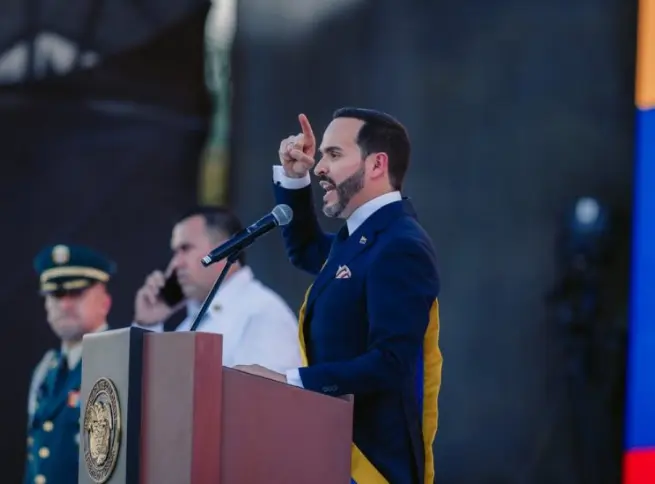
Temporary militarisation in Cúcuta following border violence surge
The Colombian government ordered the temporary militarisation of Cúcuta, capital of the border department of Norte de Santander, on Thursday, according to elnacional.com. The measure comes in response to the murder of a mayoral candidate and the detonation of an explosive device near the border crossing with Venezuela that left six injured earlier in the week.
President Abelardo De La Espriella issued the order to the Army and National Police to implement a special territorial control scheme in the metropolitan area, with the aim of containing drug trafficking and illegal armed groups.
"I have ordered the immediate militarisation of Cúcuta. This militarisation will be temporary, while we stabilise public order," De La Espriella said to the media.
Among the announced measures is the launch of Operation Sparta beginning Tuesday, 3 November, along with the formation of an institutional bloc aimed at targeting the financial structures of violent groups. A presidential inspection visit to the area is also planned for next week.
The escalation of violence began on Monday with the murder of retired Police Major Miguel Castellanos Serrano, former local government secretary and mayoral candidate. Castellanos Serrano was shot dead at a service station whilst travelling without his usual security detail.
On Tuesday, the situation worsened with the explosion of a destructive charge in the vicinity of the international bridge connecting Cúcuta with Venezuelan territory, an incident that injured four civilians and two police officers.
The convergence of smuggling and drug trafficking routes linked to the Catatumbo region has put the intelligence agencies of both countries on alert regarding the risk of further deterioration in border security.
"We will not allow narcoterrorism to continue sowing fear and threatening families. These capabilities will allow us to intensify operations against terrorism, pursue those responsible for the violence, strike criminal finances and dismantle the organisations that seek to subjugate the population," De La Espriella said.
The president added: "We will not allow criminals to destroy in a region that helped build our institutions."
The deployment of Colombian Army units seeks to strengthen surveillance at formal and informal crossings connecting Cúcuta's urban area with the Venezuelan state of Táchira. Security forces will maintain intensified patrols and permanent vehicle checkpoints to neutralise the activities of transnational gangs active on the border.
Source: Google News VE — Crime