Colombia militarises Cúcuta following murder of mayoral candidate
The Colombian government ordered the militarisation of Cúcuta following the murder of a mayoral candidate and an explosion that left six injured. Operation Sparta begins on 3 November.
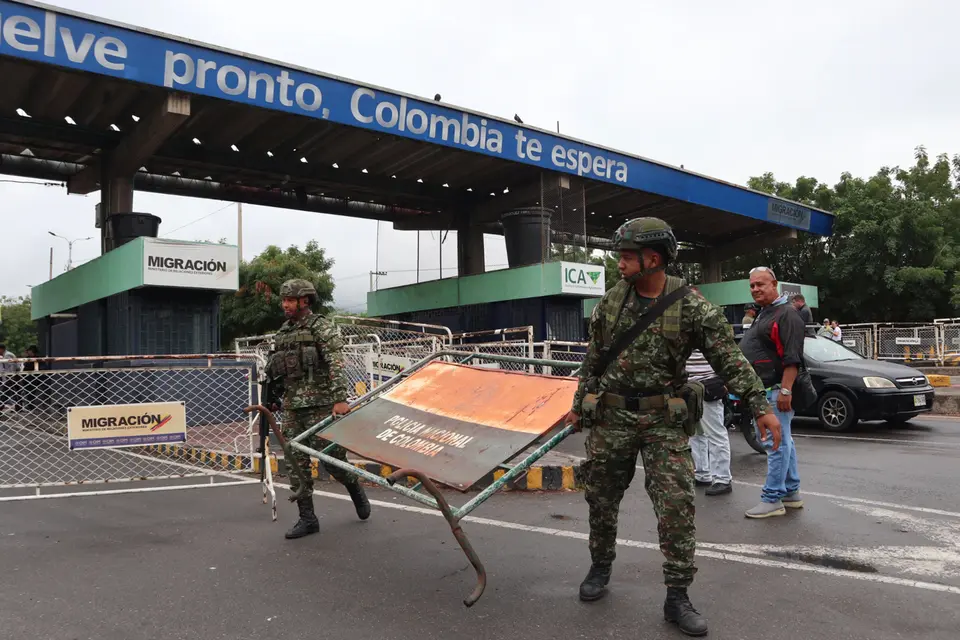
Militarisation of Cúcuta following a week of armed violence
The Colombian government decreed the militarisation of Cúcuta, a border city with Venezuela, on Thursday 29 October, after a mayoral candidate was shot dead and an explosive device left six injured in less than seven days, according to eldiario.com.
"I have ordered the immediate militarisation of Cúcuta. That militarisation will be temporary, while we stabilise public order," declared Colombian President Abelardo de la Espriella to the media.
De la Espriella stated that he would not allow "narco-terrorism to continue sowing fear and threatening families" in the department of Norte de Santander and its capital. The president announced a package of measures to contain the escalating violence.
The Army will increase its presence in the city in coordination with the Police, with the aim of "strengthening territorial control, protecting citizens and confronting" illegal armed groups active in the area. As a second measure, the president indicated that on Tuesday 3 November the military and police device called Sparta and a security bloc in Cúcuta would begin operations.
"These capabilities will allow us to intensify operations against terrorism, pursue those responsible for the violence, strike at criminal finances and dismantle the organisations that aim to subjugate the population," De la Espriella stressed. The president also ordered the continuation of other territorial control operations and announced a visit to the city next week to evaluate progress.
Murder of mayoral candidate Miguel Castellanos
The measures were adopted following the murder, which occurred on Monday, of Cúcuta mayoral candidate Miguel Castellanos Serrano, shot down near a petrol station in Norte de Santander. Castellanos was travelling without security at the time.
The politician was a retired police major who served as municipal government secretary, a position from which he fought crime and worked on the recovery of public spaces, access to justice and animal protection.
On Tuesday, at least four civilians and two police officers were injured by the detonation of an explosive device near an international bridge connecting Cúcuta with Venezuela.
Zone of high conflict
Cúcuta has concentrated, for decades, various guerrilla groups and organisations dedicated to drug trafficking that control the flow of drugs and smuggling, favoured by its border position and its proximity to the turbulent Catatumbo region.
"We will not allow criminals to be the ones who aim to destroy institutions in a region that helped us build them," the president warned.
Source: Google News VE — Crime