Tonne of cocaine seized in joint naval operation in the Caribbean
A co-ordinated operation between the Dominican Republic and the United States recovered one thousand kilograms of drugs following the sinking of a suspicious vessel near Isla Beata.
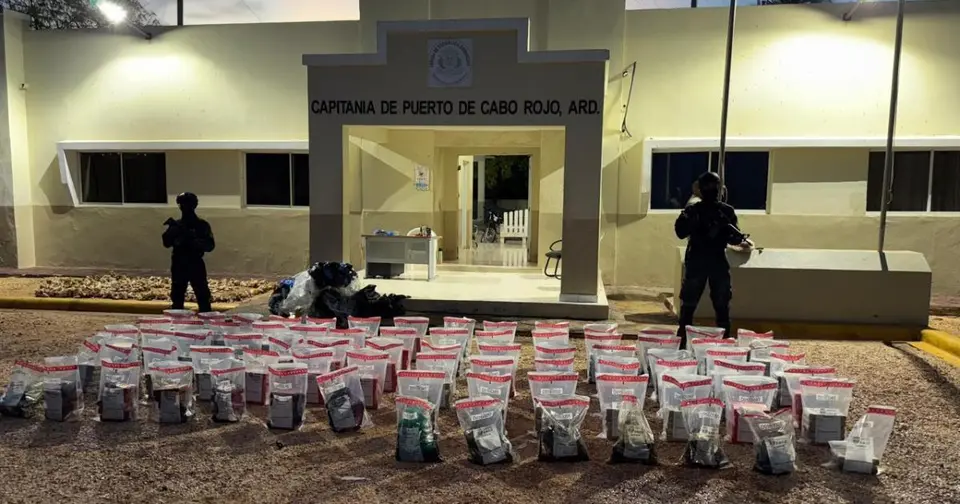
Tonne of cocaine seized in joint naval operation in the Caribbean
Nearly one tonne of cocaine was recovered by Dominican agents after a speedboat was bombed by United States forces in waters off the southern coast of the island territory. The incident forms part of a series of recent military operations aimed at stemming drug trafficking in the area.
The Caribbean nation's anti-narcotics agency—known as DNCD—announced on Sunday via its X account that they had managed to seize 377 packages totalling approximately one thousand kilograms of the substance. The seizure came following a binational intervention in which both local personnel and United States staff participated.
According to details provided by the authorities, the vessel transporting the shipment was intercepted and destroyed approximately 150 kilometres south of Isla Beata, a coastal location at the southernmost tip of the Dominican Republic.
In visual material released by DNCD, uniformed officers can be seen boarding the vessel in the open ocean and examining the packages which, according to the investigation, contained the seized drugs.
The agency responsible for narcotics enforcement emphasised that this type of joint operation with Washington constitutes a historic precedent in the fight against narco-terrorism within the Caribbean region.
The operation falls within a broader surge of United States military presence in the region. Since early September, the Trump administration has deployed eight warships, unmanned aircraft and an attack submarine to the southern Caribbean with the stated objective of combating illegal trafficking.
In recent days, United States forces have carried out at least three attacks on vessels which, according to their intelligence services, were involved in smuggling contraband drugs into United States territory. One of these actions resulted in three deaths on board a vessel travelling through corridors commonly used for drug trafficking.
The United States leader used his Truth Social platform to confirm that he personally ordered the most recent attack, carried out within the jurisdiction of Southern Command, which brings together thirty-one countries in Latin America and the Caribbean. According to Trump, intelligence reports verified that the vessel was moving along known drug trafficking routes destined for his country.
These military operations have generated criticism from various sectors. Sarah Yager, director of Human Rights Watch in Washington, questioned the legitimacy of eliminating alleged smugglers without due judicial process. Democratic legislators such as Tim Kaine and Adam Schiff, meanwhile, pushed a motion to restrict the use of armed force against civilians without prior Congressional authorisation.
Kaine noted that the federal government refuses to provide basic information about the attacks, such as the identity of the victims, the reasons that justified putting military personnel at risk and why a conventional interception procedure was not chosen instead.
The increase in naval activity in the southern Caribbean has also strained relations with Venezuela. The Maduro government interprets the presence of United States warships as a direct threat. Venezuelan Defence Minister Vladimir Padrino López denounced this as an "undeclared war" and stated that the occupants of the attacked vessels were "executed without the right to defend themselves".
Caracas claimed that a fishing vessel with permission to operate in Venezuelan waters was illegally boarded by a United States destroyer in mid-September. In response, the South American country carried out naval manoeuvres off Isla La Orchila over the weekend.
Maduro has accused Trump of seeking his removal from power—something White House officials have denied—and has called on the population to prepare through militia training. Moreover, he ordered the armed forces to instruct residents of popular neighbourhoods in the use of weapons.
In contrast, opposition figure Henrique Capriles—who ran for the presidency on two occasions and maintains an adversarial stance towards Chavism—rejected any possibility of backing a foreign military intervention.
Information from Al Jazeera
Source: Google News DM — Crime