Muhos data-centre construction site: police investigate surface water and logging allegations
Muhos municipality was aware of surface water problems at the Google data-centre construction site as early as August. Oulu police are investigating suspected environmental damage.
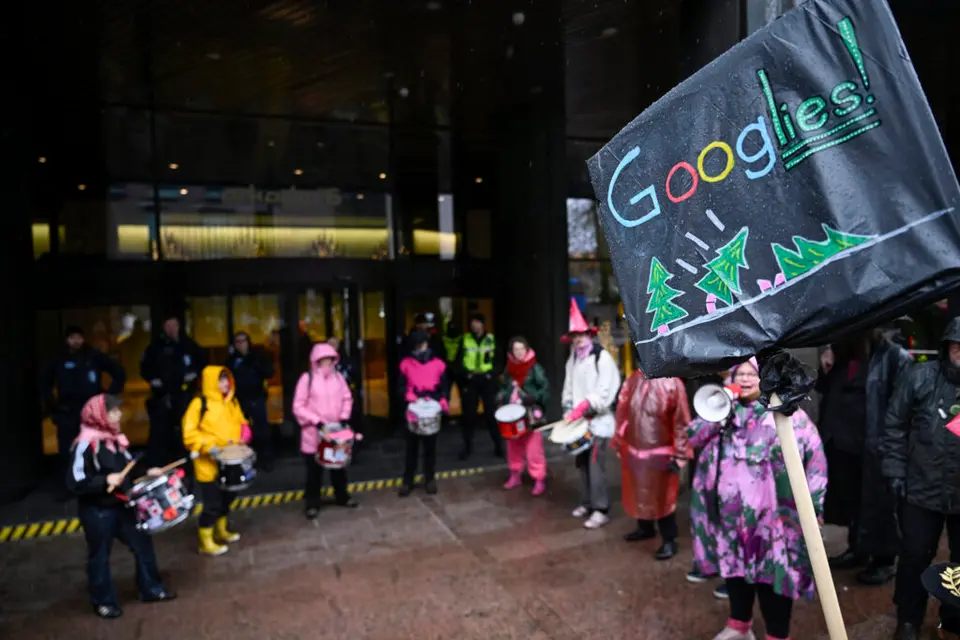
Muhos municipality knew of construction site surface water problems in August – police opened investigation
Muhos municipal manager Kimmo Hinno received information about surface water problems at the Google data-centre construction site on 12 August, when he sent an email about it to the municipality's technical director Mikko Kari. Suomenmaa.fi reported that the information is based on documents obtained by STT through a freedom of information request.
Heavy late-summer rainfall had caused significant surface water problems at the construction site. Hinno wrote in his message: "We were contacted from the Google construction site, saying that now that it has rained a lot, they are having some problems with surface water. It is probably our job to direct that surface water safely away from the area."
Information about muddy water running off the construction site only began to emerge publicly later in the autumn.
Police launched pre-investigation in October
Oulu police announced in late October that they had opened a pre-investigation into suspected environmental damage in the project's preparatory work. According to the police's preliminary information, there have been unclear areas and deficiencies in the construction site's drainage and water management.
The Permit and Supervision Authority (LVV) had already submitted a request for investigation to the police earlier in October. LVV stated at that time that changes indicating acidification had been detected in monitoring results provided by Google's subsidiary Tuike Finland. According to LVV, the acidification is caused by drainage work carried out in the area as well as other excavation and land drainage activities, and the construction site failed to implement sufficient measures to prevent the formation of acidic and metal-rich runoff water.
LVV had already participated in a construction site meeting on 28 August to gather information about the situation and sent the company a written information request. Tuike Finland responded on 2 September that water management measures had been started in August – the company did not provide an exact date.
Municipal technical director: "A terrible fuss"
Municipal manager Hinno did not wish to elaborate on the events when STT contacted him in late October. "I believe I was in contact with Google at that time and told them that they need to take action on this matter now. I cannot comment on anything else," he said.
Technical director Mikko Kari believes that the public attention the matter has received is exaggerated. "I think a terrible fuss has been made of this, given that there is brown water in one ditch," he huffed to STT. In a later email response, Kari stated that the municipality had generally relied on the parties responsible for implementing the project to have looked after the planning and execution of the work.
Responsibility for surface water management is divided between the project operator and the municipality: the management of surface water is the primary responsibility of the property where the surface water is generated, whilst in areas covered by a land-use plan, responsibility for organising surface water management rests with the municipality. The Muhos data-centre area's land-use plan has been approved but is not yet legally binding, and surface water management systems in accordance with the land-use plan have not yet been implemented.
Google knew of EIA requirement but continued logging
The Muhos data-centre construction site has also made headlines because of suspected illegal logging. Tuike Finland applied to LVV in April for an exemption so that logging permits could be issued without an environmental impact assessment, or EIA procedure. LVV announced in May that this was not possible – despite this, the company continued its operations on the construction site until the end of August.
Google has said publicly that it was under the impression that the logging could be carried out without completing the EIA procedure. However, emails obtained by STT through a freedom of information request tell a different story. Julia Payne, who acted as a strategic negotiator for Google, wrote to Mikko Kari on 28 May: "Yes, we are aware 🙁 This will really delay our project." Payne also stated in another message that Google was aware that the scale of the logging exceeded the threshold required to avoid the EIA procedure: "LVV stated that the project still needs the EIA procedure based on hectare amounts."
It has previously been reported publicly that Tuike Finland continued logging despite instructions from the authorities. According to Helsingin Sanomat, the company interpreted that the EIA requirement did not apply to it, partly on the grounds that it was not a matter of natural resource extraction. However, wood cut from the area has been sold to, for example, UPM and Stora Enso.
Google has logged more than 300 hectares of forest at Muhos for the data-centre site. According to the law, the EIA procedure should be applied to modification logging of more than 200 hectares in extent.
Source: Google News FI — Crime (fi)