Paris murder in '68: New book challenges the Alain Delon legend
A new book resurrects the unsolved murder of bodyguard Stevan Marković, for which Delon had been named as "10,000% responsible".
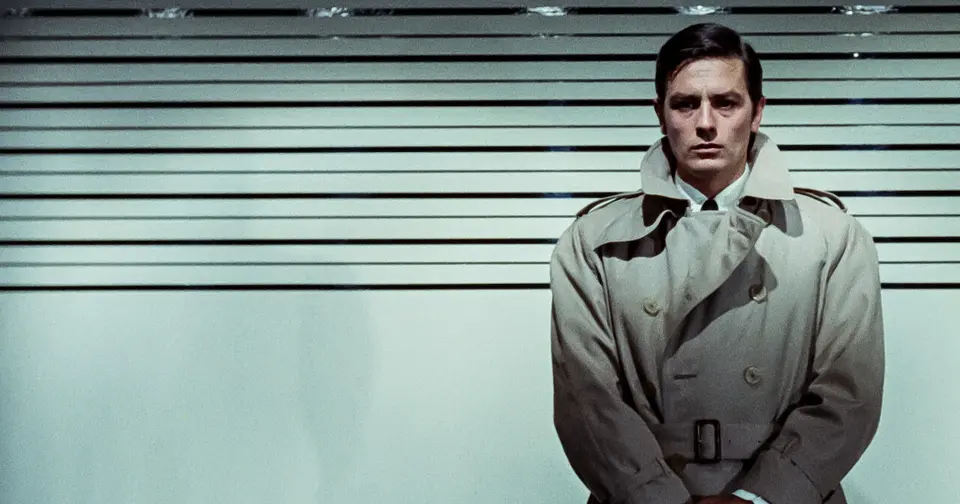
The unsolved case that haunts Alain Delon's memory
In October 1968, a corpse wrapped in plastic was discovered on the side of a road outside Paris. The victim was identified as Stevan Marković, a 31-year-old Yugoslavian with a criminal record, whose last registered address was the villa of cinema star Alain Delon on the Rive Droite. Sixty years later, the case remains officially unsolved. The new book "Murder in Paris '68" by Edward Chisolm, which In.gr reports on, seeks answers.
Marković was not merely an acquaintance of the star. He was his shadow — bodyguard, driver and, on many film sets, the double Delon used for scenes he did not wish to shoot himself. At the time of the murder, the actor was in Saint-Tropez filming the thriller "La Piscine" by Jacques Deray, alongside his former partner Romy Schneider. His alibi was considered unshakeable.
Soon, however, Marković's brother appeared with a letter the victim had written before his death. The text was revealing: "For all my troubles, speak to Alain Delon as 10,000 per cent responsible. His associate is François Marcantoni, a Corsican, a real gangster. For the rest, blame Natalie — Alain's wife. Never speak to her, she is the biggest liar in the world."
Following the publication of the letter, scandal erupted. Police compiled possible motives: had Delon been jealous of Marković's relationship with his wife, actress Natalie Delon? Had the bodyguard attempted to blackmail his employer with secret photographs from high-society orgies — photographs in which, according to investigations, the then Prime Minister's wife was also depicted? Or had the murder concealed a closer, more personal relationship between the two men?
Chisolm, writing in the first person with sharp, noir sentences, breathes new life into a case that threatened to drag down powerful worlds: French cinema, the criminal underworld of Paris, and the French presidency. "Delon had this effect — on men, on women. A beauty that threw people off balance. It made them do things," the author writes.
His descriptions are cinematic. The police headquarters is rendered as "six storeys of bureaucracy, with parquet floors that smell of cigarette butts". His own investigations, running parallel to the reconstruction of historical events, lend the narrative a contemporary pulse.
The Marković case serves Chisolm as a springboard to capture a radically transforming France in the 1960s, as it moved from the post-war stoicism of De Gaulle into hedonistic, materialistic times. The pages of the book travel from the Prime Minister's bedroom to the student protests at the Sorbonne, from the cinema sets of the Riviera to the criminal hideouts of the infamous French mafia, Le Milieu. "When I first encountered the Marković case in a Paris criminology library in the Latin Quarter, I thought it was a Delon film I hadn't seen. A murdered bodyguard, the criminal underworld, a future president, corrupted spies," he notes.
At the centre of the book are the parallel lives of two men who seemed very similar: two charming outsiders, almost the same age, who shed their difficult childhood years and found their way into the elite of a France ablaze. One ended up a god. The other was found wrapped in plastic on the side of a road.
Delon himself, who died in 2024 at the age of 88, said throughout his career: "I am my characters". The phrase takes on an unsettling tone when one considers that the role that made him a star in 1960 — in the first film adaptation of Patricia Highsmith's "The Talented Mr Ripley" — was that of sociopathic killer Tom Ripley. The cold charm that elevated him to an icon of the Nouvelle Vague, according to the New York Times, could equally describe something darker than a film performance.
French President Emmanuel Macron called him, after his death, "a French monument". "Murder in Paris '68" sets against this title a question that remains, half a century later, without official answer.
Source: In.gr