A10 Martyr: Mother sentenced to 20 years, father to 15 years after 39 years
Halima El Bakhti and Ahmed Touloub, parents of Inass Touloub who died in 1987, were tried in Blois for acts of torture and barbarism. A case long without resolution.
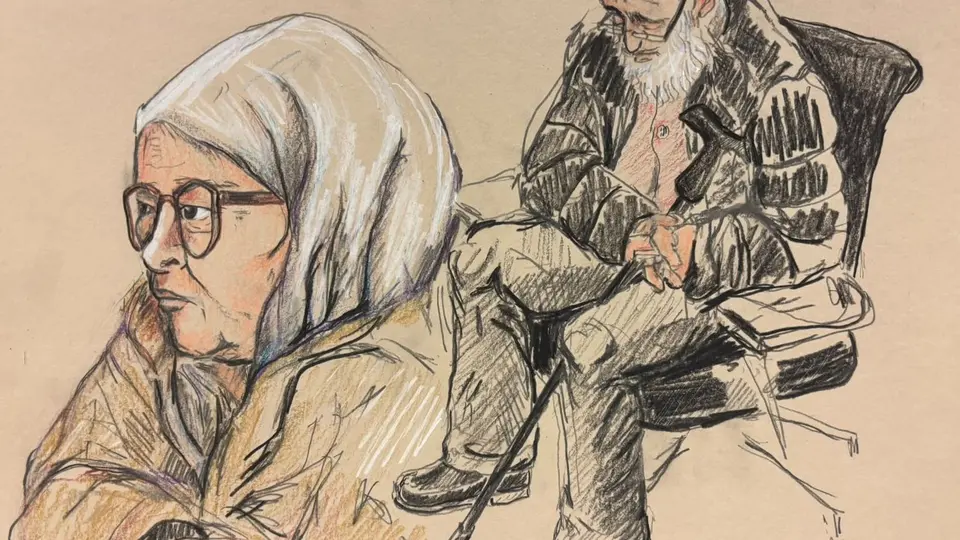
French cold case: conviction of the parents of young Inass
The Loir-et-Cher court of assizes delivered its verdict on Tuesday 17 November. Halima El Bakhti, 72, was sentenced to twenty years' imprisonment for "acts of torture and barbarism resulting in death without intent to cause it". Her husband Ahmed Touloub, 74, received a fifteen-year sentence for "complicity" in the same acts. This decision comes thirty-nine years after the death of Inass Touloub, their daughter, found tortured at the roadside of the A10 motorway in 1987.
According to franceinfo.fr, this nineteen-day trial marks the conclusion of one of France's oldest "cold cases". The attorney generals had sought a twenty-year sentence for the mother and fourteen years for the father. The three judges and six jurors thus partly followed the prosecution's arguments, showing themselves slightly more severe towards the father.
Halima El Bakhti appeared unable to explain the marks found on her daughter's body: around twenty bite marks, multiple fractures, bruising and burns. During the trial, she proved unable to account for the circumstances. Her lawyer, Camille Radot, raised the point that her own explanations were "incomplete, sometimes confused, often shocking". He also revealed that the accused herself had suffered mistreatment during her childhood, including cigarette burns and visible scars on her feet, knees and ankles.
Radot argued that Halima El Bakhti suffered from "major personality disorders" and had attempted suicide twice by ingesting Rivotril. He recalled that she lived in irregular status, isolated without friends or community support, and was managing six children in conditions of precarity. The lawyer asked the court to find that his client's judgment was impaired, which the tribunal confirmed. He also requested that life imprisonment be ruled out, even though "outside, that is what they are asking of you", stating that pronouncing the maximum sentence would amount to a "sentence of vengeance".
Inass Touloub was born in July 1983 and spent her first year in Morocco with her maternal grandmother. When Halima El Bakhti retrieved her in 1984, "inevitably the reunion did not go well", her lawyer indicated. The child rejected her mother, refused to eat and was vomiting. Radot hypothesised that tensions intensified when this little girl, raised by a mother herself violent, found herself confronted with Halima El Bakhti's deep depression.
Halima El Bakhti's children described a mother in the grip of repeated "episodes": "smashing her head against walls, throwing herself to the floor". The lawyer raised the fact that, "in the 1980s, nobody talked about post-partum depression". The accused had had seven pregnancies in total, some of them very close together, in a context of extreme precarity.
Ahmed Touloub, Inass's father, was tried for complicity. His lawyers, Yasmina Belmokhtar and Frank Berton, argued for acquittal. Belmokhtar argued that, according to criminal law, complicity requires a "positive material act" — a concrete act facilitating the violence — as well as explicit intent. "One does not become an accomplice because one knew and remained silent", she contended. She also stated that Ahmed Touloub "never wanted to participate in any way in the death of his little daughter. He never had that intention". Despite these arguments, the court rejected the request for acquittal and sentenced him to fifteen years.
Halima El Bakhti collapsed at the end of the pleading and crouched on the ground for several minutes, in tears. She was remanded in custody the same Tuesday evening. This verdict closes a case that has inspired several books and documentaries over the decades, without ever finding judicial resolution until now.
Source: Le Monde - Justice