Appeal trial of police officer Gilles Guilbert: murder or self-defence debated
The appeal trial of Gilles Guilbert, a police officer accused of the death of Olivio Gomes in 2020, pits prosecution and defence against each other over the classification of the shots. The advocate general seeks a custodial sentence; the defence argues self-defence.
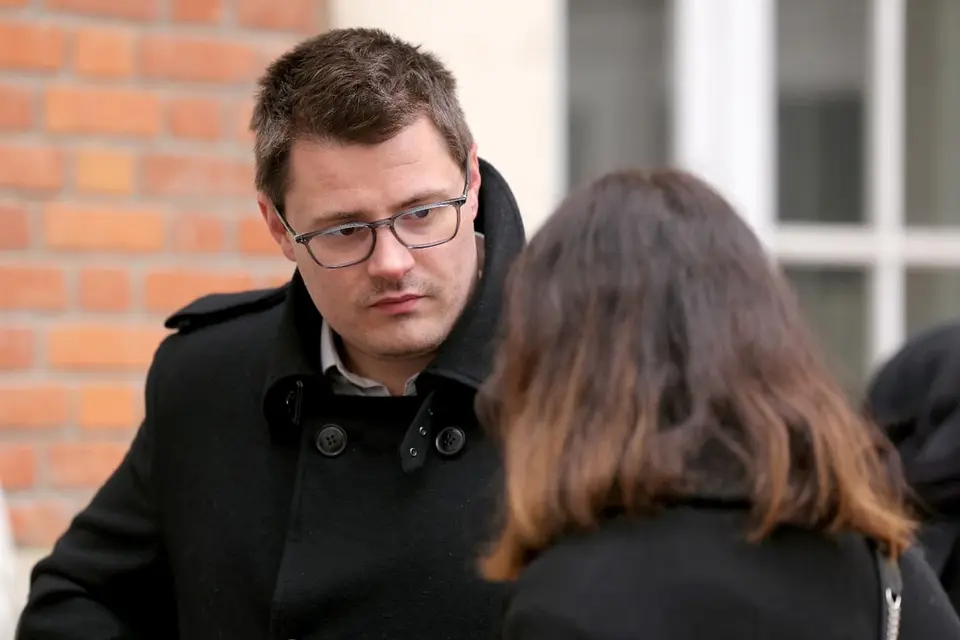
Versailles: a police officer retried on appeal for the death of Olivio Gomes
According to La Provence, the appeal trial of Gilles Guilbert, 35, was held on Tuesday at the Versailles court of assizes. The police officer is being tried for the circumstances of the death of Olivio Gomes, a young man of Bissau-Guinean origin, on 17 October 2020. The outcome of this case will depend on the reclassification — or lack thereof — of the charges against him.
Advocate General David Sénat delivered a requisitoire of approximately three hours. He seeks a custodial sentence, provisional execution of the sentence and permanent disqualification from public service. For him, Gilles Guilbert committed voluntary manslaughter: "Two bullets in the back, three shots too many". The prosecution rejects the justification argument invoked by the accused.
According to the magistrate, the surveillance of Olivio Gomes's car — which took place before the incident in Poissy (Yvelines) — reveals a "reckless" operation. The hypotheses put forward by the police officer (presence of a weapon, corpse in the boot, narcotics) found no basis in Olivio Gomes's vehicle. "The error is always there, it will be there until the end," the advocate general asserts, "because there is a focus on a danger that does not exist".
The magistrate reiterates a central argument of the case: Gilles Guilbert, by pointing a gun at Olivio Gomes, contributed to "heightening" the situation. The accused invoked his own fear and anxiety — the reasoning "it was him or me". For the advocate general, this reasoning is sufficient to establish "the homicidal reasoning": "If I avoid dying, then I kill you".
The defence, represented by Maître Laurent-Franck Liénard, seeks a reclassification to "voluntary violence resulting in death without intent to kill". According to the defence thesis, the shots constitute a "reflex act" of "less than a second", provoked by the car starting which allegedly put the police officer in immediate danger. Maître Liénard insists: facing a vehicle that "shoots out", "it is the only way to get out of it". He describes Gilles Guilbert as "a man who made a mistake".
However, according to the prosecution, the shots served no purpose in stopping the vehicle, which came to a stop 70 metres further on with Olivio Gomes dying at the wheel. Maître Liénard then blamed the actions of the victim, asserting that it was Olivio Gomes who "created this case" by deciding to restart the engine. This statement provoked an immediate reaction: Leonel Gomes, the victim's brother, stood up and left the courtroom, followed by several other people.
The lawyers for the civil parties chose to concentrate their arguments on the accused rather than "try the police". Maître Mandine Blondin, lawyer for two passengers, described Gilles Guilbert as "a man who did not behave in the way expected of a police officer". She clarified: "It is not being anti-police, on the contrary, it is saying that we expect better". A former reserve gendarme, Maître Blondin lent a form of credibility to this argument.
For Olivio Gomes's family, the accused seeks to "distort things to escape responsibility". Maître Damien Vinet emphasises that Gilles Guilbert suffered no injury — "not even a scratch" — from contact with the car. He calls for full acknowledgement of responsibility.
Maître Margot Pugliese concludes on behalf of the family: "You can kill someone and not always be a bad person. Gilles Guilbert wanted to be a superhero, too early, he shot before the danger came". The family will have to "bear this error for life".
The court will deliver its verdict in the coming days. The case turns on a pivotal question: did Gilles Guilbert act in self-defence against an immediate danger, or did he commit voluntary manslaughter based on a mistaken focus on a non-existent peril?
Source: Google News FR — Crime (fr)