Trial of the "little martyr of the A10": verdict Tuesday after two chaotic weeks
The parents of Inass Touloub, found dead by the A10 motorway in 1987, have been appearing before the Blois assize court since 2 November. The verdict will be delivered on Tuesday 17 November after a trial marked by multiple incidents.
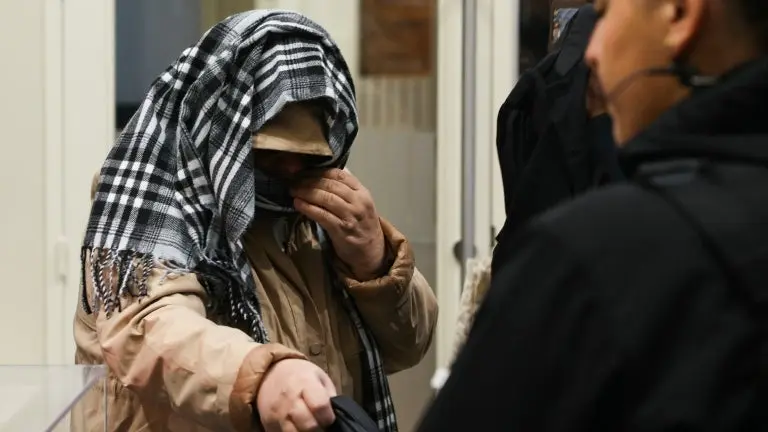
Trial disrupted by numerous incidents
According to BFM TV, the trial of the parents of Inass Touloub, a child found dead by the A10 motorway in 1987, concluded on Tuesday 17 November with the announcement of the verdict. Halima El Bakhti and Ahmed Touloub have been tried since 2 November before the Blois assize court (Loir-et-Cher) for "acts of torture and barbarism resulting in death without intent to cause death" and "complicity" in these same acts.
On Monday 16 November, the state prosecutors sought 20 years' imprisonment for the mother and 14 years for the father. The judgment on Tuesday would determine whether the accused are found guilty and, if so, what sentence they are given.
Incidents from the first day
At the opening of the trial, on the first day during the lunch break, Halima El Bakhti was pursued from the courthouse entrance for several tens of metres by a group of activists from the Mouv'enfants collective chanting slogans. Her lawyer, Me Camille Radot, denounced this action when the hearing resumed: "We were pursued by a mob, threatened, insulted as rubbish and murderers. The police had to intervene and she was eventually evacuated by a police vehicle."
State prosecutor Stéphane Javet announced the opening of a criminal investigation into this episode, recalling that the accused were entitled to a fair trial. "One can think what one likes about the facts alleged, but they presented themselves and are entitled to a fair trial," he said.
Health problems of the accused father
The question of Ahmed Touloub's psychiatric condition, a septuagenarian, took up considerable space in the debates. Me Frank Berton, the father's lawyer, requested an additional neurological assessment that had not initially been carried out before the trial opened. This assessment took place on Friday 6 November in the late afternoon.
When the hearing resumed on Monday 9 November, the presiding judge ordered a further scan, again suspending the session for several hours. The results returned early in the afternoon confirmed Ahmed Touloub's fitness to stand trial. "The expert notes that there are no modifications to be made to his conclusions. Mr Touloub's state of health is compatible with his appearance," the presiding judge stated.
Accused's distress during medical testimony
The first notable emotional reaction occurred during the first week, when forensic doctors listed from the witness stand the injuries, bites and burns found on Inass's body during the autopsy. Photographs of the child's body were projected in the courtroom, provoking tears among the public.
Faced with these images, Halima El Bakhti fainted and fell heavily to the ground, temporarily interrupting the hearing. She was hospitalised at the emergency department and spent the night under observation before returning the following morning.
Reorganisation of the public and internal tensions
At the opening of the fifth day of the hearing, the presiding judge announced a change to the arrangements. Until then, four seats had been reserved for representatives and residents of Suèvres, the commune that had buried Inass in 1987 and maintained her burial place since. This commune had sought to file a civil claim, a request rejected at the beginning of the trial. "There is no reason they should have any privilege whatsoever," the presiding judge decided, removing these reserved seats.
This decision followed tensions between the bailiff and Georges Domergue, former investigating judge in the case who had come to attend the proceedings and described himself as "haunted" by the matter. The presiding judge asked Domergue to leave the courtroom that day.
Health problem of a juror
Early in the second week of the trial, a new incident occurred: during the lunch break, an alternate juror had to be attended to in an emergency following a health problem within the courthouse.
Source: BFM TV