Gangs control 90 % of Port-au-Prince, warns UN
Nearly 90 % of Haiti's capital is under criminal control, according to senior UN officials. The multinational mission lacks personnel and funding.
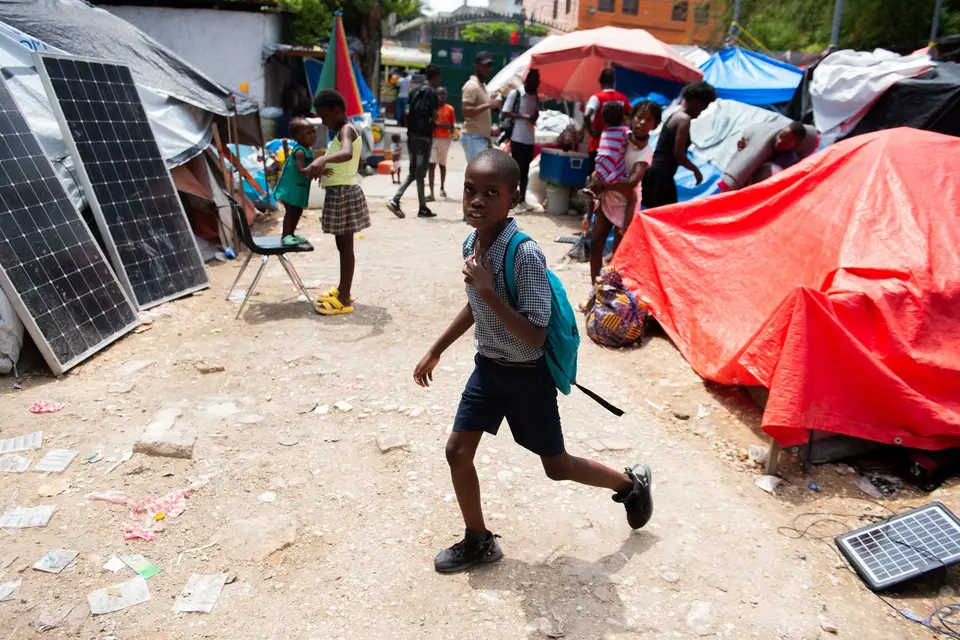
Haiti on the brink of the abyss: gangs masters of the capital
Nearly 90 % of Port-au-Prince is now under the control of criminal groups, senior UN officials warned Wednesday before the Security Council. According to ledevoir.com, which reported these statements, Haitian authorities have proved unable to check the escalation of violence.
Territorial expansion beyond the capital
Ghada Fathy Waly, executive director of the United Nations Office on Drugs and Crime (UNODC), painted an alarming picture before the Security Council. Gangs are extending their attacks far beyond the capital, now targeting areas previously spared from violence.
"Southern Haiti, until recently spared from violence, has experienced a sharp increase in gang-related incidents," she said. In the east of the country, criminal groups are exploiting land routes and key crossing points, notably Belladère and Malpasse, where attacks against police officers and customs officials have been reported.
Control of major commercial routes by these groups has paralysed legitimate commerce, causing a spike in cooking fuel and rice prices, the population's staple food. In parallel, gangs are establishing "parallel governance structures" in areas where public services are absent or failing.
"Bringing the situation closer to the abyss"
UN Under-Secretary-General Miroslav Jenca warned that "the continued encirclement of Port-au-Prince by gangs" and their strengthened foothold in the capital and beyond "bring the situation closer to the abyss". Without an increased response from the international community, he cautioned, "the total collapse of the State's presence in the capital could become a very real scenario".
Gangs have substantially increased in power since the assassination of President Jovenel Moïse in July 2021 — a time when they already controlled approximately 85 % of the capital. Haiti has had no president since that assassination.
A multinational mission under-equipped
A UN-backed mission led by Kenyan police arrived in Haiti last year to help crackdown on gang violence. However, it has only about 40 % of the 2,500 personnel originally planned, due to insufficient personnel and funding.
The proposal made in February by Secretary-General António Guterres — to provide drones, fuel, land and air transport and other non-lethal support means to this mission — was not taken up by the Security Council.
Sexual violence and self-defence groups
Between March and April, the UN Political Mission in Haiti recorded 364 incidents of sexual violence committed by gangs, involving 378 survivors. Jenca also reported an overall increase in such violence over the past three months.
Faced with the gangs' advance, the number of private security companies and self-defence groups has rapidly increased. Some seek to protect their communities, whilst others operate illegally or even collaborate with gangs, Waly noted. Over the past three months, these groups are said to have killed at least 100 men and one woman suspected of links with gangs, according to Jenca.
Corruption and political blockade
A new report by UN experts, covering the period from October to February, indicates that gangs exploited political turmoil and a disorganised response to the security crisis. The experts point to competing political ambitions and allegations of corruption within Haiti's transition bodies.
"Whilst the expansion of territorial control provides gangs with additional sources of revenue and bargaining power, these attacks are also supported by individuals seeking to destabilise the political transition for their own political ends," the experts said.
Very little progress has been made in restoring public security or implementing the roadmap aimed at organising national elections by February 2026, they concluded.
Weakened police and extrajudicial killings
Faced with a national police force riven by severe internal tensions, an army to rebuild and the limited capabilities of the multinational force, experts warned that gangs would continue to "gain the upper hand without stronger international support".
The Haitian national police itself faces severe criticism. The experts noted 281 summary executions carried out by specialised police units in 2024, including 22 women and 8 children. Self-defence groups "often include local police officers, some of whom actively participate in human rights violations," they added.
Weapons despite embargo
Despite the UN arms embargo imposed on Haiti, gangs continue to source more powerful weaponry. They obtain them not only on regional civilian markets, but also from Haitian police stocks and in neighbouring Dominican Republic, according to the same experts tasked with monitoring the embargo and sanctions against major gang leaders.
Source: Google News HT — Port-au-Prince