UN Report: Dominican ammunition found in hands of Haitian gangs
A 94-page UN report documents the diversion of Dominican ammunition to gangs in Haiti, including 400 Mawozo. Haitian police stocks have also been looted.
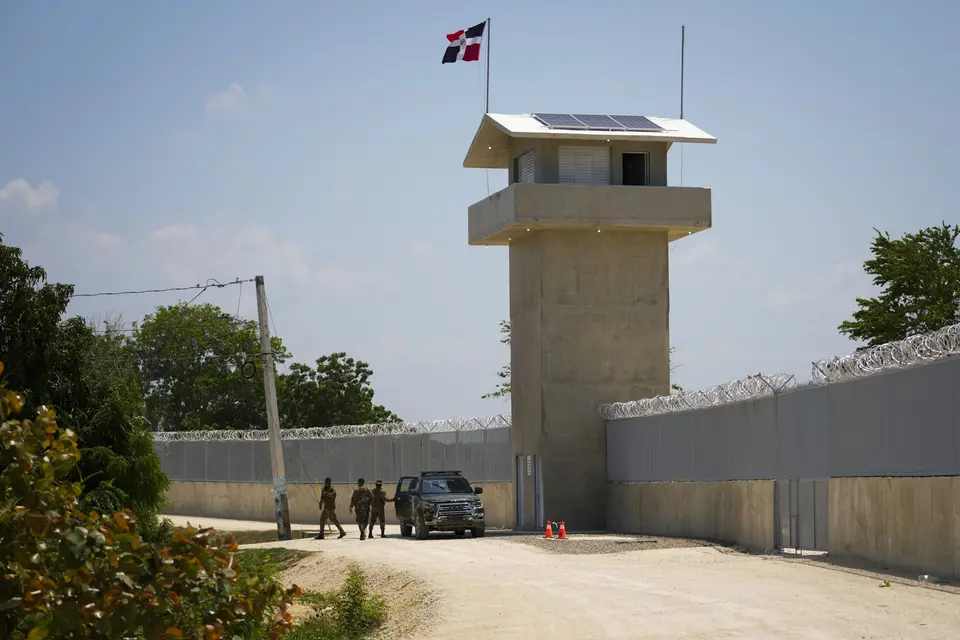
Massive diversion: UN traces route of Dominican ammunition to Haitian gangs
According to haitiantimes.com, a 94-page report by the UN Group of Experts on Haiti, released last week by the Integrated Office of the United Nations in Haiti (BINUH), establishes a direct link between ammunition from Dominican Republic police stocks and armed groups operating in Haiti. The document, dated 8 September, identifies several gangs as beneficiaries of these illicit transfers, including 400 Mawozo and groups active in Bel-Air.
Nearly one million cartridges missing in Dominican Republic
The investigation began following the seizure in 2024 of several crates containing 5,000 cartridges of 5.56 × 45 mm calibre in Mirebalais. Following this discovery, Dominican authorities conducted a complete inventory of their police stocks and found 908,001 cartridges missing.
UN experts were unable to determine precisely what proportion of this ammunition actually passed into Haiti. Dominican security specialists nonetheless indicated to investigators that the majority had likely been transported across the border.
"It is difficult to estimate precisely the quantity of material that reached Haiti," the experts stated. "However, given the relatively limited market for 5.56 × 45 mm and 7.62 × 39 mm ammunition in the Dominican Republic, the majority was probably transported to Haiti, where these two calibres are among the most used by gangs."
"ERD" marking identified on ammunition seized from gangs
During inspections conducted in February 2026, the Group of Experts examined ammunition recovered from Haitian gangs and noted the "ERD" marking, the acronym for the Dominican Republic's Armed Forces. Dominican and Colombian authorities clarified to investigators that this ammunition had been purchased in 2022 under two contracts concluded respectively with the Dominican armed forces and the Dominican Ministry of Defence.
"The Dominican armed forces apply the best practice of marking ammunition, which allows for better stock management and helps to prevent, detect and investigate diversions," the experts noted.
An incident in December 2025 illustrates these illicit flows concretely: a sub-lieutenant of the Dominican armed forces was arrested in San Juan de la Maguana in the company of a Haitian national whilst they were transporting 1,516 ammunition cartridges by motorcycle.
Wilson Joseph and ammunition from the 1950s
The experts also analysed a video in which Wilson "Lanmo San Jou" Joseph, leader of the 400 Mawozo gang, displayed surplus .50 calibre ammunition. Cartridges recovered from this gang in 2026 were identified as having been manufactured in the Dominican Republic in the 1950s. The report specifies that "at least 15 of the 32 .50 calibre cartridges recorded by the group of experts were manufactured in the Dominican Republic."
The Dominican government told experts that surplus ammunition was systematically destroyed and that no diversion had been found on its part. The group of experts nonetheless established contrary evidence, indicating that the exact traceability chain of these surplus stocks remained unclear, with some of this ammunition still available for purchase on collector websites in the United States.
Haitian police stocks also looted
The report further reveals that ammunition from Haitian National Police (PNH) stocks was diverted for the benefit of groups affiliated with the Viv Ansanm coalition. Of 336 cartridges of 7.62 × 51 mm seized from Bel-Air gangs in 2026, 70 per cent came from diverted PNH stocks.
"The police arrested several corrupt agents, some of whom were involved in arms and ammunition trafficking on behalf of Chalè, leader of the Tokyo gang," UN experts indicated. "Some police officers recover unused ammunition and resell it to gangs and self-defence groups."
Haitian Armed Forces also affected
The document also records the presence, in the hands of gangs and a self-defence group, of 5.56 × 45 mm calibre ammunition corresponding to batches imported by the Haitian Armed Forces (FAD'H). The Ministry of Defence indicated to experts in May 2026 that part of this ammunition had been transferred to the police, without subsequent traceability being guaranteed.
The experts concluded that the absence of a centralised system for managing seized arms and ammunition — many of which are not subject to any formal registration — constitutes a major structural flaw that facilitates their reintroduction into criminal networks.
Source: Google News HT — Port-au-Prince