Haiti: 1,254 financial alerts linked to gangs, zero convictions
Sanders, ambassador of Antigua and Barbuda to the OAS, calls for cutting off financing to Haitian gangs. Between 2019 and 2024, 1,254 suspicious reports, 19 cases forwarded, no convictions.
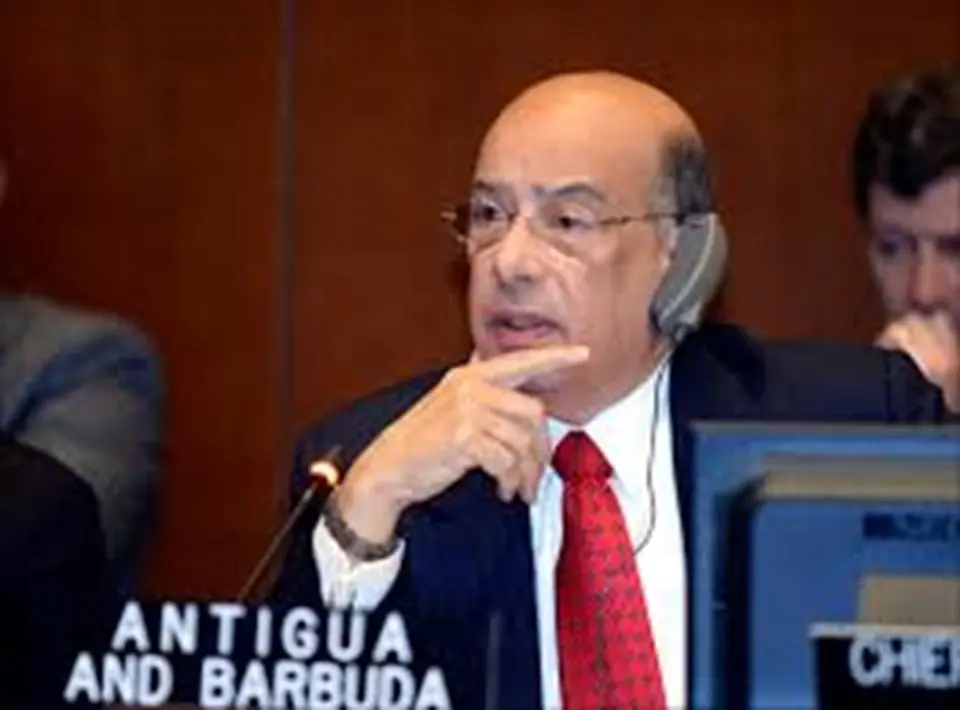
The criminal economy of Haitian gangs under OAS scrutiny
PORT-AU-PRINCE — Between 2019 and 2024, Haiti's Central Financial Intelligence Unit recorded 1,254 suspicious activity reports linked to gangs. Only 19 cases were forwarded to judicial authorities — approximately 1.5 per cent of reports — and no convictions resulted from these referrals. This is the central finding noted by rezonodwes.com, based on report S/2026/578 from the United Nations Office on Drugs and Crime (UNODC).
These figures form the starting point of an article published on 15 August by Sir Ronald Sanders, ambassador of Antigua and Barbuda to the Organisation of American States (OAS), under the title Haiti – Stop the money flow to Organised Crime. Sanders argues that territorial recovery in Haiti will remain fragile as long as those who finance, supply, transport or protect armed groups are not identified, prosecuted and sanctioned.
Financial intelligence that does not translate into justice
The gap between alerts received and judicial cases illustrates, according to the UNODC, one of the most significant deficiencies in Haiti's system. The conversion of financial intelligence into judicial results remains the missing link. The UN agency specifies that a suspicious activity report does not legally constitute proof of guilt — the 1,235 reports not forwarded therefore do not necessarily represent that many established offences — but the gap concretely measures the difficulties in advancing alerts to prosecutable investigations.
The national assessment of risks related to money laundering and terrorism financing, presented by Haiti on 11 March 2026, classifies arms trafficking, kidnapping for ransom, corruption and smuggling among threats of "very high" level. Anti-money-laundering controls remain weak in certain sectors, notably real estate and gambling. The Office managing seized and forfeited assets was still not operational at the time the report was published, due to the lack of an organic law governing its operations.
A diversified and structured gang economy
The UNODC describes a criminal economic system based on arms and drug trafficking, extortion, corruption, money laundering, human trafficking and migrant smuggling. Control of a port, road or terminal allows armed groups to convert territorial dominance into regular revenue. A previous UN Panel of Experts report documented payments of 15,000 to 30,000 gourdes per container, whilst a single gang could earn at least 22,000 dollars per day through extortion related to port access.
Monica Juma, executive director of the UNODC, warned the Security Council on 20 July that the Haiti crisis could no longer be interpreted solely as a security crisis. Armed groups now seek to control the "systems of governance" and economic circuits essential to the population: transport corridors, fuel supply, food distribution and illicit markets. Juma described the situation as a governance crisis fuelled by organised crime.
Her operational conclusion is direct: dismantling a gang without destroying the criminal economy financing it produces only a temporary result. If illicit markets remain intact, removed organisations can be replaced, she explained to the Security Council. The UNODC consequently recommends simultaneous financial investigations, cutting off clandestine revenue streams, combating corruption, improved border control and increased regional cooperation.
The United States–Haiti corridor, main documented arms supply route
Arms supply constitutes the other side of the problem. The UNODC identifies the United States–Haiti corridor as the main documented external illicit supply route, particularly via maritime freight. On 13 January, two seizures at a terminal in northern Haiti resulted in the confiscation of three firearms and 1,800 rounds of 9 mm ammunition, then nine pistols and 5,500 rounds of 7.62 × 39 mm calibre. Another shipment of American origin had been intercepted in the Dominican Republic in 2025, containing rifles, handguns and more than 36,000 rounds, in a matter that subsequently led to judicial proceedings in the United States.
Sanders contends that countries of origin and transit bear responsibility for this flow as well. Haiti cannot inspect containers before their departure from foreign ports, nor can it monitor alone financial transfers made outside its jurisdiction, nor can it trace without international cooperation the initial purchase of a weapon legally acquired then diverted to the clandestine market.
Heavy human toll against a background of incomplete military response
These dynamics occur in a particularly grave humanitarian context. Between January and early June 2026, the United Nations Office of the High Commissioner for Human Rights recorded at least 2,310 deaths, 1,106 wounded and 99 kidnappings. During the same period, 699 people, principally women and girls, were victims of sexual violence, according to data cited by the UNODC.
The international military response remains incomplete. The Gang Suppression Force — the GSF — was authorised with a ceiling of 5,550 personnel, a figure that actual deployment had not yet reached at the time the report was written. Sanders and the UNODC agree on this point: armed action alone will not suffice to stabilise Haiti if the financial circuits feeding criminal groups continue to operate unimpeded.
Source: Google News HT — Crime