Haiti, drug trafficking hub: record seizures and gang expansion
A record seizure of 1,045 kg of cocaine near Tortuga Island reveals Haiti's central role in regional drug trafficking routes.
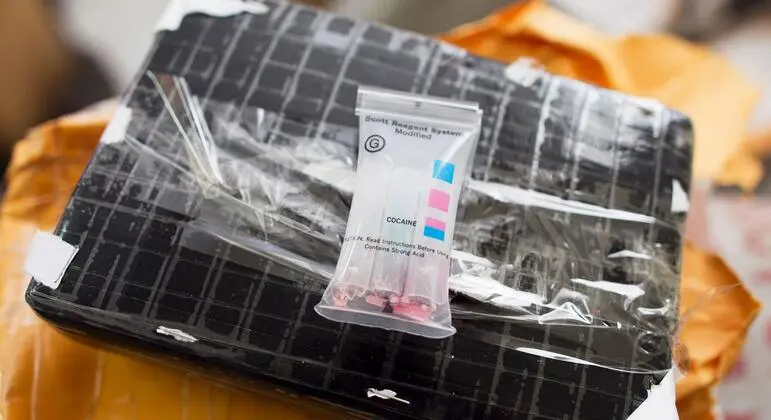
Haiti at the centre of international drug trafficking routes
According to news.un.org, a record cocaine seizure off Haiti's coast has highlighted this country's central role in trafficking routes linking South America, the Caribbean and the United States. The United Nations Office on Drugs and Crime (UNODC) is sounding the alarm over the rapid expansion of criminal networks that exploit the country's political and security instability.
Unprecedented seizures in July 2025
In July 2025, 1,045 kilogrammes of cocaine were intercepted near Tortuga Island, off Haiti's north coast, during a maritime operation conducted by Haitian authorities. This represents the largest drug seizure recorded in the country in more than thirty years.
Two weeks after this operation, 426 kg of cannabis were confiscated in Petite-Anse, near Cap-Haïtien, also in the north of the country. Simultaneously, two Haitian nationals were arrested in Jamaica in possession of more than 1,350 kg of cannabis.
The cocaine seized in July was believed to have originated from South America and was, according to investigators, destined for Caribbean and United States markets. The traffickers involved in this shipment were nationals of the Bahamas and Jamaica, which underscores the involvement of regional actors operating in collaboration with their Haitian counterparts.
Routes reaching Europe
The UNODC also received evidence of drug shipments destined for Europe. In August 2025, Belgian authorities seized 1,156 kg of cocaine in the port of Antwerp, in a container originating from Haiti. These seizures, both in Haitian waters and in Europe, reveal sophisticated and well-established trafficking routes that call for, according to the UNODC, a coordinated regional response from law enforcement.
Tortuga Island, logistical hub of drug trafficking
Tortuga Island has long constituted a strategic point for transnational criminal operations. Historically exploited by pirates, it has become, in recent decades, a platform for organised criminal networks involved in drug trafficking, human trafficking and other illicit activities.
Its geographical position offers direct maritime access to the Bahamas, Jamaica and the Turks and Caicos Islands, making it an ideal logistics and storage base for illicit cargo. Its small size and relative remoteness further complicate surveillance operations by authorities.
Gangs control transit corridors
The main Haitian gangs have established themselves along strategic corridors within and outside Port-au-Prince, as well as along the border with the Dominican Republic. They thus control the main transit routes for drugs and other contraband, including weapons.
This territorial control enables gangs to extort the local population whilst allowing narcotics to circulate with impunity, with much of it destined for export. Some gangs would also demand passage rights from vessels and engage in armed robbery at sea.
Intelligence from Jamaica furthermore establishes a link between firearms seizures and weapons trafficking in exchange for drugs involving Haitian gangs. United Nations experts fear that these groups are collaborating increasingly closely with international criminal networks.
Security instability and institutional shortcomings
Haiti is in the grip of a serious security crisis, with gangs competing for control of territory in the capital and beyond. Insecurity has caused the displacement of hundreds of thousands of Haitians, aggravating the humanitarian and economic crises facing the country.
Traffickers have taken advantage of the country's difficulties in establishing a robust judicial and criminal system capable of addressing gang expansion and the illegal activities they perpetrate. Endemic corruption and money laundering also facilitate the operations of trafficking networks.
These new drug routes also intersect with migrant trafficking operations, in which increasingly more Haitian nationals participate. Drug trafficking thus contributes to regional instability, weakens governance, disrupts local economies and fuels violence.
UNODC's response
The UNODC has intensified its interventions to strengthen Haitian border security, consolidate maritime control and develop intelligence-led policing techniques. A national border management initiative, aimed at increasing interception capacity in ports, airports and at land border posts, has been launched at the request of Haitian authorities.
At sea, the UNODC's Global Maritime Crime Programme is working to strengthen Haiti's coastguard, which plays a crucial role in securing maritime routes heavily exploited for drug trafficking and human trafficking.
On land, the United Nations agency is strengthening the capacity of law enforcement to conduct intelligence operations against organised criminal groups. The exchange of information between Haiti and its regional partners, deemed essential for identifying and dismantling transnational criminal networks, has also been intensified.
Source: Google News HT — Crime