Arms trafficking to Haiti: UN expert demands strengthened inspections in the United States
Gangs control 85 per cent of Port-au-Prince thanks to weapons illegally imported, principally from the United States. A UN expert is demanding urgent measures.
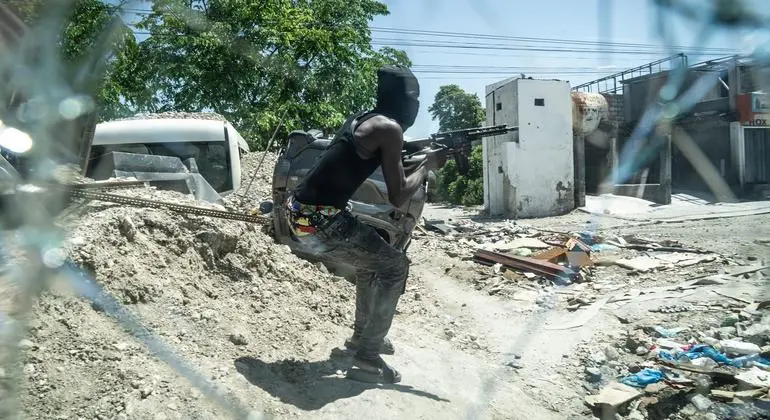
Haitian gangs armed by illegal flows coming mainly from Florida
According to news.un.org, William O'Neill, United Nations Expert on the situation of human rights in Haiti, is sounding the alarm: the gangs that are terrorising this country of 11 million inhabitants have access to a growing arsenal of heavy weapons, supplied in large part by illegal trafficking originating from the United States.
The gangs now control 85 per cent of the capital Port-au-Prince. O'Neill, speaking after a recent visit on the ground, describes a situation as "absolutely catastrophic". "The gangs have access to a growing number of large-calibre weapons and apparently inexhaustible ammunition supplies, and some gangs possess weapons that pierce armour," he told UN Info.
This reality represents a direct threat to security forces: a Kenyan police officer was wounded by a projectile inside his armoured vehicle, and several agents of the Haitian National Police suffered the same fate. The Multinational Mission to Support Security led by Kenya, like the local police, rely heavily on their armoured vehicles for protection—a protection that the gangs' armour-piercing weapons are now defeating.
Armed groups also have precision rifles, and some of their members have been trained to use them. "The gangs possess weapons that cause immense violence and the people I met said it is absolutely terrifying," O'Neill emphasises.
Weapons coming from Florida, the Dominican Republic and Colombia
Haiti produces neither firearms nor ammunition. Most of the supply comes from the United States, "some directly on small vessels that leave mostly from Florida," the expert clarifies. An increasing volume passes through the Dominican Republic, with weapons crossing a border described as "very porous" over 400 kilometres.
Recent deliveries have also come from Colombia, notably from the FARC and other Colombian armed groups, which sell their weapons or have them seized before they reach Haiti.
According to O'Neill, the most decisive link to break is ammunition. "If the gangs were to run out of ammunition, the type of weapons they possess would no longer matter. They would be wiped out, lacking popular support," he asserts.
Border controls virtually non-existent
Structural failings are apparent on both sides of the border. "The head of the Haitian border police told me they have only 350 officers to monitor a 400 km border. They have one drone, insufficient vehicles and admit they cannot even control the official border posts," O'Neill reports.
In the ports, the situation is hardly better: there is not a single scanner in the entire country. "A large metal scanner could check what arrives in these containers," the expert notes. He also points to "a lack of resources and a certain level of corruption" on the Haitian side.
On the American side, O'Neill notes "a consistent lack of commitment to inspecting outgoing cargo, although inspections have slightly increased in recent times under pressure from within the United States". He judges it essential that Washington substantially intensify these controls and strengthen investigations into trafficking networks operating in Florida.
Recent convictions judged encouraging but insufficient
Legal proceedings have recently resulted in heavy sentences, including one concerning a former Haitian gang leader extradited to the United States. "His testimony at trial revealed how he obtained weapons in the United States, which led to the arrest of other people, including Haitian nationals in the United States," O'Neill states. He believes that such severe sentences have a strong deterrent effect.
The UN expert notes that the United States now seems more sensitive to the problem, acknowledging that a stable Haiti would reduce migration flows. "Bringing stability to a neighbour who is suffering enormously would allow that country to develop economically and be at peace. At the same time, this would reduce the factor that encourages migration of desperate Haitians who wish to leave the country," he emphasises.
The Dominican Republic and the UN arms embargo
O'Neill believes that the Dominican Republic has a major interest in stability in Haiti, fearing a spread of violence beyond the border. "I believe the Dominican Republic is stepping up efforts to put an end to the illegal trafficking of weapons and ammunition to Haiti," he says.
He finally recalls the legal obligation that is imposed on all member states: the UN Security Council has issued an arms embargo for Haiti. "All countries have a legal obligation to take measures to ensure that their extraterritorial obligations regarding the situation of human rights in Haiti are linked to respect for the arms embargo," he concludes.
Source: Google News HT — Port-au-Prince