Acquittal in Caruana Galizia murder case: Shock in Malta and Europe
Businessman Yorgen Fenech was acquitted of charges of ordering the murder of Maltese journalist Daphne Caruana Galizia. The family and media organisations responded with shock.
No guilty verdict against alleged mastermind: Acquittal shakes Malta
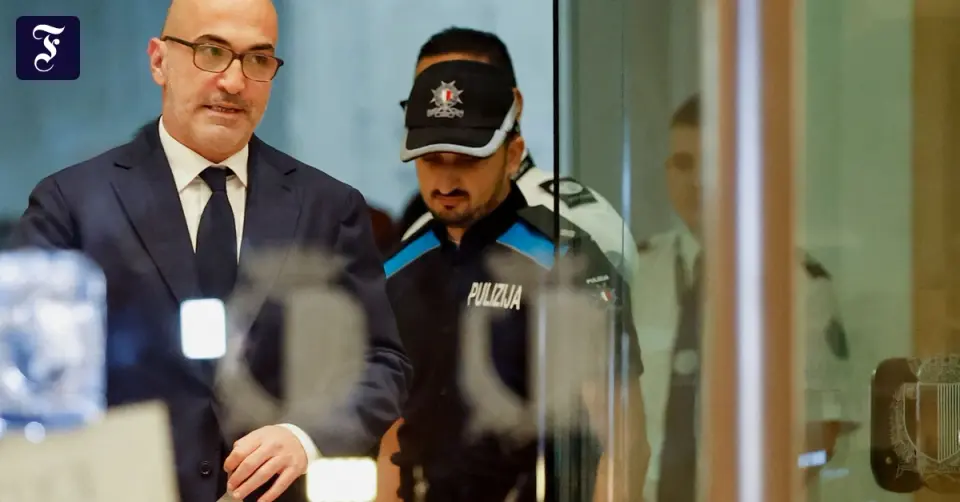
Nearly nine years after the death of Maltese investigative journalist Daphne Caruana Galizia, a jury has acquitted businessman Yorgen Fenech of all charges. According to the Frankfurter Allgemeine Zeitung, the jury voted 8-1 on Wednesday evening to find the 44-year-old guilty of neither murder nor founding a criminal organisation. The verdict caused widespread shock in Malta and abroad.
Caruana Galizia was killed by a car bomb near her home in Bidnija on 16 October 2017. She was 53 years old. The prosecution had accused Fenech of ordering the attack because the journalist was about to publish further compromising articles about his business practices and illegal activities. Fenech denied the allegations. Following the acquittal, he left the courthouse through the main entrance without answering questions from reporters. He had been arrested in 2019 when he attempted to leave Malta aboard his yacht.
Five convictions – the mastermind remains disputed
Five men have already been convicted in the murder case. Brothers George and Alfred Degiorgio, as well as Vince Muscat, built the car bomb, placed it under the vehicle and detonated it remotely. They received prison sentences ranging from 15 to 40 years in 2022. Robert Agius and Jamie Vella were sentenced to life imprisonment in June 2025 for procuring the explosives for the attack. Following Fenech's acquittal, the question of who ordered the murder remains legally unresolved.
The defence had argued during the trial that the chain of command extended further than to Fenech. His lawyers pointed to Keith Schembri, the former chief of staff of Prime Minister Joseph Muscat, as the actual mastermind. "All roads lead to Keith, and all bridges to Keith have been burned," said defence lawyer Charles Mercieca in his closing statement. The police had not adequately investigated leads pointing to Schembri's involvement, according to the defence. Fenech himself repeatedly stated that he had "neither ordered the murder of Daphne Caruana Galizia nor of anyone else".
Prosecutor Anthony Vella addressed the jury after 55 days of trial with the words: "You are to decide whether a man with far-reaching contacts in politics and among the heads of public institutions had enough power to order the murder of Daphne."
Family speaks of justice denied
Caruana Galizia's family declared immediately after the verdict that the murdered woman was being denied "the justice she deserves" nearly nine years after the crime. Her son Matthew Caruana Galizia called the acquittal a "terrible decision, from which our country may never recover". The jury had a duty to ensure justice and had shirked that responsibility.
Her sister Corinne Vella said: "Everyone is now at much greater risk, because it sends the message that journalists can be killed with impunity. We suspected that an acquittal was likely. But it is like the death of a person – it is still a shock." In a joint statement Thursday morning, the family demanded that all those who enabled, facilitated or protected the perpetrators of the murder be held accountable. The institutional failings that had made the attack possible had "still neither been addressed nor remedied".
Media organisations demand consequences
International press freedom organisations responded with sharp criticism. The European Centre for Press and Media Freedom stated that the state had "failed Caruana Galizia twice: it did not protect her while she lived, and it failed to ensure justice after her murder". The failure to ensure accountability sends an alarming message to all those who attack and kill journalists.
Reporters Without Borders (RSF) declared it was "more than outraged" and demanded "full justice". The verdict meant that the Maltese authorities had failed to identify and prosecute those responsible for orchestrating the murder. The authorities must "enforce the long-overdue measures to protect journalists and media freedom".
The Maltese campaign group Repubblika called for a "national reckoning" with the "culture of impunity" in the smallest EU state. Those who bore political responsibility for this during Joseph Muscat's time in office should not be allowed to participate in important positions in public life.
Political repercussions since 2017
The murder had shaken Malta for weeks at the time and led to sustained protests against then-Prime Minister Joseph Muscat of the social democratic Labour Party. He was accused of obstructing investigations to protect allies and senior cabinet members. Muscat resigned in January 2020. An independent investigation published in 2021 by three senior judges found that the government had created a "climate of impunity" for those who wanted to silence Caruana Galizia. Muscat's successor Robert Abela was confirmed in office in the parliamentary elections of 2022 and 2026.
Source: Frankfurter Allgemeine Zeitung