Puerto Rico prosecutors blocked from presenting voter-fraud charges in prison drug cases
Investigators had prepared charges for electoral fraud in Puerto Rico prisons, but superiors ordered the exclusion of those charges following Trump's victory and González-Colón's election as governor.
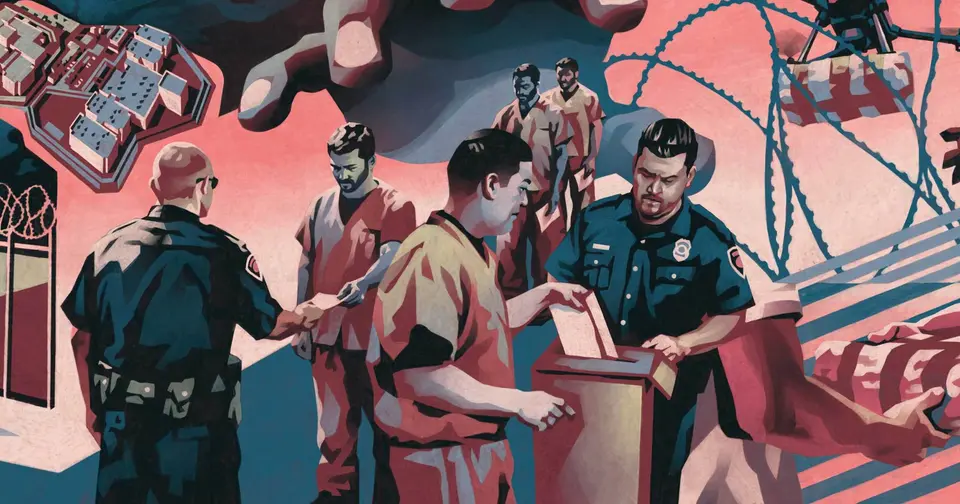
Puerto Rico prison drug-for-votes case halted after 2024 elections
A ProPublica investigation reveals that federal prosecutors in Puerto Rico had prepared charges for electoral fraud linked to drug trafficking in prisons, but were instructed by their superiors not to file them, days after Donald Trump won the presidential election and Jenniffer González-Colón took office as governor.
Drugs in exchange for votes in prisons
What began as a routine drug-trafficking case within Puerto Rico's correctional facilities evolved into something considerably more serious. Anti-drug agents discovered that leaders of a gang known as Los Tiburones—officially named "Grupo 31"—distributed illicit substances among inmates not only in exchange for money, but also in exchange for their votes in elections.
The votes, according to investigators' findings, were directed towards González-Colón, a long-serving Republican and firm ally of President Trump. To ensure the obedience of prisoners, many of them addicts, the gang leaders resorted to threats of violence and the deprivation of drugs. Employees of the corrections department participated in the scheme by looking the other way whilst the gang operated.
Puerto Rico, along with just a couple of US states, allows inmates to vote. Puerto Ricans residing on the island can participate in all elections except presidential ones. Deliberately offering money or benefits in exchange for votes constitutes a serious crime, punishable by fines of up to $250,000 and up to two years in prison.
Solid evidence, investigation cancelled
Four people with direct knowledge of the case informed ProPublica that investigators had gathered solid evidence of electoral fraud involving both inmates and prison employees. The prosecutors also attempted to determine whether González-Colón or her campaign had any connection to the scheme. The sources requested anonymity because they are not authorised to speak publicly about the matter.
While federal prosecutors were refining a formal indictment in November 2024—days after Trump won and González-Colón obtained the governorship—they received an unexpected order: their superiors at the Federal Prosecutor's Office of the District of Puerto Rico instructed them to remove the charges against inmates related to votes and all charges against prison staff.
In December, charges were filed against 34 inmates and their accomplices for drug distribution—which caused at least four overdose deaths—money laundering and firearm possession. Although judicial documents described the scheme of "drugs in exchange for votes", they did not include a single charge related to electoral fraud.
Shortly after Trump took office as president, a superior communicated to the principal prosecutor, Jorge Matos, that he should not continue with that line of investigation, according to the same four sources. Matos did not respond to ProPublica's attempts to contact him by telephone, text message or social media.
Internal frustration and questions about politics
For those working on the case, the decision proved especially difficult to understand given the new government's discourse: Trump issued presidential orders in early 2025 aimed at combating drug trafficking, and declared electoral integrity as "fundamental" to American democracy.
"Before the elections, the investigation was definitely moving full steam ahead," said a person familiar with the case. "After the elections all that changed."
"We have worked hard to make a difference," added another source. "We are frustrated, but there is nothing we can do."
Those following the case wondered whether political considerations had weighed more heavily than law enforcement. Trump congratulated González-Colón in a letter circulated during his inauguration in January 2025: "I am very proud of your resounding victory," he wrote. That same month, González-Colón pushed for the installation of a Trump statue in the San Juan Capitol. "He deserves it," she stated, according to an official post by Puerto Rico's Federal Affairs Administration on X.
Federal prosecutor's office response
W. Stephen Muldrow, federal prosecutor for the District of Puerto Rico, was appointed by Trump in 2019 and has remained in office since. His name appears in the charges filed alongside those of three assistant prosecutors. Muldrow indicated to ProPublica that his office does not comment on ongoing investigations, except through press releases or press conferences.
An office spokesman noted in a subsequent email that the charges were filed during the Biden administration and under Puerto Rico's previous government.
Spokeswoman Lymarie Llovet-Ayala wrote that pursuing charges against corrupt public officials "has always been and continues to be a fundamental priority" of the office. "When there is sufficient admissible evidence to file charges against persons involved in cases of public corruption, the Federal Prosecutor's Office of Puerto Rico will vigorously pursue such charges, as required by the Justice Manual," she added.
Although several of the accused have accepted plea agreements with the prosecutor, most cases for drugs and money laundering against the inmates and their associates continue in the courts. In judicial documents linked to another case file, a trial judge mentioned in October 2025 an ongoing independent investigation related to the matter.
Source: Google News PR — Crime