Removal of Paraguayan President Peña following Ueno banking crisis, placed under house arrest
Paraguay's Senate unanimously removed Santiago Peña for mismanagement linked to the failure of Ueno Bank, which affected nearly three million depositors.
Santiago Peña ousted in Paraguay following Ueno Bank collapse
Paraguay swore in a new president on Friday: Pedro Alliana, 52, took the oath before the Senate hours after the unanimous removal of his predecessor Santiago Peña, according to DHnet. Peña, 47, was placed under house arrest immediately afterwards, pending his hearing.
"Fellow citizens experiencing a very difficult situation because of the financial chaos will be fully compensated. We will not leave them alone," Alliana declared during his first address to the Senate.
Unanimous removal for "poor exercise of duties"
Paraguay's Senate unanimously found Peña guilty of "poor exercise of his duties," directly linked to the collapse of online bank Ueno. His term was supposed to run until 2028. A close ally of Washington, the former head of state had been president since 2023.
During the impeachment trial, senators accused him of having "permitted, tolerated and failed to correct a diversion of pension funds towards a bank linked to the presidential circle". Senator Adrián Vaesken summed up the accusations by referring to "subordinating public interest to private interests". Senators also recalled that Peña was, even before his presidency and until 2025, a shareholder in the financial holding company that owns Ueno Bank.
Absent from the hearing, Peña was defended by his lawyers, who challenged the validity of the trial. One of his advisers, Ricardo Preda, argued that Parliament "does not have jurisdiction to judge a person who has decided to relinquish his office," referring to the resignation submitted the previous day by the former president. Parliament had rejected this resignation: had it been accepted, Peña would have become a lifetime senator with parliamentary immunity, as provided for by the Constitution.
One hour after the vote, placed under house arrest
Barely an hour after his removal, prosecutor Silvia Margarita González Vester announced to journalists that Peña would be placed under house arrest. He was to be heard the following Saturday at 11:00 (14:00 GMT) for the alleged offences of breach of trust, abuse of influence and management for personal purposes.
Banking crisis triggers political turmoil
The crisis erupted on Tuesday when Paraguay's Central Bank (BCP) placed Ueno Bank under receivership for insolvency. Flourishing in recent years, the online bank claimed nearly three million customers — roughly half the country's population. The BCP's intervention froze their deposits, also affecting companies, institutions and pension funds.
Pedro Alliana, from the same conservative Colorado Party as Peña, had also been implicated in the banking crisis. In his case, however, Parliament voted against opening an impeachment trial.
Reimbursements under way, euphoria and scepticism on the streets
The Central Bank began returning funds to savers. "The process of paying advance guarantee payments to Ueno Bank depositors began on Thursday," José Maciel, administrative director of the BCP's deposit guarantee fund, told AFP. The first disbursements concern depositors whose holdings in Ueno represented between 1 and 10 million guaraníes, or between 160 and 1,600 US dollars. One of Peña's lawyers indicated that approximately 700,000 people had already received their first payments on Friday.
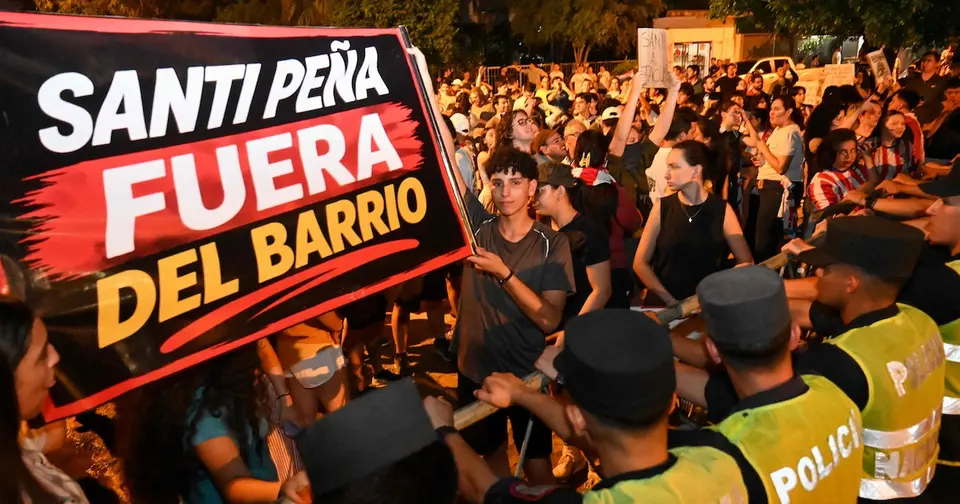
A few hundred people gathered outside Parliament welcomed Peña's removal with jubilation. "Finally, finally Santiago Peña is gone, finally justice has been done!" exulted Jessica Aquino, a 32-year-old employee, to AFP. "Now we want him to return our money and end up in prison!"
Jonathan Riverola, 24, a student whose family is directly affected by the deposit freeze, was more measured. "A relief! We got what we wanted, the conviction, the trial and there it is! But not so happy, because his successor will be Alliana," from the same dominant conservative party, he tempered.
Regional effects: Argentina and Conmebol affected
The Paraguayan banking crisis also had repercussions beyond the borders. In Argentina, a thousand employees of technology company ITTI, which belongs to the same group as Ueno, were suspended for thirty days without pay. Meanwhile, South American football confederation (Conmebol) held approximately 13 million dollars in the bank, according to an AFP internal source who requested anonymity.
Source: DHnet