Paraguayan prosecution accuses former president Santiago Peña of criminal association in Ueno Bank case
The prosecution expanded charges against the former president, who faces a sentence of up to 15 years in prison. The former head of the Central Bank and four other officials were also charged.
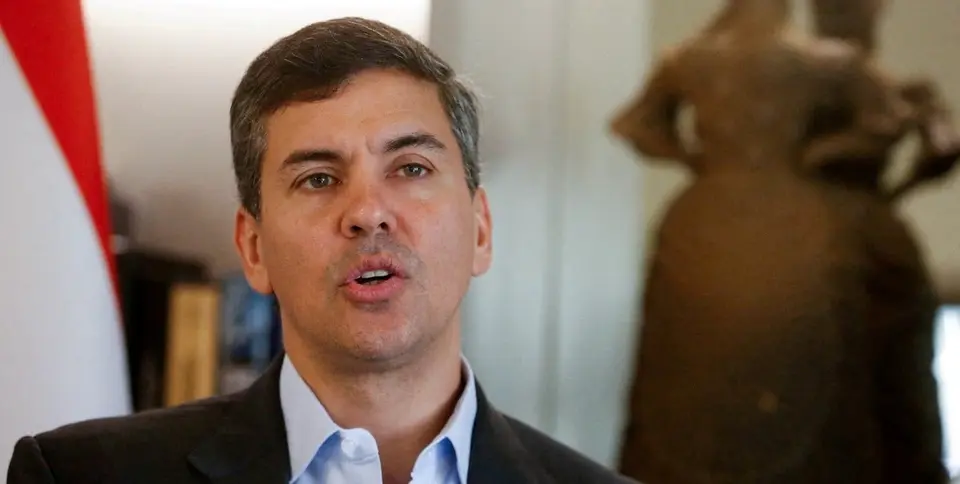
New charges against Peña and former Central Bank executives in Ueno scandal
The Paraguayan prosecution accused former president Santiago Peña of criminal association on Friday, along with the former head of the Central Bank of Paraguay (BCP), Carlos Carvallo, according to ellitoral.com. The charges also include three former members of the BCP board and the superintendent of the banking sector, in connection with the investigation into the intervention of Ueno Bank, an entity that received substantial public funds during Peña's government.
Prosecutor Christian Benítez explained to the press that the criminal association charge is added to those of breach of trust and self-dealing, charges with which the former president had already been indicted. Benítez clarified that criminal association and breach of trust are classified as "predicate" offences to money laundering. The expected sentence against Peña remains at fifteen years in prison.
Among the newly indicted is banking superintendent Holger Insfrán, detained the previous day during a raid on his home. Former BCP directors Marco Aurelio González, Liana Caballero and Miguel Mora were arrested the same day.
According to a prosecution document accessed by the AFP agency, "from the Presidency of the Republic Santiago Peña Palacios would have acted as head of the structure". The Public Ministry maintains that Peña headed an "organised and hierarchical structure embedded within the state apparatus itself" designed to subordinate the BCP's financial controls to the interests of the Vázquez Group, owner of Ueno Bank.
Prosecutors state that the former president would have held "periodic clandestine meetings" with Federico Vázquez, president of the group, at the presidential residence, and would have issued instructions to prevent the intervention of the bank. He is implicated in the placement of hundreds of millions of dollars in public funds in that entity, in which the Vázquez Group—with which Peña would have had shareholding ties—exercised control.
The BCP officials, according to the prosecution, would have acted in a coordinated manner to cover up the financial irregularities of Ueno and allow it to continue accepting deposits despite alerts about its insolvency.
Peña was removed last week through an impeachment trial in the Senate for "poor performance of his duties" and was detained a few hours later.
Source: Google News PY — Crime