Ueno Bank fraud in Paraguay: Peña's removal and 800 million dollar damage to public assets
Congress removed President Santiago Peña following the collapse of Ueno Bank, with damage to public assets estimated at 800 million dollars.
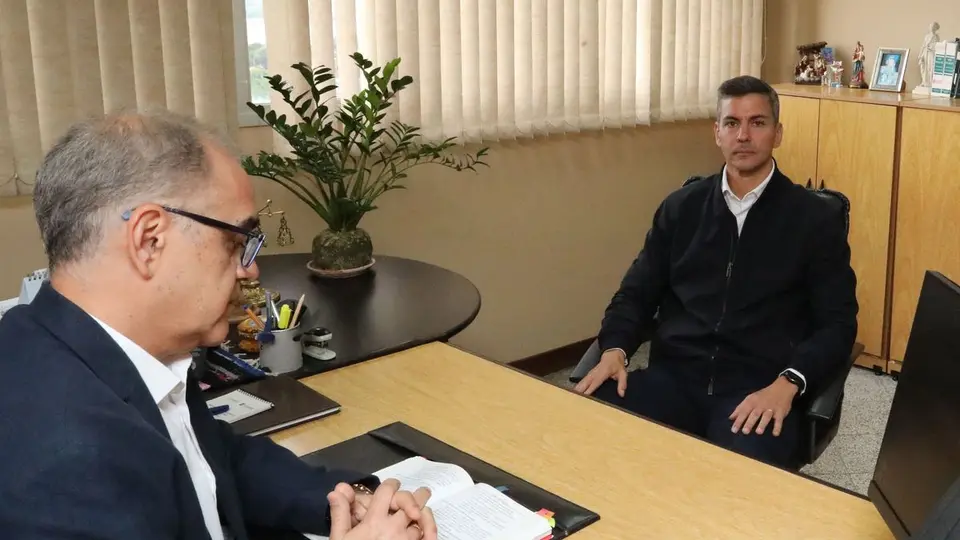
Ueno Bank collapse displaces Peña from Paraguay's presidency
According to diariolasamericas.com, the political-financial scandal in Paraguay took definitive shape on Tuesday, 3 November, when the closure of Ueno Bank was declared. Three days later, Congress unanimously removed President Santiago Peña from office.
The prosecutor's office ruled in favour of preventive detention for the now former president, charged with alleged breach of trust and administration for personal gain. The investigations, which are only beginning, could extend for up to six months, with the possibility that charges against the Colorado Party representative could increase; the party's leader is former president Horacio Cartes.
Extent of damage to the public purse
Damage to public assets is estimated at 800 million dollars. The bank held deposits from large state entities and companies: Itaipú Binacional deposited 158 million dollars, the Ministry of Economy and Finance deposited 80 million, and deposits from the National Electricity Administration (ANDE) and pension funds are also listed. Even Paraguay's volunteer firefighters had approximately 2,000 million guaraníes—roughly 320,000 dollars—deposited at Ueno.
The financial collapse devalued the guaraní by 10 per cent and damaged the country's image among foreign investors. The financial panic, however, gradually subsided: the Central Bank of Paraguay (BCP) and other banks began to pay savers in phases, initially those with up to 10 million guaraníes. Approximately 700,000 people received payments in the first few days; subsequently, payment of larger amounts was enabled.
A structural pattern from those in power
Political scientist Hugo Duarte argues that the Ueno Bank crisis was not an unpredictable financial accident. "It is very difficult not to identify within the factors a sort of complicity and preparation from those in power that ultimately led to this crisis, because there is a series of facts that now, when linked together, show a pattern: President Peña's behaviour as a sort of preparation of the scene so that not only would Ueno Bank collapse and defraud people, but also have a privileged relationship with the State, especially in the capture of public funds," explains Duarte.
Peña came to the presidency in 2023 and was at that time a shareholder of Ueno Bank until 2025. Journalist Marcela Portillo, of the newspaper La Clave de Ciudad del Este, notes that this link was public: "When Ueno became a bank, former president Peña was a minority shareholder. Subsequently, he sold his shares, but there was indeed government support and a sort of protection."
Regulator captured from within
Duarte details how Peña appointed Carlos Carvallo as president of the BCP, who was then president of Financiera Ueno. "Furthermore, he presents a bill to relax conflict-of-interest rules to adapt conditions to Carvallo. From that point on, Carvallo grants the banking licence to Ueno, gives him 20 years to manage a toxic portfolio of 300 million dollars from Visión Banco and relaxes access to funds from the Social Security Institute (IPS)," the political scientist specifies.
The entity's irregularities had been known for a year and a half and had been reported, according to Portillo, who adds that the collapse was expected for the end of Peña's term.
The ignored memorandum
In July 2026, Fernando Rivarola, then Manager of Supervision at the Banking Superintendency of the BCP, delivered a memorandum in which he warned of severe asset mismatches, unsecured operations that threatened the sustainability of the bank and savers, according to Diario Hoy. The bank had also exceeded the permitted limits for loans to companies and individuals linked to its controlling group.
Furthermore, Ueno sold a credit portfolio to another company to conceal its regulatory excess, and the money for that purchase came indirectly from the bank itself, according to the same publication.
Duarte reveals that the crisis intensified when the regulatory bodies attempted to cover up the insolvency. "A Banking Superintendency official presented a report and summarised the investigation—a file of almost 2,000 pages—to be discussed at the BCP's board meeting. It was Carvallo himself who removed the matter from the agenda and shelved the file. The next day, the technician who presented the report was transferred to another unit," the political scientist states.
The rescue attempt that precipitated the collapse
The breaking point came when Peña attempted to use the BCP's Guarantee Funds to execute a rescue of Ueno Bank. "That was the last straw. He began to lose political support because the evidence was too clear. The technical sector of the BCP pressured because the crisis was going to be worse. They closed the bank in the early morning and Peña lost the parliamentary shield he had," Duarte asserts.
Institutionality and political continuity
The prosecutor's office's actions and payment to small and medium-sized savers are cited as signs that Paraguayan institutions responded, at least partially. Pedro Alliana, who was vice-president, was appointed head of State by Congress and will complete the presidential term until 2028, when the next elections will be held.
Peña, meanwhile, also faced popular judgement: savers protested outside his residence with horns and megaphones, singing the song "Two-legged Rat," popularised by Paquita la del Barrio.
Source: Google News PY — Crime