Drugs impregnated in letters intercepted in prisons: 721 cases in 2025
Attempts to introduce drugs into Romanian prisons increased by 242% between 2020 and 2025. Letters impregnated with banned substances represent one of the methods used.
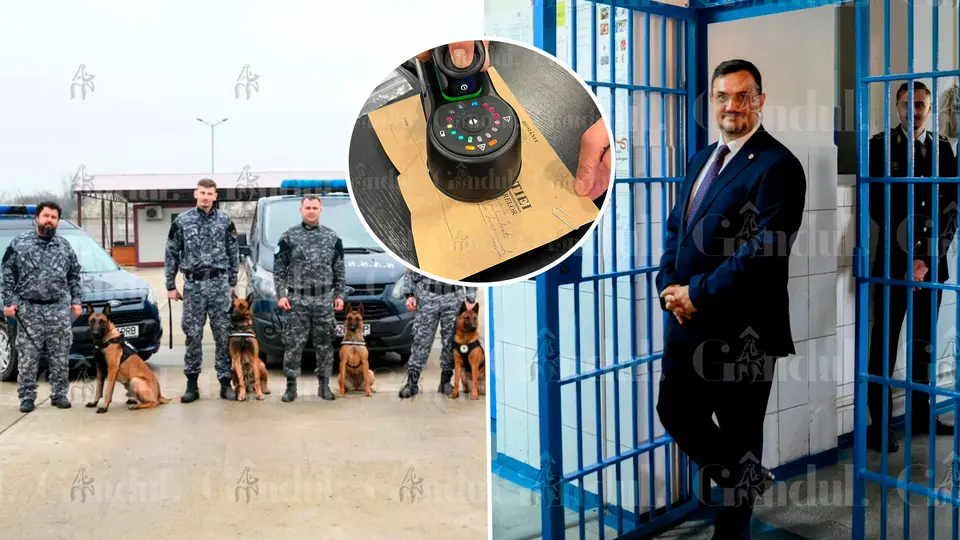
Love letters with drugs: attempts to introduce banned substances into prisons have tripled in five years
Letters sent to detainees have come to be used as a vehicle for banned substances, according to information published by Gândul based on data provided by the National Prison Administration (ANP). Paper impregnated with drugs — including cocaine and plant residues — is introduced into envelopes sent apparently as ordinary correspondence or love letters.
The number of situations involving identification of substances suspected of being narcotics in prison units increased from 211 in 2020 to 721 in 2025 — an increase of approximately 241.7%. Compared to 2024, the jump is 259 cases, equivalent to an increase of 56.1% in a single year.
In the first nine months of 2026, 449 situations have already been recorded, of which 227 were intercepted before the substances reached detainees, whilst 222 were discovered after the substances had already come into their possession.
Six-month investigations, searches at private residences
Three notable cases from the past year have been investigated by authorities for six months, according to a statement to Gândul by ANP director Bogdan Burcu. The investigations targeted both prison units and private properties, where searches took place as part of the same cases.
"The investigations by law enforcement bodies focused on a series of repeated shipments over this period, monitored by authorities to prove criminal activity and to identify all persons involved, both from outside and from inside," Burcu specified.
He added that the phenomenon can be associated with both personal consumption and subsequent trafficking of banned substances amongst persons in custody.
Various methods of introducing drugs
Impregnated letters are not the only method used. According to director Burcu, amongst the most frequent methods are:
- throwing packages over the security perimeter of the prison unit;
- concealing substances in objects or food products received through the visits and packages sector;
- hiding drugs in personal baggage when transferring between units;
- introducing substances upon return to prison after external activities — court appearances, transfers to medical units or work at external work points;
- involvement of persons from outside who have access to the prison or external work points.
Increasingly effective interception
The ANP also signals a change in the distribution of cases depending on the moment of discovery. In 2025, of the 721 recorded situations, 454 were identified before the substances came into the possession of detainees — compared to only 199 in 2024.
"The increase in the number of identifications made before substances come into the possession of persons deprived of liberty reflects the intensification of efforts at prison units to strengthen control and inspection activities," say representatives of the ANP, cited by Gândul.
The institution regards this development as "a favourable indicator of improved preventive measures", arguing that early interception limits both consumption and trafficking within prisons.
Equipment and trained dogs deployed in detection
Beginning in 2023, the ANP implemented a permanent plan to prevent the introduction of goods and banned substances into detention units. The plan aims to identify trends in the phenomenon and eliminate vulnerabilities in the operational circuit of prisons.
Prison units are equipped with drug testing kits for staff at control posts and the visits sector, X-ray machines and metal detector gates. Some units also have canine teams specially trained to detect banned substances. Three units purchased additional control equipment in previous years, according to ANP data provided to publication Gândul.
When correspondence raises suspicion, "legal measures are taken to identify, seize and hand over to competent institutions, in order to carry out specific laboratory analyses," the ANP specifies.
Source: Gândul