Laicised priest Balázs Szűcs still lives near young people – authorities remain inactive
Balázs Szűcs, expelled by the pope and convicted of child abuse, lives in Hargita County among adolescents. According to 444's investigation, authorities are not taking action.
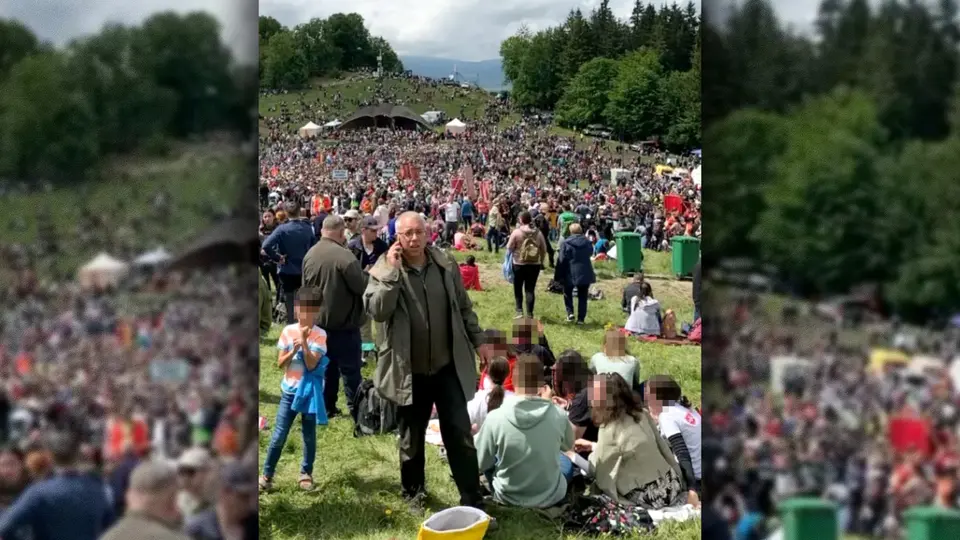
Laicised priest living with young people in Hargita County – authorities not intervening
According to an investigation by 444, Balázs Szűcs, who was expelled from the priesthood by the pope for child abuse, continues to associate openly with young people in the Hargita Mountains – whilst the authorities remain inactive.
At least four independent sources described to 444 journalists in identical terms where to find Szűcs: at a house accessible by jeep from a specific section of road in the Hargita, he lives together with several others. The newspaper's reporters walked the dirt roads to locate the house where the former priest, counted among Hungary's most notorious sexual abusers, is staying.
The article centres on the question: what happens to the perpetrator and the injured community around him after the ecclesiastical verdict?
The ecclesiastical investigation concluded – the problem remains
The investigation by the Esztergom archbishopric was completed years ago and ended with Balázs Szűcs's complete expulsion and laicisation. The process was partly initiated by reports from young people in Piliscsaba and their parents. The public followed the case for a long time primarily from the perspective of the victim, Attila Pető, who disclosed his name and face.
Following this, the Catholic community in Piliscsaba themselves conducted an unofficial reckoning: they confronted Szűcs directly with the victims, communicated transparently and widely about what had occurred, and organised spiritual care for those affected with the involvement of mental health professionals. At least twenty victims are counted locally, whilst the number of secondary and tertiary affected parties in surrounding families, schools and camps can be estimated at several hundred.
According to 444, ecclesiastical experts drew attention to the fact that the handling of such a case should not fall to the community – it should take place within institutional frameworks.
Inaction by authorities in Hargita County
The newspaper's investigation also covers how the police allowed the serial perpetrator to escape, and why the child protection authority in Hargita County does not act despite – according to 444 – knowing itself that Balázs Szűcs is living with young people.
The broader context of the case also features in the article: the handling of cases involving sexual abuse is generally difficult, and with child abuse community judgement begins particularly quickly. Some ecclesiastical institutions – such as the Benedictine or Piarist orders – have by now developed professional-level communication for such situations, but this too is the result of a long developmental process. A decade ago, when the ecclesiastical investigation into the Szűcs case concluded, the #metoo movement did not yet exist, and scarcely anyone spoke publicly about child abuse within the Church.
In the second part of 444's two-part investigation, journalists examine: why only two reporters can track down one of Hungary's most notorious sexual abusers, whilst the authorities do not intervene.
Source: 444