Tocoma scandal: Chavism hands hydroelectric "rescue" to Impsa after $10 billion losses
The Venezuelan government cedes to Argentine company Impsa the Tocoma dam rescue project, an undertaking halted since 2013 after diverting up to $10.370 billion in one of chavism's largest corruption scandals.
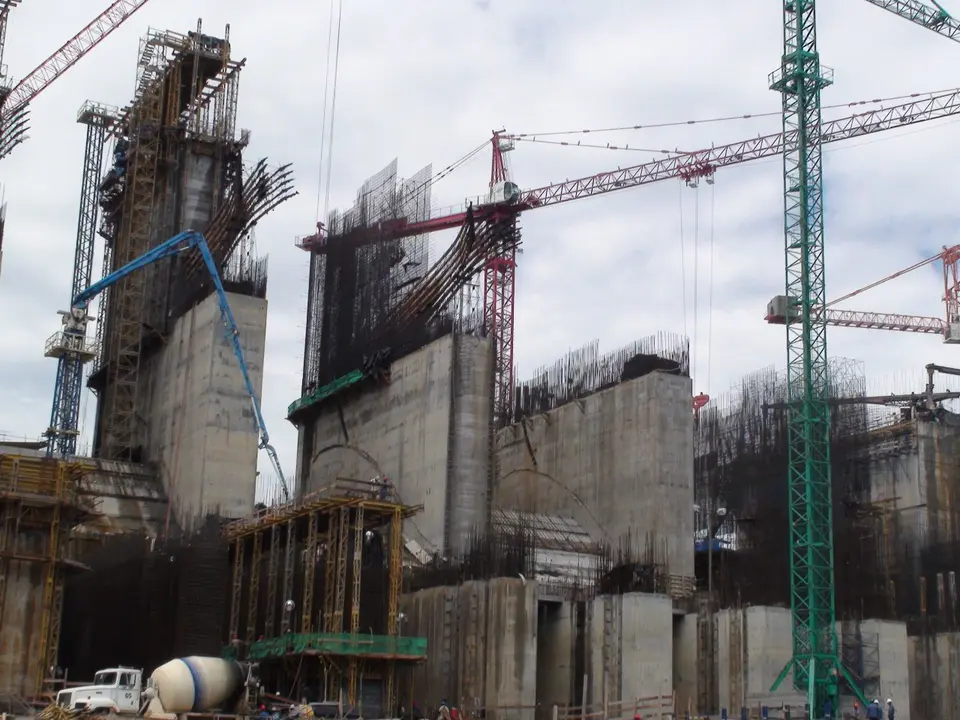
Tocoma: $10 billion disappeared, and now the regime trusts Impsa again
According to Google News VE — Crime, the Chavista government has ceded to Argentine company Impsa — already implicated in the multi-million-dollar Tocoma dam fraud — the so-called "rescue" of that unfinished hydroelectric facility on the Caroní river, in one of the largest corruption scandals of the Bolivarian era.
The work was initiated in March 2007, at the height of the oil boom, and halted in 2013 when its civil works had reached 87% completion. In its construction, at least $9 billion was squandered, and up to $10.370 billion according to the research laboratory AidData, from the College of William & Mary university in Virginia. That figure is equivalent to three times the original budget and double what the expansion of the Panama Canal cost.
The dam, renamed Manuel Piar, was projected to provide 2,160 megawatts to the national electricity grid — energy sufficient to supply between five and six million households — but never entered into operation. The halt has directly contributed to the energy crisis that millions of Venezuelans suffer today, according to experts consulted for this report.
Multi-million-dollar financing without accountability
The project accumulated contributions from multiple international sources. China joined in 2011 with $4.170 billion channelled through the Chinese-Venezuelan Joint Fund, within a loans scheme of around $62 billion in exchange for future oil sales. CAF contributed $1.500 billion and the Inter-American Development Bank (IDB) granted two credits: one for $800 million in July 2009 and another for $750 million in November 2005, according to the bank's own records.
"Even in 2012, after Chinese investment had been announced, the vice-president of Corpoelec said that another $3.300 billion investment would be necessary," cites AidData in its analysis.
Through just those three channels — China, CAF and IDB — $6.350 billion in financing was channelled. Part of those funds was allocated to Impsa for the Kaplan turbines which, according to investigations, never arrived.
As Venezuela neither completed the dam nor repaid the loans, both CAF and the IDB were prevented from financing new infrastructure projects in the country.
Documented overpricing and lack of oversight
Engineer José María de Viana, one of Venezuela's most recognised public services experts, points out that evidence of overpricing is clear: "We know there is overpricing because there is Caruachi. Tocoma is a clone of Caruachi, which cost 2.300 billion dollars".
The Caruachi hydroelectric facility, built by the former Edelca from 1997 onwards, was already generating energy in 2003 and was completed in 2006 with 2,300 MW in 12 Kaplan-type turbines — identical to those planned for Tocoma —. Its cost was $2.300 billion, also financed by the IDB and CAF.
"Between the IDB and CAF there were 1.500 billion dollars, so what the country had to put in was 800 million. And well, they found a way for the thing instead of costing, as it should have cost, 2.300 billion, to cost 10.000 billion dollars and it still hasn't been finished", says De Viana.
In November 2012, the contract with Impsa was recalculated from $451 million to $1.150 billion, an increase of 154%, according to a 2017 report from the National Assembly then under opposition control, which demanded explanations for that increase financed by CAF.
That same parliamentary report calculated the opportunity cost of the halt at $16 billion, measured only in the first eight years: the figure results from accounting for hydrocarbons burned to generate the electricity that Tocoma never produced.
A consortium of companies under suspicion
In the Tocoma saga participated the OIV Consortium, led by Brazilian construction company Odebrecht — with 50% participation —, Italian Impregilo (40%) and Venezuelan Vinccler for civil works. The manufacture and installation of the electromechanical component, including the ten Kaplan turbines, was assigned to Metalúrgicas Pescarmona, known as Impsa.
Completing the contracting scheme were firms such as HPC Venezuela (Hitachi), Consorcio Uriaparí, Consultores Occidentales, Deproex, GERINSA, INELMECA, Y&V Ingeniería y Construcción, Consorcio DECOYNE, TSK Ingeniería y Sistemas de Venezuela and French Tractebel.
Experts consulted concur that there were widespread overprices and that no body oversaw the correct use of the financing. There are no audit reports from the General Comptroller's Office, there is no official document on the state of the abandoned works and the accumulated amount of interest on the original debt is unknown, as is the amount owed to national contractors.
Only the regime knows the real figure
The actual magnitude of losses remains undetermined. It is unknown how much has been spent, indebted or misappropriated in the national component of the work, paid in bolívares, for a project that was supposed to enter full operation in 2020.
By way of reference, between June 2011 and November 2019 — whilst Tocoma remained halted — Brazil built and put into operation the Belo Monte hydroelectric facility, in the Amazonian state of Pará: with 11,233 megawatts, five times the capacity projected for Tocoma, it is the fourth largest in the world, and had a cost of around $10 billion, according to Brazil's Court of Accounts.
De Viana, who prefers to centre the analysis on the future, acknowledges that reviewing what occurred will require the intervention of lawyers. "What happened there will have to be reviewed," he says, without delving into criminal responsibilities.
Source: Google News VE — Crime