Zapatero's daughters received €100,965 from firm linked to pro-Chavism digital campaign
Spanish police reports indicate that Laura and Alba Rodríguez Espinosa received payments from Venqis, a Panamanian company linked to digital manipulation in Venezuela.
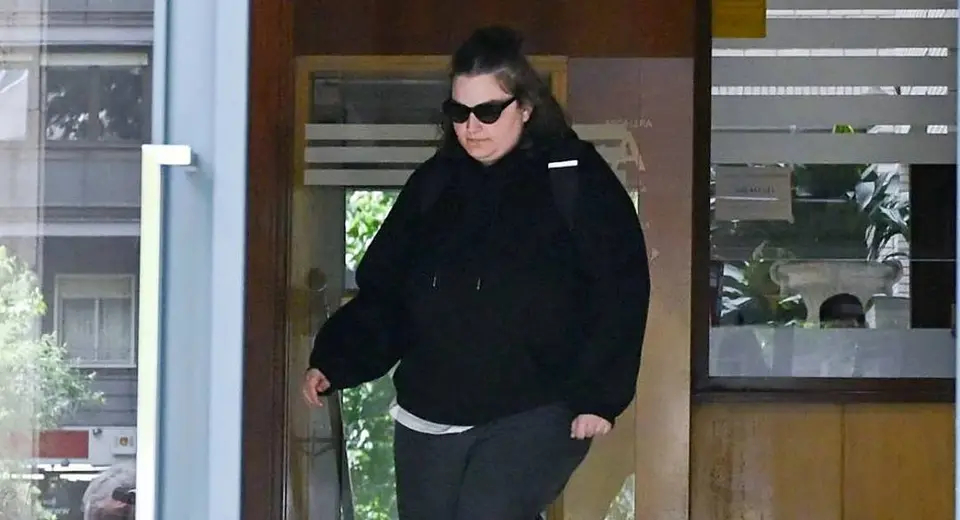
Spanish police report links payments to Zapatero's daughters with Chavista digital network
Reports from the Spanish Tax Agency and the Economic and Fiscal Crime Unit (UDEF) of the Spanish National Police, incorporated into the Plus Ultra case, indicate that Laura and Alba Rodríguez Espinosa—daughters of former Government president José Luis Rodríguez Zapatero—received €100,965 between 2023 and 2024 through their company Whathefav SL for work carried out for Venqis, a company based in Panama. This is reported by correodelcaroni.com, citing the Spanish publication El Confidencial.
According to the same reports, Venqis "advised on campaigns that coincided with the activity of hundreds of false accounts on the Twitter application, which spread disinformation and propaganda in favour of Bolivarian candidates for governorships in Venezuela and officials in Panama, Bolivia and the Dominican Republic".
The businessman behind Venqis
Brazilian businessman André Golabek appears identified as the central figure behind Venqis. The company formally presented itself as a political consulting agency, crisis management and electoral campaigns firm. However, an investigation by the Latin American Centre for Journalistic Investigation (CLIP) and the Digital Mercenaries project documented a structure dedicated to digital manipulation and covert political communication.
The Venezuelan focus of that operation was situated in the regional elections of November 2021. According to the Spanish police reports, Golabek would have promoted hundreds of false accounts on X—then Twitter—to support Chavista candidates and pressure opposition candidates to refrain from participating in the elections. The activity also reached Panama, the Dominican Republic and Bolivia, where the accounts supported candidates aligned with the Grupo de Puebla.
Troll farm documented in 2021
The Venezuelan collective Cazadores de Fake News identified accounts at that time that published in a coordinated manner in favour of PSUV candidates Jorge Arreaza—candidate for governor of Barinas—, Héctor Rodríguez, of Miranda, and Carmen Meléndez, of the Capital District. These were profiles with few followers that adopted fictional personalities to intervene covertly in online electoral conversation.
Cazadores initially detected at least 187 Twitter profiles operating inauthentically and in a coordinated manner; the number reached 357 in subsequent investigations. The profiles praised government-backed candidates, rejected opposition candidates and encouraged boycotts of the elections.
El Confidencial indicates that the operation of those profiles coincided with the awarding of public contracts to companies within Golabek's network, under concepts such as development of open government applications, maintenance of digital services or advice on image and communication.
VenApp: from citizen tool to instrument of control
In 2022, the Nicolás Maduro administration launched VenApp as an application for citizens to report public service problems. The CLIP investigation determined that VenApp was not designed by Venezuelans, but by a Panamanian firm connected with other companies of that nationality and a Dominican one, all linked to Golabek's name as head of Venqis.
The application ended up being used to classify citizens according to their political positions, for so-called "citizen snitching" and for electoral surveillance. In 2024, Maduro asked on official television to use VenApp to report to Bolivarian militias any suspicious behaviour. The data gathered were used in the "Operation Tun Tun", described by human rights defenders as State terrorism. In 2025, the denunciation module was reactivated.
Spanish investigations connect VenApp with Nolatech, a company within Venqis's commercial network, and with a network of false accounts associated with Golabek that promoted the downloading of the application.
Whathefav SL and El Server
Reports from the Tax Agency indicate that Whathefav SL received €28,800 from Venqis in 2023 and another €72,165 in 2024. The documents incorporated into the summary of the Plus Ultra case do not specify what work was carried out by Laura and Alba Rodríguez Espinosa for that company.
However, the disbursements coincide with the creation in Venezuela of El Server, a platform focused on video games and electronic sports launched in April 2023, in which Whathefav SL participated. El Confidencial argues that Zapatero's daughters obtained Maduro's approval to launch that project, and that the El Server lead points once again to Nolatech, a subsidiary of Venqis and company related to VenApp.
The Plus Ultra case
The findings form part of the Plus Ultra case, an investigation examining alleged illegal commissions, abuse of influence and money laundering. The evidence suggests that Zapatero would have used Whathefav SL to channel payments for alleged influence over the executive of Pedro Sánchez and other foreign governments.
Among other clients of Whathefav SL related to Zapatero's circle is the firm Inteligencia Prospectiva SL—owned by two Venezuelan businessmen—which would have paid €561,440 between 2021 and 2024; Huawei, with transfers of €80,000; and the wife of Javier de Paz, deputy to the president of Telefónica and president of Movistar Plus, with payments of €10,527 in 2024.
Laura and Alba Rodríguez Espinosa have not been charged so far in the investigation by the Central Court of Instruction number 4 of the National Court.
Source: Google News VE — Crime