Death of Niño Guerrero and Tren de Aragua: transnational crime continues without borders
The elimination of the Tren de Aragua leader by a US Southern Command attack in Venezuela exposes a regional security crisis that transcends borders and governments.
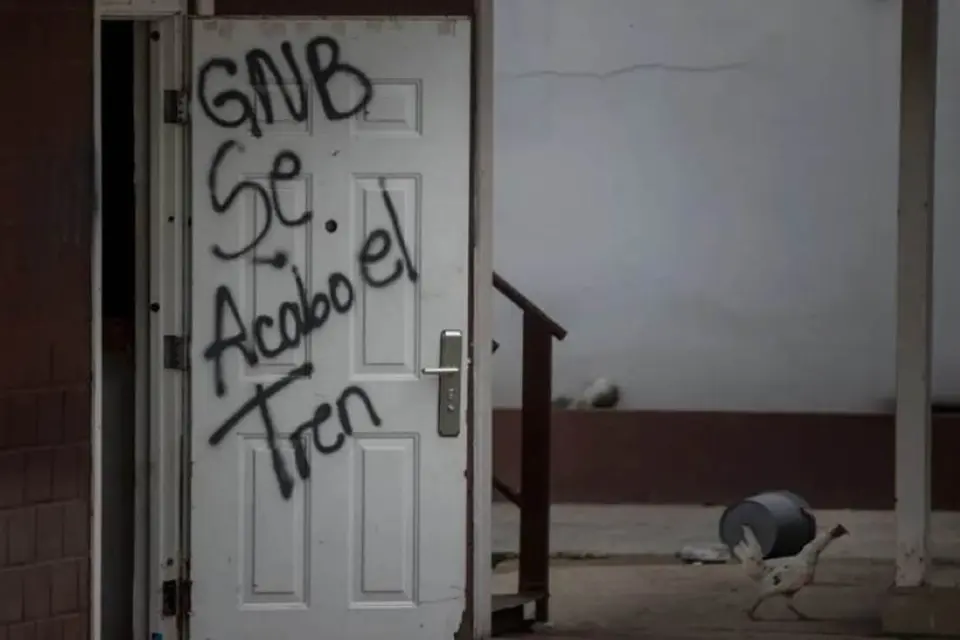
The death of Niño Guerrero does not close the era of transnational crime in Latin America
The assassination of Héctor Rusthenford Guerrero Flores, alias Niño Guerrero, leader of the Tren de Aragua, on Venezuelan territory by means of an attack by the United States Southern Command, revealed something deeper than the end of a drug lord, according to latinamericanpost.com. It exposed a continental security crisis that has surpassed borders, courts, prisons and the political custom of treating crime as a strictly local problem.
The attack and the official version
An explosion destroyed a building in Bolívar state. President Donald Trump announced that Southern Command had executed a "rapid and lethal" operation against the veteran chief of the Tren de Aragua. Venezuelan authorities also claimed to have participated, describing the incident as a joint operation against organised crime. That detail is not minor: a Venezuelan gang leader dies by US military action on Venezuelan soil, supposedly with Caracas's consent. It is not merely a police matter. It is a new grammar of regional security.
From Venezuelan prison to continental network
The Tren de Aragua was born as a prison gang and under Guerrero's command became one of the most widespread criminal organisations in Latin America. It expanded to Colombia, Ecuador, Peru and Chile, shifting from extortion of migrants to human trafficking, kidnapping, contract killing, illegal mining and drug corridors. It did not require a State of its own, but learned to exploit the weaknesses of other States.
The gang fed on the Venezuelan collapse that began in 2014: economic ruin, mass migration and institutional decomposition simultaneously generated recruits and victims. Migrants fleeing hunger, repression or unemployment crossed routes where the organisation collected desperation with precision. The Tren de Aragua read the migration route as a business map.
Tocorón: sovereignty ceded room by room
Tocorón prison was the most eloquent symbol of that institutional erosion. Guerrero transformed that Venezuelan penal facility into a complex with a zoo, restaurants, nightclub, betting house and swimming pool. A State facility operated as a criminal headquarters with better services than many poor neighbourhoods beyond its walls.
In September 2023, Nicolás Maduro deployed 11,000 soldiers to retake Tocorón. Guerrero was no longer there. The image synthesised a pattern known throughout the region: the State arriving late and noisily, the press conference after bribes had been paid, the deployment of uniforms after years of silent permission.
Killing the leader does not erase the market
Guerrero's death may interrupt a network, frighten his lieutenants and satisfy public anger. It does not rebuild courts. It does not make prisons governable. It does not protect a migrant extorted at a border crossing tonight.
Current criminal organisations are modular: they franchise, form alliances, change names, subcontract and migrate. In Ecuador, the Tren de Aragua would have built ties with groups linked to the Sinaloa cartel. In Colombia, it has been alleged that members of the gang operated alongside actors connected to the ELN. The exact form varies; the method is the same: local muscle, foreign contacts, shared routes, common profits.
Latin America has already lived through the illusion of the drug lord strategy. Pablo Escobar died and cocaine did not disappear. Mexican chiefs fell and fentanyl networks adapted. Brazilian prison gangs expanded from cellblocks to ports and neighbourhoods. Leaders matter, but they matter less than the conditions that allow their replacements to inherit routes, weapons, officials and money.
The asymmetry between crime and the State
Organised crime internationalised faster than governments cooperated with each other. Criminal groups learned regional integration from the bottom up: through ports, highways, encrypted phones, informal finances and migrant corridors. States, by contrast, remained jealous, bureaucratic, underfunded and theatrically political. A gang can move money across three countries in the time it takes a prosecutor to request a certified document.
The risk of the language of war
The Trump administration has maintained that the Tren de Aragua is not merely a criminal organisation but an enemy in an irregular war, and designated the gang as a foreign terrorist organisation. That framing gives Washington political and legal room to use military tools. It also activates a risk that Latin America knows well: when the language of security expands, rights tend to shrink first for the poor, the foreign and the accused.
The attack on Guerrero took place within a broader US campaign against vessels that Washington claims carry drugs, including ships it links to the Tren de Aragua. According to available information, more than 200 people are said to have died since September in those operations. However, the US military has not publicly presented evidence that the attacked vessels were carrying drugs or traffickers. Legal experts have questioned whether such attacks violate international law by causing civilian deaths.
Cooperation without blank cheques
Regional security cooperation cannot mean blank cheques for any power. The death of Niño Guerrero is a data point in a longer structural crisis. The market that sustained him—forced migration, fragile institutions, corruption, uncontrolled routes—continues to operate. Latin American governments that read this fact solely as a victory will miss the only question that matters: what conditions allowed a Venezuelan prison gang to become a continental criminal franchise, and which of those conditions remain intact today.
Source: Google News VE — Crime