Horiatiko bakery chain fraud: 149 accused, 58 arrested, €170M in alleged tax evasion
Greek authorities have charged 149 people in a sweeping probe into the Horiatiko bakery empire, linked to over 340 shell companies and €95.5M in unpaid taxes.
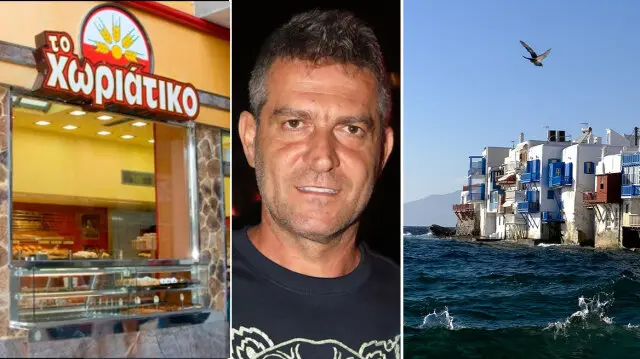
Horiatiko scandal: how a bakery chain became the centre of a €170M fraud network
En.protothema.gr reports that Greek authorities have dismantled what investigators describe as one of the country's most elaborate tax evasion schemes, centred on the Horiatiko bakery chain and its sprawling network of connected businesses.
The 850-page case file compiled by Greece's Organised Crime Directorate — informally known as the Greek FBI — names 149 alleged participants. Of those, 58 have been arrested during coordinated police operations carried out across multiple locations.
The scale of the alleged fraud
At the core of the investigation is businessman Angelos Giannakopoulos, whose commercial interests allegedly extended well beyond bread. Prosecutors say his portfolio included restaurants, luxury beach bars on Mykonos and Rhodes, and strip clubs in Athens.
Investigators estimate the network generated approximately €170 million in suspected tax-related irregularities. Documented outstanding liabilities — including penalties and surcharges — stand at €95.56 million: €45.27 million owed to Greek tax authorities and €50.28 million owed to the national social security body, e-EFKA.
Sample audits covering businesses in Athens, Mykonos and Rhodes separately identified an estimated €30.52 million in concealed net profits and €43.3 million in taxable transactions that were allegedly never properly declared.
A suspected subsidy fraud is also under examination: a €684,517 government grant was awarded to a company in Larissa for an investment valued at around €1.24 million, and investigators believe the claim was fraudulent.
A system built on phantom directors
According to the case file, the network operated through more than 340 interconnected companies. Many were created specifically to manage individual commercial premises — bakeries, restaurants, beach bars and entertainment venues, often trading under well-known brand names.
Investigators believe the scheme followed a consistent pattern. A property would first be leased by a company or individual linked to the alleged leadership, then sublet to an operating company headed by a nominal director — described in the case file as a front person — who held little or no real authority.
That company would accumulate unpaid VAT, income tax, payroll taxes and social security contributions. Once debts reached a level likely to trigger enforcement, the company would be dissolved or placed into liquidation.
A replacement entity, with a different nominal director, would immediately take over the same premises. The business continued trading under the same name, with the same staff, equipment and suppliers. Customers, according to investigators, had no way of knowing the legal operator had changed.
By September 2026, the network's basic overdue liabilities — before surcharges — totalled €76.96 million, comprising roughly €38.18 million owed to tax authorities and €38.78 million to e-EFKA.
Giannakopoulos: 'Boss', 'Daddy' and bakery worker
Police identify Giannakopoulos as the alleged leader of the organisation. In intercepted communications, associates referred to him by a series of nicknames: 'Boss', 'Daddy', 'Big Man', 'Friend' and 'Fanis'.
Despite his alleged strategic control, Giannakopoulos did not appear as a formal director of any company within the network. Employment records instead reportedly listed him as an ordinary worker across various businesses between 2017 and 2026. His declared roles included security guard, bakery worker, cashier, restaurant cook and senior executive.
Investigators believe these designations were designed to account for his presence at the establishments and justify financial transactions involving him. The case file also alleges he used six telephone connections registered to third parties or to companies within the network, and that he introduced himself under assumed names during at least one conversation with a police officer in April 2026.
Giannakopoulos has been active in the bakery and hospitality sectors since 1996.
Origins: a trafficking complaint
The investigation was formally launched on 14 January 2026, following allegations that a criminal network was recruiting foreign women with misleading promises of work as dancers in Greek nightclubs. The original complaint alleged the women were subsequently pressured into prostitution and that their earnings were withheld to repay debts supposedly incurred during their transportation to Greece.
Following judicial authorisation, investigators conducted surveillance operations, intercepted communications and carried out undercover inquiries. The inquiry gradually expanded to reveal a much broader financial operation, allegedly active since at least 2016.
Working with Greece's Independent Authority for Public Revenue (AADE) and the country's anti-money laundering authority, police examined financial movements through at least 520 bank accounts held by more than 300 individuals and legal entities. Case files from prosecutors in Rhodes and Athens were also incorporated into the investigation.
Seven public officials are among those whose alleged connections to the organisation are under scrutiny.
Investigators identified a two-storey commercial complex of more than 3,000 square metres on Kifisou Avenue in Peristeri as the organisation's central headquarters.
Source: Google News CA — Crime (EN)