Opposition leader Azruddin Mohamed held in isolation at Lusignan Prison amid abuse allegations
Family of Guyana's opposition leader Azruddin Mohamed alleges inhumane detention conditions and secret court proceedings. The prison service denies all claims of mistreatment.
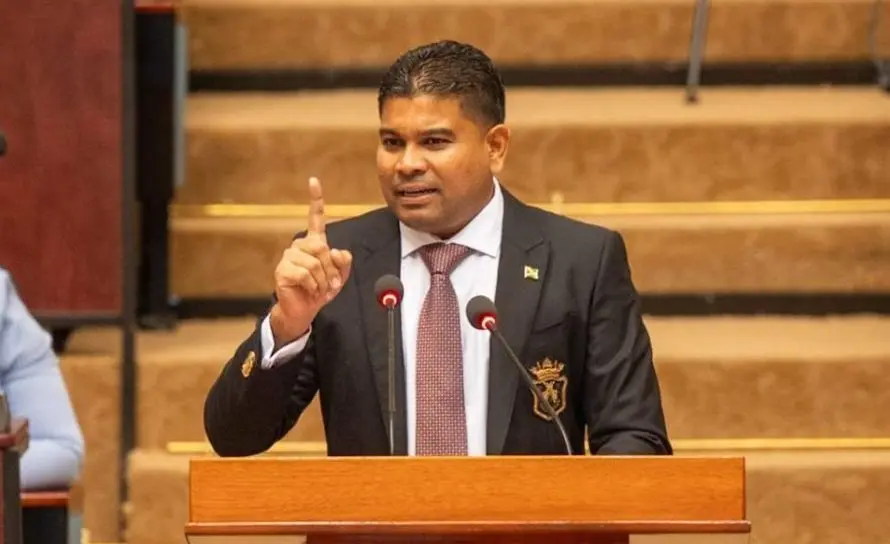
Opposition leader Azruddin Mohamed remanded to maximum-security prison amid family abuse claims
The family of Opposition Leader Azruddin Mohamed has raised serious concerns over his physical and psychological wellbeing following his remand to the Lusignan Prison, alleging political victimisation, secret judicial proceedings, and inhumane treatment. Kaieteur News reports that Mohamed's sister, Hadiyyah Mohamed, spoke on behalf of the family after visiting the facility, describing what she characterised as a calculated effort by the ruling People's Progressive Party (PPP) government to strip the opposition leader of his constitutional rights.
According to Hadiyyah Mohamed, the legal proceedings unfolded under highly irregular circumstances during a high court session involving defence counsel Nigel Hughes and Attorney General Anil Nandlall. She alleged that police transferred Mohamed from the Kitty Police Station to the Sparendaam Police Station without notifying his legal team or family, before bringing him before the Sparendaam Magistrate's Court after regular business hours.
"The gates were locked, the employees were sent home, but they were called back to report back to the magistrate court," Mohamed said. Defence attorneys were reportedly forced to navigate heavy afternoon traffic without prior notice. "When in the history of Guyana has this ever been done for anyone in any case? It was sudden, spontaneous, unexpected, and deliberate."
Following a hearing before Magistrate Gibbs, the opposition leader was remanded under Section 9 of the Cybercrime Act — an offence his family maintains is bailable — alongside related allegations concerning firearm and ammunition possession.
Conditions described as "a furnace"
Hadiyyah Mohamed stated that her brother was placed in Building 5 of the Lusignan Prison, a maximum-security section typically reserved for high-profile offenders, after authorities cleared the upper floor of other inmates. She described conditions she called abusive: 23 hours and 50 minutes of daily isolation in a cramped cell with no windows or ventilation, continuous bright overhead lighting with no wall switch, and physical restraints so tight that his hands and feet were left "swollen and black and blue."
"This is a deliberate psychological attempt to make someone deranged, to induce sleep deprivation," Mohamed said, adding that her brother gestured to his head to indicate the psychological toll he was experiencing. Fearing potential poisoning or the administration of psychotic drugs, Mohamed initially refused prison-issued meals and declared a hunger strike. The family placed public responsibility for his wellbeing on Home Affairs Minister Oneidge Walrond and prison management.
Prison service rejects all allegations
In response, the Guyana Prison Service (GPS) issued a statement rejecting all claims of punitive, degrading, or unlawful treatment, asserting that Mohamed is being managed in strict compliance with standard protocols and the UN Nelson Mandela Rules.
The GPS stated that upon admission on Friday, October 30, 2026, Mohamed was evaluated through the Prison Management Offenders System and classified as a high-profile prisoner — a security designation that, officials emphasised, dictates housing and supervision levels and is not a form of punishment.
Prison authorities confirmed that Mohamed was examined by a medical officer and seen by a welfare officer on arrival. Following a meeting on Saturday, October 31, 2026, between Acting Assistant Director of Prisons (Operations) Deoraj Gyandat and the family, approval was granted for designated relatives to supply home-cooked meals subject to security checks.
The GPS further stated that Director of Prisons Nicklon Elliot and Officer-in-Charge Seon Charles personally conducted a welfare check later that day. Officials granted Mohamed's request to telephone his son ahead of the boy's birthday on Sunday, November 1, 2026, and adjusted a ceiling fan serving his cell block.
Vigil, condemnation, and civil society response
Public demonstrations and sharp rebukes from civil society followed swiftly after the remand. At a candlelight vigil held Sunday night, Ronald Bulkan expressed deep concern over what he described as the unjust treatment of a senior constitutional officeholder.
"He's right now being held in cruel, inhumane, and degrading conditions that even hardened criminals should not be exposed to," Bulkan said, condemning what he characterised as the weaponisation of the Guyana Police Force and the suppression of constitutionally guaranteed freedoms. He warned that the situation evokes dark periods in the nation's past.
WIN Member of Parliament Odessa Primus also addressed the matter, reaffirming her opposition to the ruling party and emphasising that maintaining professional relationships with international bodies — including a recent UK delegation — is essential for representing marginalised citizens and addressing grievances the administration has neglected.
The executive committee of the Guyana Human Rights Association (GHRA) issued a separate statement on Sunday, condemning what it described as collusion between the police force and the magistracy to secure a weekend remand. The GHRA argued that the move against Mohamed is part of a broader pattern of police harassment and political victimisation, with criminal investigations sidelined in favour of political surveillance. The association also noted that extradition proceedings are governed by distinct international legal principles — a point it stressed in the context of mounting international attention on the case.
Source: Kaieteur News