Italy passes law giving mafia children new identities to escape organised crime
Italy's senate has approved the "free to choose" law, offering under-25s from mafia families new homes, schools and identities. Around 400 children are expected to enter the programme annually.
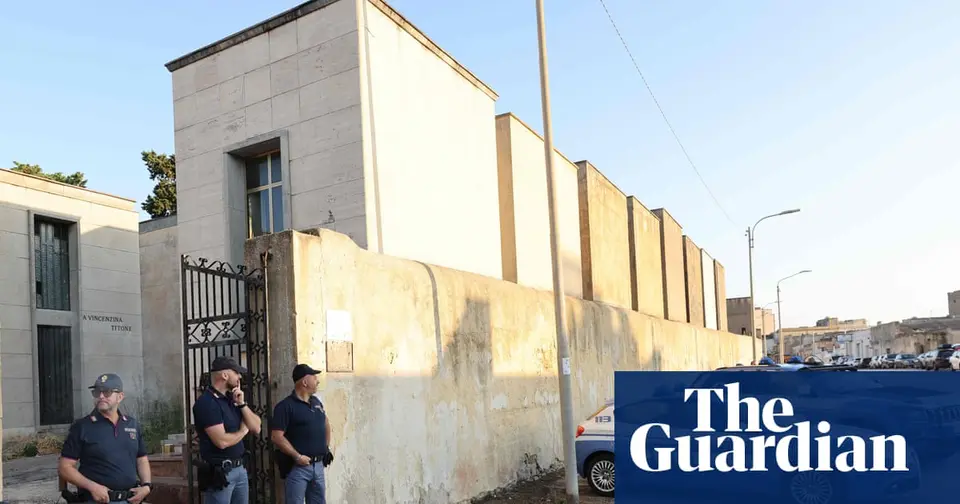
Italy's senate approves law to break intergenerational mafia cycle
Italy has passed landmark legislation giving children and young adults raised in mafia families the opportunity to leave organised crime behind — with a new home, a new school and, where necessary, a new identity, theguardian.com reports.
The "free to choose" bill received final approval in the senate on Wednesday, offering children under the age of 25 and close relatives of mafia bosses a state-supported chance to restart their lives in another city.
"Today, parliament is translating into law a dream that for years seemed impossible," said Chiara Colosimo, the president of the parliamentary anti-mafia commission. She estimated that around 400 children born into mafia families would enter the programme each year.
Blood ties and the 'Ndrangheta
In many Italian mafia clans, power moves from one generation to the next. While hereditary succession is not a fixed rule in Sicily's Cosa Nostra or in the Neapolitan Camorra, it is deeply embedded in Calabria's 'Ndrangheta — one of the world's most powerful criminal organisations — where the son of a boss is often expected to inherit his father's position.
These family bonds have long made the 'Ndrangheta exceptionally difficult to penetrate, and largely resistant to the system of pentiti, former mafia members who cooperate with authorities. For many insiders, confessing clan crimes would mean betraying not only fellow gangsters but their own fathers, grandfathers and uncles.
Despite sweeping arrests and a series of large-scale trials involving hundreds of defendants, the organisation has shown remarkable resilience. As fathers and grandfathers serve life sentences in high-security prisons, sons and younger relatives increasingly step into their roles — often while still in their teens.
The judge who started it
The new law draws directly on a probation scheme launched in 2011 by Roberto Di Bella, then president of the youth court in Reggio Calabria. His programme — already called Liberi di Scegliere, meaning "free to choose" — allowed authorities to remove children from the most dangerous 'Ndrangheta families and relocate them until they turned 18. Educators, social workers and psychologists supported them through education and helped them build lives outside organised crime. Parents who continued to draw their children into criminal activity risked losing parental rights.
The initiative drew a fierce backlash. Di Bella was accused of tearing families apart and denounced by politicians, commentators and parts of the church, who argued that removing children from their parents — regardless of circumstances — amounted to an assault on family values. One jailed mafia boss sent the judge a thinly veiled threat, reminding him that everyone had children.
Support, however, came from unexpected quarters. Di Bella said mothers from 'Ndrangheta families, including wives of powerful bosses, had begun secretly approaching him and asking him to remove their sons from Calabria, telling him they feared the alternative was prison or death.
"A historic day"
"This is an enormously important law with extraordinary potential because it can genuinely transform the lives of hundreds of women and children," Di Bella told the Guardian. "It will allow women to rebuild their lives, train for a profession and, if they choose, even change their surname. It is also a model that could be applied beyond Italy, including internationally, where criminal organisations such as drug cartels exert the same influence over women and children."
Under the legislation, the state prioritises keeping mothers and children together, provided the mother agrees to cut ties with the mafia. Families are relocated to a protected location outside their home region. Where the mother remains involved with the clan, children are placed with vetted foster families or in protected care homes, receiving education and psychological support.
Di Bella watched the senate vote from the chamber and said he was deeply moved. In the hours that followed, he received dozens of messages from people whose families had taken part in the rehabilitation programme that inspired the law.
One message, shared with the Guardian and sent by the former wife of a mafia member, read: "This is a historic day for so many women, children and young people, who from today can look to the future with a little more hope. I will never forget that when it all began, you were the first to reach out your hand and believe in me and my children … This law will change so many lives, just as you helped change ours."
Salvatore Vella, the chief prosecutor in Gela, Sicily — one of the island's historic criminal strongholds — welcomed the vote. "It is the right law," he said. "It recognises that defeating the mafia is not just about policing, but also about culture and the social environment."
Source: Times of Malta