BBC exposes fake gay asylum racket charging migrants up to £7,000
A shadow industry of law firms is helping migrants fake LGBT asylum claims with staged photos and bogus letters. BBC undercover reporters uncovered advisers charging thousands of pounds.
Undercover investigation unmasks fake gay asylum network across UK
A shadow industry of immigration law firms and advisers is charging migrants thousands of pounds to fabricate asylum claims based on false assertions of homosexuality, bbc.co.uk has found in a major undercover investigation.
Reporters posed as Pakistani and Bangladeshi students whose visas were due to expire. What they uncovered was a systematic operation in which legal advisers coached clients to invent cover stories, obtain staged photographs, forge supporting letters, and secure misleading medical reports — all to submit fraudulent asylum claims to the Home Office.
One law firm quoted up to £7,000 to construct a fabricated claim and told the undercover reporter the chance of refusal was "very low". A separate lawyer linked to another firm offered to help for £1,500, with a further £2,000–£3,000 to manufacture evidence.
The UK's asylum system grants protection to individuals who face genuine danger if returned to their home countries. In Pakistan and Bangladesh, where same-sex relations are illegal, a credible claim of homosexuality can be grounds for asylum. Advisers in the investigation told reporters they had spent years exploiting precisely that route.
One adviser boasted of more than 17 years helping clients bring fake claims. She told a reporter she could arrange for someone to pose as having had a gay relationship with a client. An undercover reporter was even advised he could later bring his wife to the UK, where she could then file her own false claim — as a supposed lesbian.
Fake asylum seekers were also directed to visit GPs while pretending to suffer from depression, to generate medical evidence. One individual lied about being HIV positive to strengthen a fraudulent application.
The Home Office said in response: "Anyone found trying to exploit the system will face the full force of the law, including removal from the UK."
Worcester LGBT and the Birmingham paralegal
On a Tuesday evening at a community centre in Beckton, east London, more than 175 people gathered for a meeting organised by Worcester LGBT, a group that describes itself on its website as a support group for genuine gay and lesbian asylum seekers. Attendees had travelled from as far as South Wales, Birmingham and Oxford.
Yet men outside the centre readily admitted the reality to the undercover reporter.
"Most of the people here are not gays," one man, who gave the name Fahar, said. Another, who called himself Zeeshan, went further: "Nobody is a gay here. Not even 1% are gay. Not even 0.01% are gay."
The reporter's route to that meeting had begun in late February, when he approached Mazedul Hasan Shakil, a paralegal at Law & Justice Solicitors, an immigration firm with offices in Birmingham and London. Shakil is also the founder and chairman of Worcester LGBT and had previously used the group's website to advertise his legal services.
In an initial phone call, Shakil told the reporter he would need to demonstrate a genuine fear of persecution to claim asylum and appeared to find no obvious grounds for doing so.
Within hours, however, the reporter received an unsolicited call from a woman who introduced herself as Tanisa. Speaking in Urdu, she expressed clear willingness to help him remain in the UK through an asylum claim based on sexuality. When the reporter told her he was not gay, she replied: "Listen to me. There is nobody who is real. There is only one way out in order to live here now and that is the very method everyone is adopting."
The BBC matched her WhatsApp profile picture and first name to Tanisa Khan, listed as an adviser to Worcester LGBT.
Bedroom consultation and a scripted deception
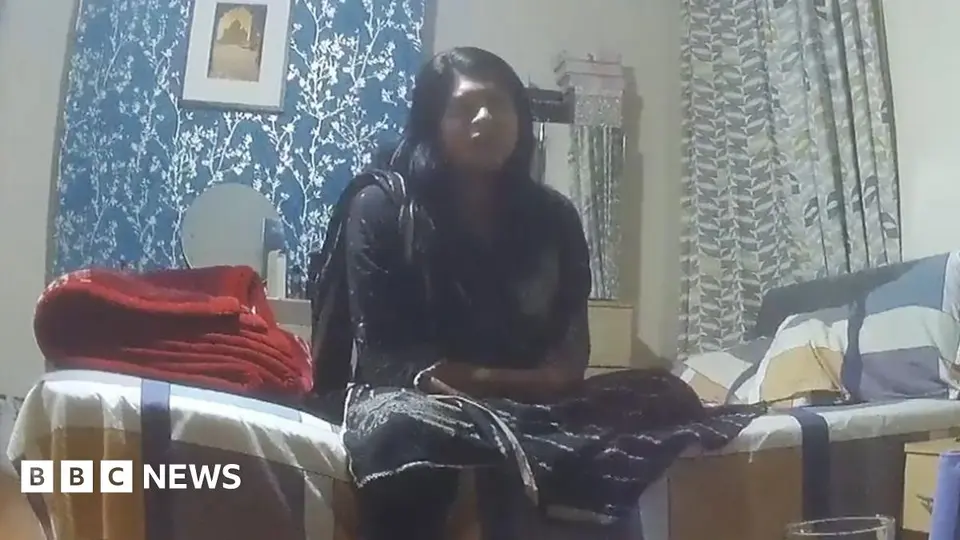
That evening, the undercover reporter met Tanisa not at the law firm's offices but at her own home in Forest Gate, east London. He was taken upstairs to a bedroom for the consultation.
"At the moment there is only one route from where you can get a visa and it is open," she told him, perched on the edge of the bed. "It is the asylum visa — it is on human rights and it is called gay case or same sex. There is no hope for any other visa."
Tanisa made clear the process required preparation. The reporter would have to memorise a fabricated personal history before his Home Office interview. "You are the one who has to go and take the exam. I am here to prepare everything for you but ultimately it is you who has to go there," she said.
Over 45 minutes in the bedroom, the investigation revealed how elaborate and rehearsed these deceptions had become.
A growing cohort of in-country claimants
The BBC investigation focuses on a category of asylum seekers distinct from those crossing the Channel on small boats. These are migrants already in the UK — on student, work or tourist visas that have since expired — who turn to false asylum claims as a mechanism to extend their stay. This group now accounts for 39% of all asylum claims. The total number of asylum applications in the UK topped 100,000 in 2025.
The investigation is described by the BBC as the first part of a broader undercover series examining fabricated asylum claims, including cases built around false claims of atheism and staged protest photographs.
Source: The Sun