Fayed abuse survivors risk losing trafficking victim status under new UK immigration bill
The UK's immigration and asylum bill could deny Fayed accusers recognition as trafficking victims. The anti-slavery commissioner warns the credibility tests are "fundamentally unfair".
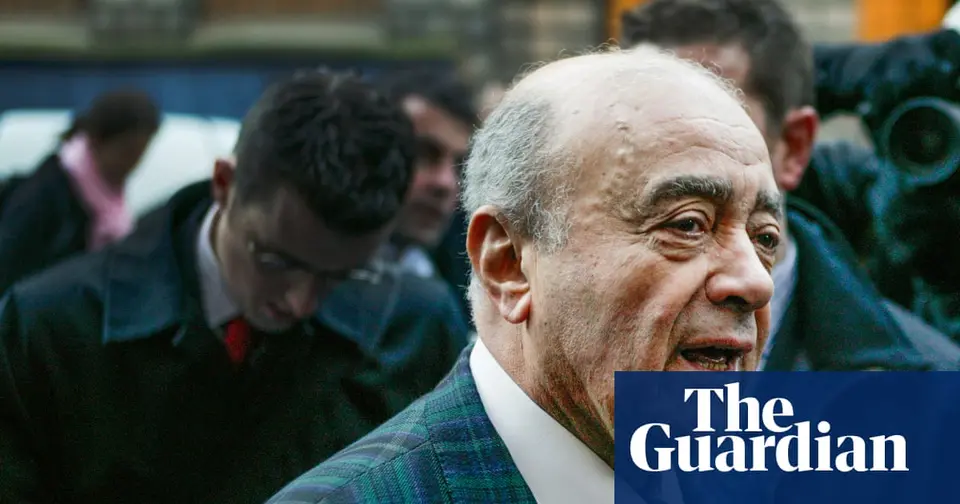
New UK immigration law threatens trafficking recognition for Fayed abuse survivors
Women who allege they were sexually abused and trafficked by the late billionaire Mohamed Al Fayed could be denied recognition as victims of human trafficking under credibility tests contained in the UK's new immigration and asylum bill, theguardian.com reports.
Eleanor Lyons, the independent anti-slavery commissioner, warned that the proposed measures are fundamentally unfair and could prevent many survivors of slavery and trafficking — including those allegedly abused by Fayed — from accessing support.
Under the legislation, Home Office officials would be required to treat any delay in making a modern slavery or human trafficking claim as damaging to the claimant's credibility. Inaccuracies, inconsistencies or omissions in a person's account must also be treated as grounds for disbelief — as must any striking similarity between one person's claim and another's.
Lyons said the tests would disproportionately harm survivors of sexual violence, who frequently experience memory loss as a result of trauma. Many victims are also reluctant to come forward due to fear of reprisals from their abusers, she added.
"They are basically saying to victims, if you don't come forward in a timely fashion not yet defined, if there are inconsistencies in your account, and if there are similarities between exploitation and [those of] others, the Home Office decision-maker must question your credibility," Lyons said.
She added that the tests would be "particularly concerning" for Fayed's alleged victims, noting that significant time has passed since the alleged abuse, that many were exploited in similar ways to one another, and that some may be unable to recall precise details of events due to the impact of trauma.
Survivors: tests would 're-victimise' those who came forward
Holly Johnson, who says she was trafficked and sexually assaulted while working at Harrods and at Fayed's Park Lane offices, said the credibility measures would re-victimise survivors.
"Fayed had a specific strategy for trafficking and assaulting women, and many of our stories are really similar," Johnson said. "To say someone shouldn't be believed because their situation is too similar to another victim of that same abuser is absurd."
No One Above (NOA), a collective of survivors of Fayed's alleged abuse, said many women delayed reporting their exploitation until after his death in 2023 and after Harrods announced in 2024 that it would not enforce non-disclosure agreements signed by former employees.
Elizabeth, an NOA member who has already been recognised as a trafficking victim by the Home Office, said the Harrods declaration was what finally gave her confidence to speak out. "It took that for me to finally believe that I couldn't have somebody take my house away for speaking out," she said.
Pelham Spong, who says she was trafficked in Paris on Fayed's orders in 2008 before being brought to London to be sexually assaulted, told theguardian.com she did not report the matter to the Metropolitan Police until 2017 because she feared her life "was going to be ruined". Her case is currently being investigated by French police.
"The thought of speaking out as a 23-year-old with no money, no resources behind me against a billionaire was unfathomable," Spong said. "He was so powerful."
Government and critics clash over NRM protections
The government introduced the credibility provisions to close what it characterises as opportunities to misuse the National Referral Mechanism (NRM), the system used in the UK to identify potential victims of modern slavery and human trafficking, and to accelerate the removal of illegal migrants.
Eleanora Fais, anti-trafficking monitoring group coordinator at Anti-Slavery International, said that when legislation is primarily focused on immigration enforcement, safeguarding inevitably takes second place. She warned that weakening the NRM would reduce the number of victims able to cooperate with police and bring perpetrators to justice.
Hilary Agg, head of policy and research at the anti-slavery charity Unseen, said the measures would allow human trafficking to thrive in the UK by reducing the number of identified victims. She also stressed that the tests would harm not only immigrants but the majority of trafficking and slavery victims, who are British nationals.
A Home Office spokesperson defended the bill, saying: "Modern slavery is a barbaric crime, and the government is committed to identifying victims and ensuring they get the support they need. The credibility considerations in the bill are well-balanced and contain appropriate safeguards, which will enhance the robustness of modern slavery decision-making."
Responses from Harrods and Ritz Paris
A Harrods spokesperson said the retailer supported all survivors in their pursuit of justice and continued to work closely with the Metropolitan Police on its investigation.
A Ritz Paris spokesperson said the hotel was "deeply concerned by the allegations that have been reported and takes them with the utmost seriousness," adding that it wished to "express our deepest sympathy to the women who have come forward."
The Fayed estate had not responded to a request for comment at the time of publication.
Source: Google News UK — Crime (en)