KGB umbrella murder of Bulgarian dissident Georgi Markov on London's Waterloo Bridge
On 7 September 1978, Bulgarian dissident Georgi Markov was stabbed with a poison-tipped umbrella on Waterloo Bridge and died four days later. BBC's Panorama revealed KGB and Bulgarian state involvement.
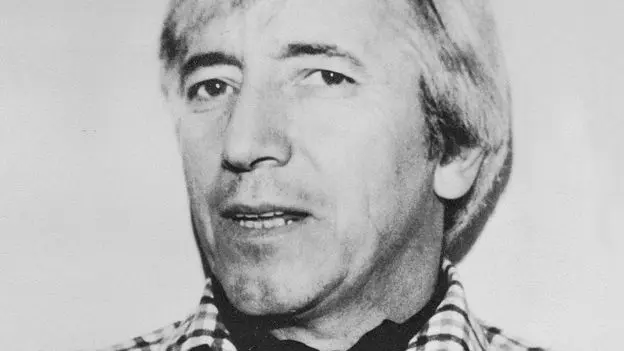
KGB's umbrella assassination of Bulgarian dissident on Waterloo Bridge
On 7 September 1978, Georgi Markov — a 49-year-old Bulgarian dissident, journalist and writer — was waiting at a bus stop on Waterloo Bridge in central London when he felt a sharp jab in his thigh. The man behind him apologised and picked up an umbrella. Four days later, Markov was dead.
As bbc.com reports, the killing has since become one of the most documented cases of state-sponsored assassination on British soil, with evidence pointing directly to the highest levels of both the Bulgarian and Soviet governments.
"He'd felt a jab in his thigh. And he'd looked round, and there'd been a man behind him who'd apologised and dropped an umbrella," Markov's widow, Annabel Markov, told the BBC's Panorama programme in 1979.
Doctors initially diagnosed blood poisoning. But Britain's anti-terrorist squad, examining tissue from the wound, found a metal pellet no larger than a pinhead. Under a microscope at Scotland Yard's forensic laboratory, chief scientific officer confirmed the object contained four tiny holes that experts believed had held an infinitesimally small quantity of a lethal toxin. Scientists at Porton Down, the UK's top-secret chemical and microbiological warfare research establishment, identified that toxin as ricin — a substance that had never previously been used for murder in Britain, according to Panorama.
A near-identical attack in Paris
Ten days before Markov was stabbed, another Bulgarian exile had been struck in a strikingly similar fashion. Vladimir Kostov felt a sudden sharp pain in his back while leaving the Paris Métro with his wife. He suffered a high fever for three days but survived. After hearing of Markov's death, Kostov had his back X-rayed, which revealed a tiny metal object lodged near the surface.
A surgeon in Paris, operating under the observation of a French police officer in surgical gown and mask, removed the pellet without touching it directly. "The surgeon had to be extremely careful," Kostov told the BBC. The pellet was handed to a Scotland Yard inspector and transported to England for analysis.
Metallurgists using a high-powered scanning electron microscope found the pellet from Kostov's back to be identical to the one extracted from Markov's thigh. "Both pellets weighed exactly the same," Panorama reporter Michael Cockerell said. "The holes were in the same places, and both were made of a rare platinum iridium alloy that the human body does not reject."
Toxicologists at Porton Down subsequently found ricin antibodies in Kostov's tissue, concluding he had survived only because insufficient poison had remained in the pellet.
Warnings ignored before the killing
The coordination of attacks and the technical sophistication of the weapon persuaded Scotland Yard that a state intelligence service had been responsible. Panorama's interviews in 1979 provided further detail, drawing on testimony from the former head of a KGB assassination squad and a former colonel in the Bulgarian secret service — both speaking publicly for the first time.
Markov's family said they had been warned months in advance. Annabel Markov told the BBC that an anonymous man had contacted her husband in May 1978, warning that a decision had been taken at the highest political level in Bulgaria to have him killed.
"They spoke Bulgarian all evening. Every so often Georgi would turn to me and say in English, 'this is extraordinary what this man's saying'," she said. The anonymous caller reportedly told Georgi that the order had been issued because of his broadcasts for Radio Free Europe (RFE), a US state-funded media organisation.
Markov's brother Nikolai said he had received a separate warning even earlier, in September 1977. "A man phoned me saying the decision has been taken to kill Georgi, to eliminate him without trace," Nikolai told the BBC. "He told me Georgi would definitely be poisoned at the first opportunity… that a sort of poison or some sort of bacteria, he didn't know exactly which, had already been brought out to Western Europe."
A dissident voice that angered the Bulgarian state
Markov had been a celebrated novelist and playwright in Bulgaria, moving within government elite circles, before defecting from the communist regime in 1969. After settling in the United Kingdom, he began working for the BBC World Service and RFE, broadcasting weekly programmes that exposed life among Bulgaria's ruling class.
One of his series, Life Behind the Curtains, referenced the small curtains fitted to the rear windows of official black Mercedes cars. His programmes presented a detailed and damning account of nepotism, financial abuse and corruption at the top of Bulgarian society.
Though the Bulgarian government officially denied that Markov's broadcasts carried any influence, the BBC found that President Todor Zhivkov was particularly angered by a series of programmes called My Meetings with Todor Zhivkov. Kyril Panov, a Bulgarian broadcaster for RFE, told Panorama: "We have heard that he was quite furious about Markov's talks concerning the meetings with him."
The murder of Georgi Markov on a central London bridge, carried out with a weapon of remarkable technical precision, remains one of the starkest examples of Cold War-era political assassination conducted on Western European soil.
Source: Google News IE — Crime (en)