McCartney sisters' 20-year fight for justice reviewed in BBC Belfast documentary
A new three-part BBC documentary revisits the McCartney family's campaign after Robert was killed in a 2005 IRA-linked bar attack in Belfast.
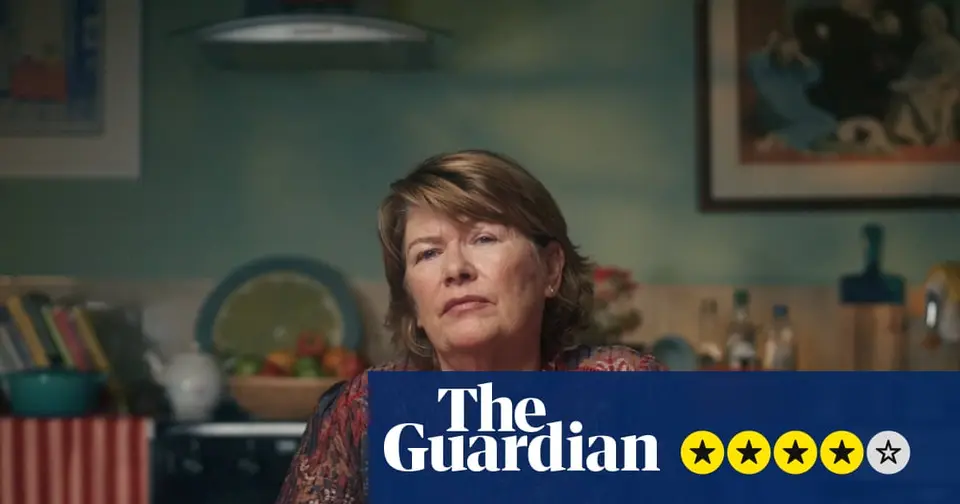
BBC documentary examines McCartney sisters' decades-long pursuit of justice in Belfast
A three-part documentary series, Murder in Belfast: Sisters Seeking Justice, chronicles the 20-year campaign by the five McCartney sisters to bring their brother's killers to account, theguardian.com reports. The film tracks how the women turned a wall of IRA-enforced silence into an international cause that reached the White House and, according to the review, accelerated Northern Ireland's peace process.
Robert McCartney, a 33-year-old Catholic father of two from the Short Strand area of Belfast, was killed in January 2005. He had been trying to pull his friend Brendan Devine away from a brawl involving members of the local Provisional IRA at Magennis's bar in the nationalist neighbourhood where the McCartney family had lived for five generations. Devine was seriously injured. Robert was stabbed, beaten and had an eye gouged out during the attack. "I'm not going to make it," he told Devine as the two attempted to flee the alleyway. "Our Gerard needs me. I have to go." He died in hospital shortly afterwards.
His eldest sister Gemma recalls the moment she understood she would have to tell their parents that a second son was gone — Robert's brother Gerard had died by suicide years earlier after struggling with mental illness. "The two most tragic ways to die — and we've got both?" she says in the documentary.
Roughly 70 people were present in Magennis's bar that night. According to the film, an IRA intimidation campaign produced no witnesses: all, it was claimed, had been in the toilet at the time. The bar itself was methodically cleared of forensic evidence — glasses swept up, bloodstains bleached, CCTV tapes removed. Bertie Ahern, Ireland's taoiseach at the time, says in the documentary that "the dogs in the street knew who was involved," and the family gathered names. Without physical evidence or willing witnesses, however, no prosecution could proceed. "Like a bloody cult," says sister Donna of the enforced silence.
The first of the three episodes focuses on the human cost for those closest to Robert: sisters Gemma, Paula, Donna, Catherine and Claire, cousin Gerard Quinn, and Devine all appear on camera. The remaining two episodes trace the sisters' sustained refusal to accept the IRA's preferred outcome, and the frustrations faced by the Police Service of Northern Ireland as Sinn Féin declined to allow its members to confess or come forward as witnesses.
Weeks after the murder, Sinn Féin invited the sisters to its annual conference. Claire says in the film the invitation was designed to neutralise them. "It's like being lovebombed. Meant to get swept away, aren't you?" Instead of providing the party with a propaganda image of reconciliation, the sisters sat in the front row and refused to applaud as Sinn Féin leader Gerry Adams spoke about the possibility of witnesses coming forward.
When charm failed alongside intimidation, the sisters escalated. A few months after Robert's death they travelled to the United States, where they met President George W. Bush and senators including Hillary Clinton and Ted Kennedy. Adams was refused an invitation to the White House during the same period — a signal, the documentary suggests, that Washington expected Sinn Féin to move more decisively toward genuine power-sharing with the British government. "I was too angry to be afraid of the IRA," says Catherine. "I still am."
The pressure eventually produced a court case in 2008, when charges were brought against three men. The case collapsed, however, due to what the documentary describes as an ongoing lack of robust physical evidence and flawed witness testimony — a direct consequence, the sisters maintain, of the original cover-up.
More than two decades on, the five women still carry visible signs of the toll the campaign has taken. The documentary notes they continue to grieve not only for Robert but for the homes they were forced to leave after the killing and for a community in which they had once placed unquestioning trust. They say they draw some comfort from the public vigils and rallies that followed Robert's death in the weeks after January 2005.
The theguardian.com review concludes that Murder in Belfast is not, ultimately, a story of redemption. It is, the reviewer writes, a reminder of undemocratic and unaccountable forces that continued to operate in the years following the Good Friday Agreement, and of how long the consequences of political violence — "British, Irish, Protestant, Catholic" — endure. The McCartney sisters are described as inspiring; the broader picture the documentary paints is considerably darker.
Source: Google News IE — Crime (en)