New forensic analysis casts doubt on silencer evidence in Jeremy Bamber case
A forensic expert commissioned by theguardian.com says bullet wounds on Sheila Caffell are inconsistent with a silencer being used — the prosecution's key argument at trial.
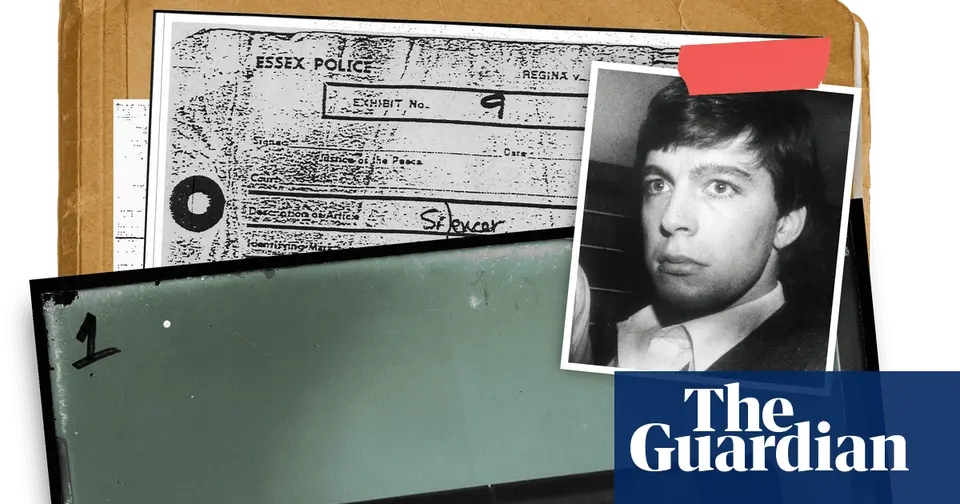
New forensic analysis challenges key evidence in White House Farm murders
A distinguished forensic physician has concluded that a silencer was not attached to the rifle when Sheila Caffell was shot dead at White House Farm in 1985 — directly contradicting the central argument that secured Jeremy Bamber's conviction for five murders, theguardian.com reports.
Bamber, now 61, has been imprisoned for 41 years following the deaths of his adoptive sister Caffell, her six-year-old twin sons Daniel and Nicholas, and his adoptive parents June and Nevill Bamber. All five were found shot dead at the family's farmhouse in Essex on 7 August 1985. No DNA evidence links Bamber to the crime.
The Guardian commissioned Professor Jason Payne-James, president of the European Council of Legal & Forensic Medicine, to examine crime-scene photographs taken by Essex police. His conclusion challenges the foundation of the prosecution's case.
"The pattern imprint on the skin is not large enough to suggest that a silencer was used, either at very close range or in contact with her body," Payne-James told the Guardian. "These are close-range bullet holes, and the nature of the moderator or silencer is such that you'd expect some form of pattern imprint equivalent to the diameter of the silencer if it was used in contact or at very close range."
The silencer at the heart of the prosecution case
The presence or absence of a silencer was decisive at trial. In 1986, Justice Maurice Drake directed the jury at Essex Crown Court that if they believed a silencer had been attached to the Anschütz 525 rifle used to kill Caffell, then Bamber — and not Caffell herself — must have been the killer.
Caffell had recently been hospitalised with schizophrenia and was said to have feared her children would be taken into foster care. She was found with the rifle lying on her chest, pointing towards her neck. She had sustained two gunshot wounds to her neck and chin, with a bloodied Bible beside her. The case was initially treated as a murder-suicide.
Bamber's arrest came a month later. The silencer had been found in a downstairs cupboard by Bamber's relatives three days after the killings — notably not during the original police search of that same cupboard on the day of the deaths. The prosecution argued that Caffell's blood, characterised as "backspatter" — biological material ejected backward from a gunshot entrance wound — had been found inside the silencer, indicating it had been fitted to the rifle when she was shot.
The prosecution then applied a second strand of reasoning: Caffell's arms were not long enough to reach the trigger and fire at her own neck with the silencer attached. And there was no plausible mechanism by which she could have shot herself twice in the neck, descended to remove the silencer, placed it in a downstairs cupboard, then returned upstairs to her parents' bedroom to die. That sequence, the prosecution argued, was physically impossible. The only remaining conclusion, they told the jury, was that Bamber was the killer.
The jury's question — and its verdict
After approximately ten hours of deliberation, the jury sent a note to Justice Drake asking whether the blood in the silencer was an exact match for Caffell alone. Drake confirmed it contained only Caffell's blood and matched no other member of the family. Twenty-one minutes later, the jury returned a 10-2 majority verdict of guilty on all five counts.
The silencer's own mysteries
The silencer raises questions that have never been fully resolved. If Bamber had killed five people, evaded detection, called the police, and remained outside with officers for four hours before the bodies were found — a sequence that would suggest considerable calculation — it is unclear why he would have returned the silencer to a cupboard inside the farmhouse rather than disposing of it entirely.
The Criminal Cases Review Commission (CCRC), the statutory body responsible for reviewing potential miscarriages of justice, has been examining evidence submitted by Bamber's legal team. Four years into that process, however, the CCRC has considered less than half of the material submitted to it. The body has been described as being in disarray.
Mugford's changing account
Attention shifted from the murder-suicide theory in part because of the testimony of Julie Mugford, Bamber's former girlfriend. A month after the killings, Mugford changed her original statement and told police that Bamber had spoken of killing his family in order to inherit their substantial wealth. She initially claimed he had hired a hitman; when that individual was found to have a cast-iron alibi, Mugford altered her account again, saying Bamber had told her he intended to carry out the killings himself. The couple had separated shortly after the murders.
It later emerged that Mugford had agreed to sell the story of her relationship with Bamber to the News of the World for £25,000 in the event of his conviction.
Bamber's position
Bamber and his legal team regard the new forensic analysis as significant. If Payne-James's assessment is correct and no silencer was used when Caffell was shot, then the backspatter argument — the cornerstone of the prosecution's case — loses its evidential basis. The blood in the silencer would not, under those circumstances, establish that the device had been fitted to the rifle at the time of the killing.
The case continues to be regarded as one of the most contested criminal convictions in British legal history. Whether the CCRC will reach a determination before further years elapse remains uncertain.
Source: The Sun