10th Circuit clears Utah to prosecute Singularism founder over psilocybin use
A federal appeals court reversed an injunction that had shielded Bridger Jensen from criminal prosecution over the religious use of psychedelic mushrooms in Provo, Utah.
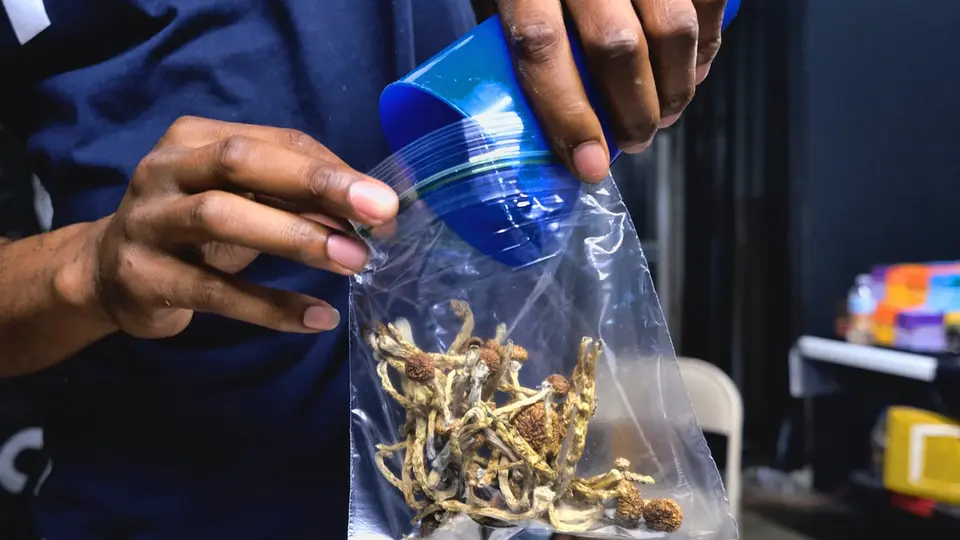
10th Circuit reinstates Utah drug prosecution against Singularism founder Bridger Jensen
The 10th U.S. Circuit Court of Appeals has cleared Utah to resume its criminal prosecution of Bridger Jensen, founder of the Provo-based spiritual organization Singularism, over his group's religious use of psilocybin mushrooms. Courthouse News Service reports the Monday ruling overturned a federal district court injunction that had halted the state proceedings.
Jensen, who owns and operates Singularism in Provo, Utah, was targeted by law enforcement in 2024 after police sent an undercover officer to his center and subsequently conducted a raid, seizing 450 grams of psilocybin — the naturally occurring psychedelic compound central to Singularism's spiritual practice. He responded with a lawsuit against Utah County and the city of Provo, alleging the police action violated his religious freedom.
U.S. District Judge Jill Parrish, a Barack Obama appointee, sided with Jensen in 2025 and blocked the state from moving forward with criminal proceedings. Utah authorities appealed that ruling.
Federal courts should not block state prosecution, circuit says
The central question before the three-judge panel was whether a federal court may prevent state prosecutors from pursuing criminal charges against a religious leader for drug use. U.S. Circuit Judge Robert Bacharach, also an Obama appointee, was direct in his answer.
"We answer no," Bacharach wrote. "This appeal involves the intersection between the exercise of religion and a state's authority to criminalize drug use. Individuals can freely exercise their religion, and states can criminalize drug use. But what happens when a religious tenet includes the use of a drug that is otherwise prohibited under a state's criminal law?"
The circuit concluded the district court should have allowed the matter to proceed through state courts under the Younger abstention doctrine, which bars federal courts from interfering with active state proceedings when significant state interests are involved.
Jensen argued that federal intervention was justified because the prosecution was brought in bad faith and would cause him irreparable harm. The 10th Circuit found he did not meet the heavy burden of proof required to establish either claim.
Medical exemptions do not parallel religious use, court finds
Jensen also contended that Utah's 2024 law — which permits qualified medical institutions to use psilocybin experimentally in controlled, regulated settings while criminalizing its use in religious ceremonies — treated secular and religious conduct unequally in violation of his First Amendment rights.
The panel rejected that argument. "Given state law, state regulations and actual practice, Mr. Jensen and Singularism haven't shown a similarity in the health risks from secular and religious uses of psilocybin," Bacharach wrote. "To the contrary, the statutory and regulatory safeguards render secular use less likely to undermine the government's interests than Singularism's religious use."
Jensen's attorney, Tanner Bean of Fabian VanCott, noted that Utah has recognized other religious exemptions, including allowing Native American tribes to use peyote in ceremonial contexts.
Key religious freedom claim remains alive in lower court
The 10th Circuit declined to rule on one of Jensen's most significant arguments: that Utah's own Religious Freedom Restoration Act — enacted in 2024 and requiring the government to satisfy strict scrutiny before burdening a person's religious freedom — protects his use of psilocybin. That question was sent back to the district court.
Jensen's case is the first to test the Utah statute.
Bean described the outcome as a qualified setback rather than a decisive defeat. "I think the biggest point is that this case continues and now is set to be resolved on the plane that's going to be the most important, which is the Religious Freedom Restoration Act," he told Courthouse News by phone. "As far as losses go, it's not bad for Singularism because the best claim is still in district court."
The lower court had previously relied on the Utah statute to grant a separate preliminary injunction ordering the return of the seized items to Singularism. Utah authorities have not appealed that injunction or addressed the state RFRA claims, the 10th Circuit noted.
As of Monday, prosecutors had not refiled criminal charges against Jensen. Judges Richard Federico, a Joe Biden appointee, and David Ebel, a Ronald Reagan appointee, joined Bacharach on the panel. A spokesperson for the defendants did not respond to requests for comment.
Source: Courthouse News Service