US Army Plans Executions of Four Military Death Row Inmates Under Trump
The Army is preparing to execute its four death-row inmates under "Operation Resolute Justice," pending presidential approval. Nidal Hasan, convicted of the 2009 Fort Hood shooting, is among those facing execution.
US Army Draws Up Execution Plan for Military's Death Row Under Trump
The U.S. Army is laying the groundwork to execute all four of its death-row inmates if President Donald Trump authorizes the sentences to proceed, according to an internal planning document reviewed by abcnews.com. If carried out, the executions would be the first by the American military in more than 50 years.
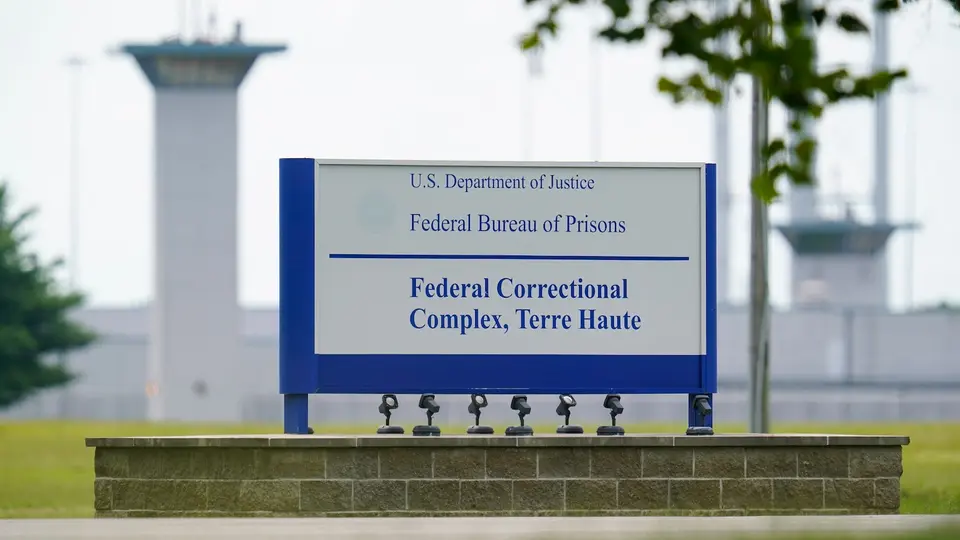
The plan, internally designated "Operation Resolute Justice" and issued in February, directs Army officials to coordinate with the Federal Bureau of Prisons to transfer the condemned prisoners from the U.S. Disciplinary Barracks at Fort Leavenworth, Kansas, to the federal execution facility in Terre Haute, Indiana. That facility was used by the Justice Department to carry out a series of non-military federal executions during Trump's first term.
Army spokesperson Cynthia Smith said the service conducts planning exercises for executions in the same way it prepares for other potential missions, regularly anticipating orders from the White House.
"Exercises regarding this operation have been conducted regularly for the past 20 years. These drills are a standard component of our continued planning and preparation if the president approves a death sentence," Smith said, adding that no specific presidential order has yet been issued.
The Army's plan directs multiple components to be ready to facilitate executions "no later than 150 days from the date of presidential approval of the death sentences," and lays out timelines for preparatory meetings and execution procedures. It also includes provisions for media access to witness the executions.
The military news outlet Task & Purpose first reported on the planning effort.
Presidential Approval Required
While military courts have the authority to impose death sentences, presidential sign-off is required before any execution can take place. The White House did not respond to a request for comment on whether Trump intends to authorize any of the executions, referring ABC News to the Army.
Trump has moved aggressively to revive the federal government's use of capital punishment during his second term. On his first day back in office, he signed an executive order directing the Justice Department to reinstate the death penalty and pursue it more vigorously, reversing the Biden administration's moratorium on federal executions. There were also no federal executions under President Barack Obama, who commuted the death sentence of one military death-row inmate, Dwight Loving — convicted of murdering two soldiers in 1988 — to life without parole.
In April, the Justice Department announced additional steps to accelerate executions, including expanding approved methods to include death by firing squad.
Nidal Hasan and the 2009 Fort Hood Attack
The highest-profile case involves Maj. Nidal Malik Hasan, who was sentenced to death for carrying out the deadliest mass shooting ever at an American military installation. The November 2009 attack at Fort Hood, Texas, left 13 people dead and 32 injured.
Defense Secretary Pete Hegseth said in September he was seeking Hasan's execution. "I am 100% committed to ensuring the death penalty is carried out for Nidal Hasan," Hegseth said. "The victims and survivors deserve justice without delays."
In May, Hegseth awarded Purple Hearts to nine veterans at Fort Campbell, Kentucky, wounded in a 2003 attack at Camp Pennsylvania, Kuwait — an assault carried out by Army Sgt. Hasan Akbar, who threw grenades into tents and opened fire on fellow soldiers. Akbar was convicted of premeditated murder and attempted premeditated murder, and is also on military death row.
The Other Death Row Inmates
Ronald Gray, a former specialist and cook for the 82nd Airborne Division based at Fort Bragg, North Carolina, was convicted in 1988 on 14 charges, including three counts of premeditated murder, attempted murder, and three counts of rape. President George W. Bush approved Gray's execution in July 2008, with a date set for December of that year, but a federal judge halted the process. The halt was lifted by a different judge in 2016. Gray is the only current death-row inmate whose execution has previously received presidential authorization.
The fourth inmate is Timothy Hennis, a former master sergeant who worked on parachutes in the 82nd Airborne Division. Hennis was convicted in 1986 in North Carolina state court of raping a woman and murdering her and two of her daughters. That conviction was later overturned for insufficient evidence, and a 1989 retrial resulted in an acquittal.
Years later, preserved evidence was retested using DNA analysis not available at the time, prompting renewed scrutiny of the case. Although double jeopardy protections barred another state prosecution, military prosecutors charged Hennis under the principle that a former service member can still face military justice for offenses committed while on active duty. Hennis, who had honorably left the Army in 2004, was recalled to active duty and tried again in a military court, where he was convicted and sentenced to death.
The last time the U.S. military executed a service member was in 1961, when Pvt. John Bennett was put to death after being convicted of the rape and attempted murder of an 11-year-old girl in Austria.
Source: NYT US News