Comey Leak Case: DOJ Eyes Additional Espionage Act Charges at DC Hearing
Federal prosecutors signaled they may expand charges against ex-FBI Director James Comey beyond the current indictment. A judge questioned whether to wait for a grand jury ruling.
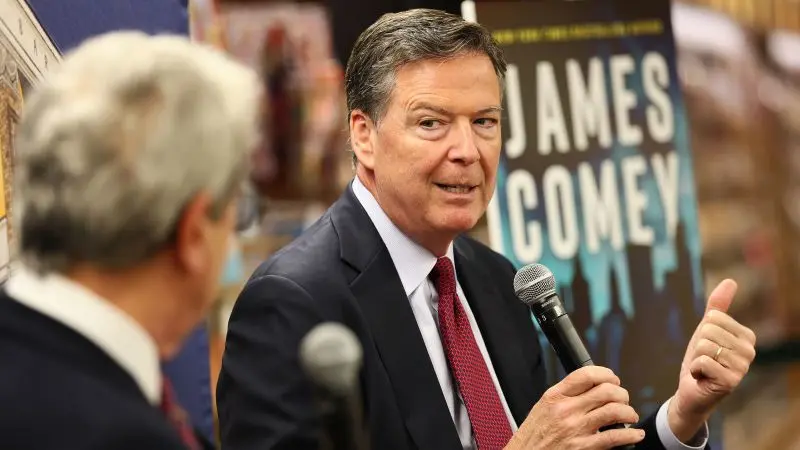
DOJ Signals Broader Charges Against Former FBI Director Comey
Federal prosecutors are weighing additional charges against former FBI Director James Comey, cnn.com reports, after a Friday hearing in Washington, DC, where a judge questioned whether placeholder charges filed without grand jury approval can legally stand.
District Judge Trevor McFadden is now set to rule on whether the current charges — filed through an "information" rather than a grand jury indictment — can survive while the Justice Department pursues a formal indictment.
The charges against Comey allege he conspired to share classified information with a media outlet in 2016 in order to correct reporting from a separate news organization. They were filed in early October through a procedural mechanism that bypasses both a judge and a grand jury, meaning the charges cannot by themselves move the case forward to trial.
During Friday's hearing, DOJ attorneys told the court they have gathered new evidence and are now considering charging Comey for alleged conduct that extended beyond October 2016 — through as late as April 2017. That window would sidestep the current statute-of-limitations problem, as the Espionage Act carries a 10-year deadline on bringing charges.
Prosecutors said the new evidence emerged after the earlier investigation conducted by John Durham, the Connecticut US attorney who declined to bring charges in 2018. They did not clarify whether the evidence postdates a second investigation — also conducted during the first Trump administration — that similarly produced no charges.
Comey's defense attorneys pushed back, arguing the underlying law does not permit the use of an "information" to pause the statute-of-limitations clock, which is the stated purpose of the current filing. They also described the mounting personal toll on their client.
"FBI agents have been placed outside of Mr. Comey's home," Comey's attorney told the court, describing the case as "hanging over" the former director.
McFadden pressed Comey's legal team repeatedly on why he should not simply wait to see whether the Justice Department succeeds in securing a grand jury indictment before issuing any ruling. DOJ attorneys, for their part, argued that the term "indictment" in the statute should be read broadly — encompassing any formal charging act, not exclusively a grand jury return.
McFadden acknowledged complexity in the case, noting "there is at least one novel issue," and said pursuing a grand jury indictment remained the Justice Department's prerogative before he ruled.
The judge also issued a pointed warning to prosecutors. "I will be extremely frustrated if there's some dawn raid" on Comey's home, McFadden said. Prosecutors responded that no such action was planned.
The hearing comes amid a broader pattern of resistance from Washington, DC, grand juries during the second Trump administration. Earlier this week, a grand jury declined to bring charges against former White House aide Cassidy Hutchinson.
McFadden acknowledged the trend with a dry observation: "Ham sandwiches are hard to indict these days."
Source: NYT US News