Newport, Kentucky: how the mob ran America's vice capital for decades
Newport, Ky. was America's top gambling hub from the 1920s to 1960s, run by organized crime with corrupt cops on the payroll. Toronto Sun Crime chronicles the city's dark history.
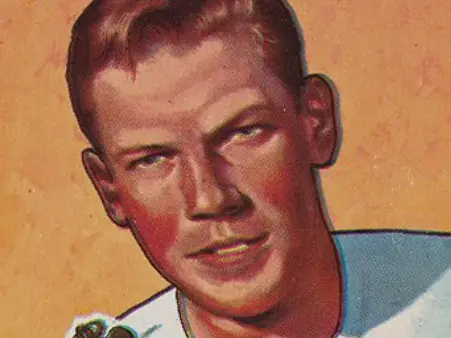
Newport, Ky.: mob rule, murder, and the ex-NFL quarterback who fought back
Toronto Sun Crime reports on a largely forgotten chapter of American organized crime history — one set not in New York or Chicago, but in a small Kentucky city of 31,000 people perched across the Ohio River from Cincinnati.
For roughly four decades, Newport, Kentucky was the undisputed gambling capital of the United States. Brothels, gaming houses and strip clubs defined its streets. Local police were on the payroll of the vice lords. Mobsters ran city hall. Celebrities including Frank Sinatra, Dean Martin, Marilyn Monroe and Duke Ellington came to be entertained. And when someone stepped out of line, they were dealt with swiftly and without legal consequence.
A city where anything went
Newport's rise as a criminal playground began in the 1920s. Relatively isolated from Ohio law enforcement by the river, and loosely governed by a Kentucky political machine that looked the other way, the city became what reporters of the era called "wide open." By 1933, the now-defunct Kentucky Post had already labeled Newport "a hell-hole, a den of vice and corruption, and a haven for criminals from all the states in the Union."
Retired Cincinnati and Northern Kentucky reporter Terry Flynn described the dynamic plainly: "You could pretty much do what you wanted — and the guys with some money really did what they wanted. In Newport, nobody cared. They just gambled."
Overseeing much of the city's criminal infrastructure was mobster-turned-power-broker Frank "Screw" Andrews, who functioned as an unofficial mayor of vice. According to historian Paul Tenkotte, Andrews' role was to ensure visitors "had a good time, that the city was clean, that you didn't see any murders happening." For ordinary residents, that meant clean streets and unlocked front doors. It also meant a justice system that answered to the underworld.
The murder of Melvin Clark
The racial dimensions of Newport's organized crime scene mirrored broader American society of the mid-twentieth century: the rackets were segregated. Black racketeer Melvin Clark owned several gambling clubs and operated in a sphere separate from the white mob structure. When a botched hit on a white gangster was attributed to Clark, Andrews moved to settle the matter personally.
On July 18, 1955, on Newport's Central Avenue, Andrews approached Clark on the street, extended his hand as if to shake it, then shot Clark in the neck — three times. At his subsequent murder trial, Andrews claimed Clark had fired first and missed. The claim was implausible: Clark was a trained U.S. Marine sharpshooter. But Andrews had the support of local police, and the judge ruled self-defence. White witnesses were each paid $100 for their cooperation. The Cincinnati Enquirer noted dryly that Clark "found Monday night that Frank (Screw) Andrews — once a policy 'king' himself — was a better shot than he was."
A cop who vanished
By 1961, the national spotlight was turning toward Newport and its web of corruption. On April 3 of that year, police officer George Hawkins, 48, made breakfast for his wife and daughter and then disappeared. Four days later, his 1959 Plymouth Fury station wagon was found parked on the banks of the Ohio River in Dayton, keys still in the ignition. Hawkins was never found.
Informants told investigators that Hawkins had been taking kickbacks from Newport's vice operators, and had repeatedly raised his price until the Cleveland-based organized crime figures who controlled the city decided to remove him. No charges have ever been laid. The case remains unsolved.
The honey trap
Also in 1961, former NFL quarterback George Ratterman entered the picture. A one-time Cleveland Browns starter, Ratterman had decided to run for sheriff of Campbell County on a platform of shutting down Newport's gambling and prostitution networks. The local underworld took the campaign seriously enough to act.
Ratterman was lured to a hotel suite above the Tropicana nightclub, where he was drugged. He regained consciousness to find himself in bed with a stripper named April Flowers. Three police officers then burst into the room and arrested him — a setup designed to destroy his candidacy before it could gain traction.
Ratterman responded by requesting a blood test, which confirmed he had been drugged. The scheme unravelled publicly. Ratterman won the election. Shortly after, U.S. Attorney General Robert F. Kennedy dispatched the FBI to assist in cleaning up the city.
"In four years I got rid of the gambling and the prostitution," Ratterman said in later years, "and I didn't get killed."
The fall of "Screw" Andrews
The final chapter of Newport's era of mob control came with the death of Frank Andrews. The parallel drawn by crime historians is to Abe "Kid Twist" Reles, the Murder Incorporated hitman who in 1940 fell from a window of the Half Moon Hotel in Coney Island while under police protection and cooperating with prosecutors. New York tabloids quipped at the time: "Canary could sing but couldn't fly."
On December 17, 1973, Andrews died after falling from a fourth-floor window at Saint Luke Hospital in Fort Thomas, Kentucky. The circumstances were widely interpreted as an underworld settling of accounts. His death marked the effective end of the organized crime structure that had governed Newport for more than four decades.
The city's population, once 31,000 at the height of its notoriety, now stands at approximately 14,000.
Source: Toronto Sun Crime