UK and US politicians condemn plan to livestream Fort Hood killer's execution
The US plans to publicly broadcast the firing squad execution of Fort Hood shooter Nidal Hasan on 3 December. UK and US figures have denounced the move as "barbaric" and "deeply disturbing".
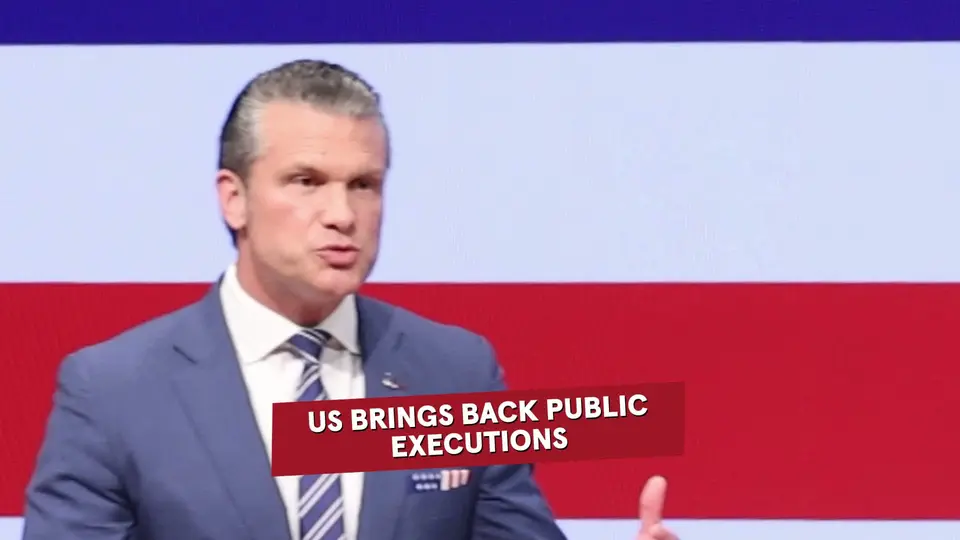
Backlash grows over plan to broadcast Hasan's firing squad execution live
Plans to livestream the execution of Nidal Hasan, the former US Army major who killed 13 people at Fort Hood in 2009, have drawn widespread condemnation from politicians and rights groups on both sides of the Atlantic, aol.co.uk reports.
Pete Hegseth, Donald Trump's defence secretary, announced on Thursday that the public would be able to watch Hasan die by firing squad on a live feed. Hasan, 56, shot dead 12 soldiers and one civilian at the US Army post in Fort Hood, Texas, and is scheduled to become the first person to die by military execution in 60 years on 3 December. A Pentagon spokesperson confirmed on Monday that Trump had approved the firing squad method. The execution will be the first in US history to be livestreamed.
Amnesty International led the international condemnation, calling the plans "deeply disturbing" and "an appalling disregard for human dignity". Kyinzom Dhongdue, the organisation's Strategic Campaigns and Advocacy Manager, said: "The suggestion that an execution by firing squad should be livestreamed for public viewing is an appalling disregard for human dignity. Turning a state-sanctioned killing into a public spectacle only compounds the cruelty of the death penalty."
Dhongdue added that Amnesty opposes the death penalty in all cases without exception, describing it as "the ultimate cruel, inhuman and degrading punishment, and a violation of the right to life."
In Britain, Labour chair Bridget Phillipson voiced her personal opposition during an appearance on BBC Radio 4's Today programme. "This is a matter for the US government," she said. "It's not something that the British government would routinely have a position on. The view of the government is always that we are opposed to the death penalty." She added: "My personal view is that I am opposed to the death penalty and I find that rather disturbing is my honest reaction."
Criticism within the United States has come from across the political spectrum. Republican Senator Thom Tillis said that while Hasan "should face the death penalty", making the execution public was "beyond disgusting". "Public executions are what oppressive dictatorships like Iran and Afghanistan do," Tillis said. "It should not be happening in America."
Democrat Senator Chris Murphy echoed that view in remarks to CNN, calling the livestream plan "disgusting" and drawing comparisons to executions carried out by the Islamic State terror group.
Patrick Skinner, a former homicide detective, also condemned the announcement on X, formerly Twitter. "As a homicide detective, I can say with all of my being that there is no lesson learned in seeing someone die. But there is a price. And that price is your peace. Your decency. And the soul of our society," he wrote, describing the move as "fake tough but real ugly".
The announcement has also drawn attention to apparent contradictions in Trump's own record. Earlier this year, the president condemned Iran for carrying out public hangings in the aftermath of widespread protests, and cited those executions as a justification for military action. He told reporters at the time: "We've been told that the killing in Iran is stopping. It's stopping, and there's no plan for executions."
Despite the scale of the controversy, legal experts have questioned whether the livestream will actually go ahead. John Mills, a lawyer who works with death row inmates, told the BBC that the decision is "unprecedented in the modern era" and sits on "uncertain legal terrain". He described it as "little more than attention-seeking by the Trump administration", concluding that it is "unlikely to occur, much less deliver any semblance of justice".
Elisabeth Semel, co-director of the Death Penalty Clinic at UC Berkeley Law, said Hegseth's announcement raises serious legal and public policy questions, including concerns about the defendant's dignity. "I don't recall a situation in which it was instituted by the government," she said. "I think that also raises serious questions about what is the motivation of the government." She characterised Trump as "a president who's about spectacle".
Brenner Fissell, a professor at Villanova Law and vice president of the National Institute of Military Justice, said the move appeared to be driven by Hegseth's broader interest in what Fissell described as "lethality culture". "There's a perceived masculinity and military-ness to firing squads that is part of the aura Hegseth" is seeking to project, Fissell said.
The announcement has come in the immediate aftermath of a botched lethal injection attempt on Tennessee death row prisoner Christa Pike, a case that has already intensified scrutiny of US execution practices.
Source: The Sun