16-Year-Old Released on $75,000 Bail After High Court Rules on Bail Act Challenge
A Barbados High Court ordered the immediate release of a teen held at Dodds Prison since December on firearm charges, after a constitutional challenge to the Bail Act's vague "exceptional circumstances" test.
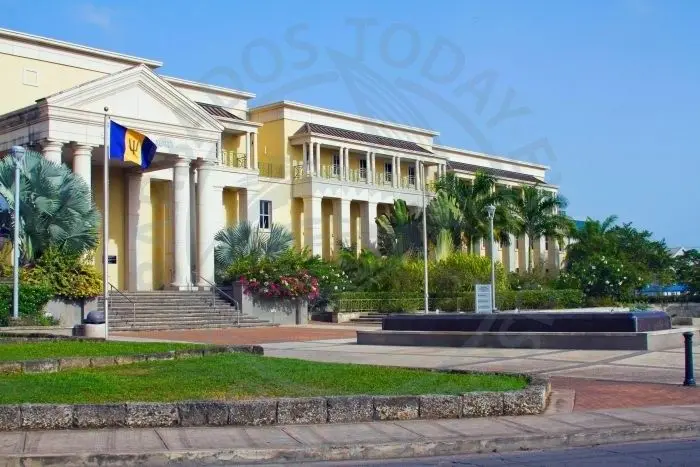
Teen walks free after High Court strikes at Bail Act's firearm bail clause
A 16-year-old boy remanded at Dodds Prison on firearm charges since approximately 1 December 2025 was released on Monday after Justice Bryan Weekes of the High Court ordered his immediate bail, Barbados Today reports. The ruling followed a constitutional motion challenging the "exceptional circumstances" test written into the newly passed Bail Act.
The minor was reunited with his family within minutes of the judgment being delivered. His mother described herself as "great and elated," offering only a brief response to reporters outside court.
Constitutional challenge
Acting through his mother and attorney Lalu Hanuman, the boy argues that Section 6(10) of the amended Bail Act — which requires "exceptional circumstances" before bail can be granted for firearm offences — kept him locked up without clear legal grounds and breaches Section 13 of the Bill of Rights in the Barbados Constitution.
Hanuman contended that Justice Laurie Ann Smith-Bovell, who presided over five previous bail hearings involving the boy, was "fettered by the amended Bail Act at Section 6(10) with the requirement that there should be 'exceptional circumstances' before someone charged with a gun matter is granted bail." The legislation, the attorney argued, does not define what constitutes exceptional circumstances, leaving accused persons "on remand, permanently, in effect permanently deprived of their liberty even though they haven't been found guilty."
The boy's statement of claim, which names the Attorney General as the sole defendant, describes the undefined requirement as a "glass barrier" and acknowledges that the failure to grant bail at prior hearings was no fault of the presiding judge, who "had sought to interpret both the letter and spirit of the law."
Bail conditions set at $75,000
Justice Weekes ordered the minor released into the custody of his parents — who were present in court — on $75,000 bail with two sureties. The government, represented by Deputy Solicitor-General Marsha Lougheed, had agreed to bail at that sum, though it initially sought only one surety.
Additional conditions accepted by the judge include: that the teen reside at a safe place; observe a daily curfew from 6 a.m. to 6 p.m.; surrender his travel documents; and report to the District 'B' Police Station on Mondays, Wednesdays and Fridays between 9 a.m. and 10 a.m. Because the accused is still a child, the judge emphasised he must at all times be accompanied by his mother or father. Hanuman did not object to any of the conditions.
Judge flags prison placement and disclosure delays
Justice Weekes had earlier raised concern that the minor was being held at the adult prison rather than the Government Industrial School, located a short distance away at Dodds. Lougheed explained that the school is not equipped to house him and noted that the boy occupies a dedicated space within the prison where he does not share a cell with any other inmate. She also indicated that the State's persistent refusal to grant bail had been motivated in part by concerns for his safety.
The judge reserved sharper words for the pace of disclosure. He described as "unacceptable" the fact that nearly a year after the boy's remand, his legal adviser still does not know the precise nature of the charges against his client. Justice Weekes stated that this, in effect, means the teen's trial has not yet begun.
Civil claim for damages
The boy, who recently turned 16 and has denied all firearm charges, is also suing for damages on the grounds that the State violated his right to personal liberty under Section 13 of the Constitution. His claim points to practices adopted in other jurisdictions — and in Barbados itself during the COVID-19 pandemic — where electronic ankle tags were used to monitor accused persons released on bail, as an alternative to remand custody.
He is asking the court to declare that the Bail Act's undefined "exceptional circumstances" requirement breaches Section 13(2)(3) of the Constitution and to award vindicatory damages.
Section 13 of the Bill of Rights
Section 13, found in Chapter 3 of the Barbados Constitution, affirms the right of anyone arrested or detained to be informed promptly, in a language they understand, of the reason for their detention. It further guarantees access to a qualified attorney of their choosing and the right to communicate privately with that lawyer. Persons under 16 must also be given a reasonable opportunity to contact a parent or guardian.
The section additionally provides that anyone arrested on reasonable suspicion of a criminal offence and not released must be brought before a court as soon as reasonably practicable. If not tried within a reasonable time, they must be released — either unconditionally or on conditions designed to secure their appearance at a later date for trial or preliminary proceedings.
The constitutional motion is ongoing; Monday's bail order represents a ruling on the minor's immediate liberty, not a final determination on the validity of the Bail Act's "exceptional circumstances" clause.
Source: Barbados Today