Barreda quadruple femicide in La Plata: the 1992 crime that marked Argentina
Dentist Ricardo Barreda killed his wife, daughters and mother-in-law in La Plata in 1992. The case redefined how Argentina viewed gender-based violence.
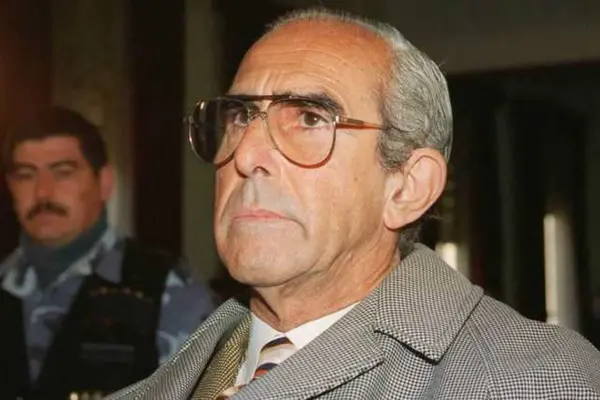
The quadruple murder that redefined family violence in Argentina
On 15 November 1992, dentist Ricardo José Barreda, aged 56, fired a 16-calibre shotgun at his wife Gladys McDonald, his daughters Cecilia and Adriana Barreda, and his mother-in-law Elena Arreche inside the family home in La Plata. According to nuevodiarioweb.com.ar, the incident was recorded as one of the most remembered judicial and media cases in Argentine criminal history.
The investigation established that Barreda killed the four women in different parts of the house. After the murders, he remained at the location for several hours and carried out routine activities before being detained. When apprehended, he confessed to the killings.
The statements and trial
In his initial statements, Barreda claimed he was a victim of constant humiliation within the home and stated that his wife and mother-in-law called him "conchita". The expression was amplified by the media and occupied a central place in coverage of the case for years.
In 1995, the courts sentenced him to life imprisonment for qualified homicide. The judges rejected claims of violent emotion and concluded that Barreda fully understood the criminal nature of his acts.
A social phenomenon that evolved over time
As time passed, the case transcended the judicial sphere to become a social phenomenon. In the 1990s, part of public opinion came to justify the killer on the basis that he suffered psychological abuse in his family, an interpretation largely fuelled by media coverage of the time and now widely questioned.
The evolving perspective on gender-based violence led to a review of the case from a different angle. Although the crime occurred two decades before femicide was incorporated as an aggravating factor in the Argentine Penal Code, numerous specialists consider it a paradigmatic case of extreme violence against women.
House arrest, conditional release and death
After several years of serving his sentence, Barreda obtained the benefit of house arrest in 2008 and later regained conditional release. During this period he cohabited with a woman with whom he had begun a relationship whilst detained, a situation that again generated intense public debate.
On 25 May 2020, Barreda died aged 84 at a care home in the Buenos Aires district of José C. Paz due to heart failure aggravated by other health problems.
Three decades of impact
More than thirty years after the crime, the case continues to be studied in judicial, academic and journalistic spheres. It remains an example of how social perspective on family violence changed in Argentina: from interpretations that relativised the facts to an analysis centred on the victims and the need to prevent gender-based violence.
Source: Google News AR — Crime