March in José C. Paz following the murder of 22-year-old motorcyclist to steal his bike
David Ojeda Vázquez was shot in the back upon arriving home in José C. Paz. Neighbours and friends marched demanding justice and greater security.
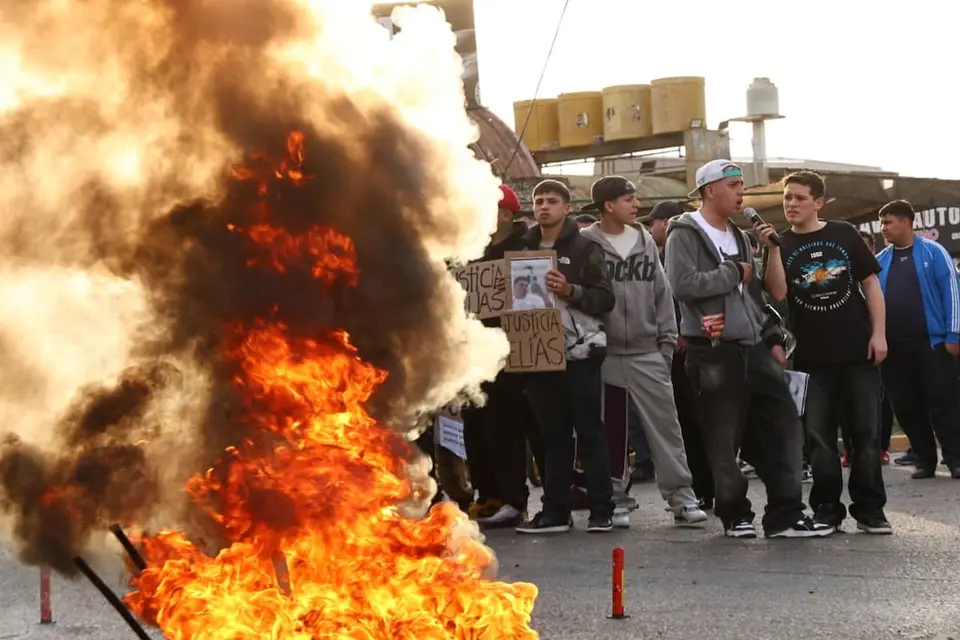
Calls for justice in José C. Paz following the murder of a young motorcyclist
Friends and neighbours of David Elías Ojeda Vázquez, 22, took to the streets in the central areas of José C. Paz hours after the wake of the young man, who was murdered last Monday by two criminals who stole his motorcycle after shooting him in the back. According to lanacion.com.ar, the demonstration ended outside the municipal building, with placards showing the victim's image, burning of tyres and demands for the arrest of those responsible and greater crime prevention measures.
The crime: eight minutes after leaving the gym
At 21:20 on Monday, Ojeda Vázquez left the gym in José C. Paz. Eight minutes later, on Calle Polonia between Piñero and Matheu, two men intercepted him. One of them was carrying a rucksack similar to those used by delivery drivers. They shot him once in the back to force him to stop, robbed him of his motorcycle and fled. The young man fell wounded in the street; a nurse neighbour immediately began CPR on him, but he did not survive.
Investigation progresses with neighbours' cameras
Investigators from the Investigation Sub-Directorate of José C. Paz managed to reconstruct the route of the two attackers thanks to videos voluntarily provided by neighbours from their own security cameras. The images made it possible to establish, with some degree of approximation, the point at which the robbers arrived with the stolen motorcycles. However, it was still not possible to determine with precision the house in which they took refuge or whether they abandoned the motorcycles there before fleeing on foot.
To date, investigators have found no image showing the faces of the assailants. A neighbour who lives metres from the scene crossed paths with them, but was unable to identify them because they were wearing helmets.
"We were brothers for life"
Those who knew David—nicknamed "Tito" by those close to him—described him as an enterprising young man who dedicated himself to buying and selling online and was planning a future with his lifelong group of friends. "We were all part of the same group. We grew up together. Imagine how close we were that when he was shot down he managed to send a voice message to Alan, one of our friends, and told him that they had wounded him," recounted Julián, one of his closest friends.
"We were brothers for life. And now that he is no longer with us it is as if a piece were missing from the puzzle," he added.
"You leave to work without knowing if you will return"
The fear expressed by neighbours at the march was also reflected in testimonies gathered in the wake room. Sebastián, one of those present, summed it up bluntly: "This is The Walking Dead. Lawless land. You wake up and leave to work without knowing if you will return home. You have to feign madness and pray that it does not happen to you."
Karina, another neighbour, expressed her anguish: "I have a son who studies Computer Science. I cannot wait for him to graduate and get out of here. The only thing I ask God is that they do not kill him first. I have the house for sale, but who is going to buy it from me?"
The same Karina witnessed the moment Ojeda Vázquez fell wounded: "I heard the shot and a scream. We thought it was a dog, but it was the boy falling. We came out and the neighbour, who is a nurse, was already performing CPR on him." She also noted that this is not an isolated incident: "There have already been five deaths so far this year of young people who leave to work or study."
Neighbours point to political and police authorities
The testimonies are consistent in pointing to a situation of sustained institutional abandonment. Karina distinguished the responsibility of the rank-and-file officers of the Buenos Aires Provincial Police and pointed toward the chain of command: "Out of 15 police districts in José C. Paz sometimes there are seven patrol cars, and only three have fuel. This zone is not abandoned by the police below; it is abandoned by the police chiefs, the mayor and the security minister."
Sebastián added: "You drive 5 kilometres to San Miguel or Malvinas Argentinas and things work; here it is negligence. The streets look like they have been bombed with grenades. Each person does what they can, you have to live behind bars, put up cameras and pray."
Both neighbours identified Mario Alberto Ishii, mayor of José C. Paz for 28 years, currently on leave to assume the position of provincial senator, as the person most responsible for the situation. They also mentioned Lorena Espina, who was put in charge of the municipality in an interim capacity. The sense of institutional abandonment and allegations about the authorities' complicity with drug trafficking were repeated throughout the entire demonstration.
Source: Google News BO — La Paz