Femicide in Vienna: Life imprisonment for Jennifer Scharinger's killer
Eight years after the disappearance of 21-year-old Jennifer Scharinger, her ex-boyfriend was sentenced to life imprisonment on 27 August 2026.
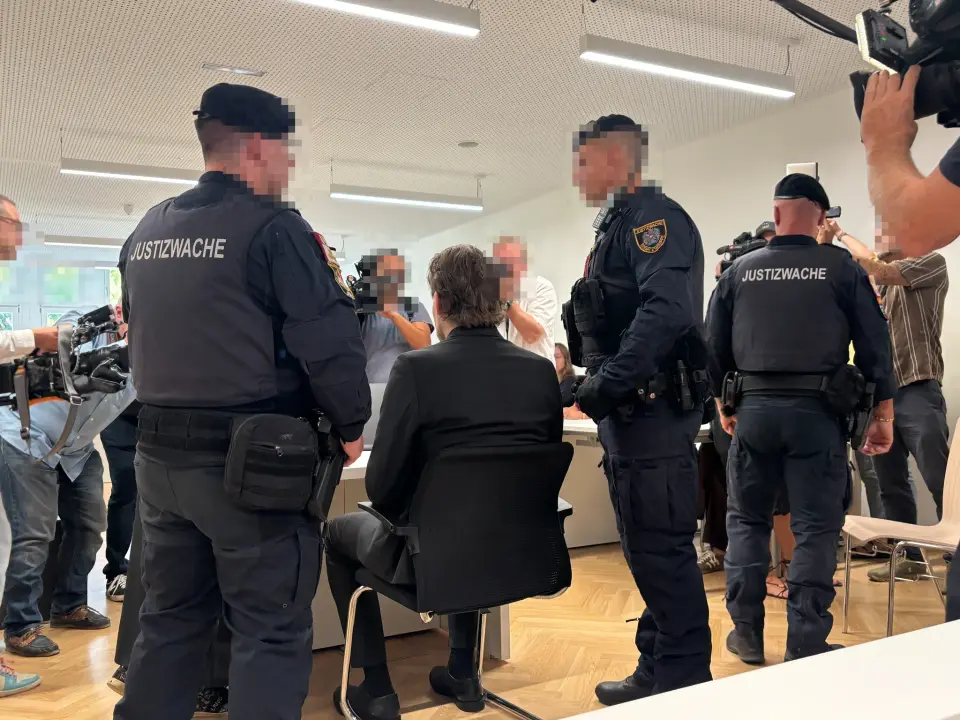
Conviction after eight years: ex-boyfriend strangled Jennifer Scharinger because she wanted to end the relationship
On 27 August 2026, a Vienna court sentenced 33-year-old Joachim L. to life imprisonment for the murder of his former girlfriend Jennifer Scharinger, along with placement in a forensic-therapeutic centre. According to Google News AT — Crime (de), new investigations and ultimately the defendant's confession after almost eight years led to the discovery of the body.
Jennifer Scharinger disappeared in January 2018 – then 21 years old, a student, socially engaged and employed at the social insurance agency. Her mother searched for her for years together with police and search teams; dogs were deployed, areas were combed, excavations were carried out. "Dear Jenni, if you are reading this, please get in touch," was written in a public appeal shortly after her disappearance.
While the family waited for answers, Joachim L. continued to live undisturbed. It was not until the end of 2025 that there was a breakthrough in the case: chat logs emerged, new investigations were initiated. Shortly after, the defendant turned himself in to police. In a voice message to a person on a dating app, he had described how to make a body disappear.
Control, surveillance cameras, search for sedative drugs
The public prosecutor painted a picture in court of a relationship that had been marked by power and control from the beginning. The couple had met in 2017. However, Joachim L. had a completely distorted notion of love – characterised by jealousy and the desire to control his partner. He had forbidden her things, restricted her freedom of movement and secretly installed surveillance cameras in her flat. At the same time, he himself maintained contact with other women; on the very day of Jennifer's disappearance, he wrote to another woman about how beautiful she was.
A few months before her death, Jennifer had attempted to end the relationship. During this period, according to investigators, the defendant searched the internet for sedative drugs and chloroform. Corresponding search queries were found on his mobile phone – also for the period in which Jennifer actually disappeared.
"I strangled her on that day"
In January 2018, an argument escalated. Jennifer wanted to go through with the separation. For the defendant, this was not acceptable according to the charges. Joachim L. himself told the court that the argument arose because he had reported one of Jennifer's friends to the authorities for cannabis consumption.
"I strangled her on that day," said the defendant. According to the public prosecutor's account, he grabbed the young woman from behind, both fell to the ground, and he pressed extremely hard with his forearm against her throat while lying on top of her. Jennifer resisted initially, then lay motionless. He was said to have continued to apply pressure for two to three minutes. The public prosecutor described it as a particularly long and violent death: "He strangled her in cold blood because he could not bear the thought of her leaving him."
After the deed, Joachim L. neither called for emergency services nor the police. Instead, he contacted his parents and told them about the separation. While Jennifer Scharinger lay dead on the ground, he downloaded Instagram and wrote to another woman. He then undressed Jennifer, placed her body in a trunk and drove it into the forest.
When investigations later pointed in his direction, he drove back to the location and moved the already decomposed body with his car further away – to prevent police from finding it, according to the public prosecutor. In early interrogations following his confession, Joachim L. attempted to portray the death as an accident.
Personality disorder and history of violence
When asked by the presiding judge what he had felt after the deed, the 33-year-old replied: "Fear that I would be caught, that I would be held accountable." Court psychiatrist Peter Hoffmann diagnosed the defendant with a combined personality disorder as well as narcissistic traits. According to investigation findings, Joachim L. had previously used violence against former partners on several occasions – he punched one woman in the face, as he himself admitted in court.
Bereavement compensation for mother and sister
The deceased's mother and sister were awarded bereavement compensation of €20,000 and €15,000 respectively by the court. The bereaved were directed to civil law proceedings for further claims – such as compensation for shock.
"This is a femicide"
A private counsel representative who had accompanied the case for eight years described Jennifer Scharinger as a young woman who had joy in life – a life that still lay ahead of her. The defendant "was the one who took Jennifer Scharinger's life because she wanted to leave him. This is a femicide."
In her closing statement, the public prosecutor placed the question of self-determination at the centre. Jennifer had wanted to determine her own life, she had wanted to end the relationship – "and that was her right." The case did not stand alone: time and again, women are killed by partners or male relatives when these men assert a claim of ownership over them. A femicide is therefore not merely another relationship conflict. The verdict must also be a signal – "to every man who believes his partner belongs to him, to every man who believes a separation can justify violence."
Source: Google News AT — Crime (de)