Life sentence in Jennifer Scharinger murder case – Ex-partner convicted
A Vienna court sentenced the 33-year-old ex-partner of Jennifer Scharinger to life imprisonment. The sentence is not final.
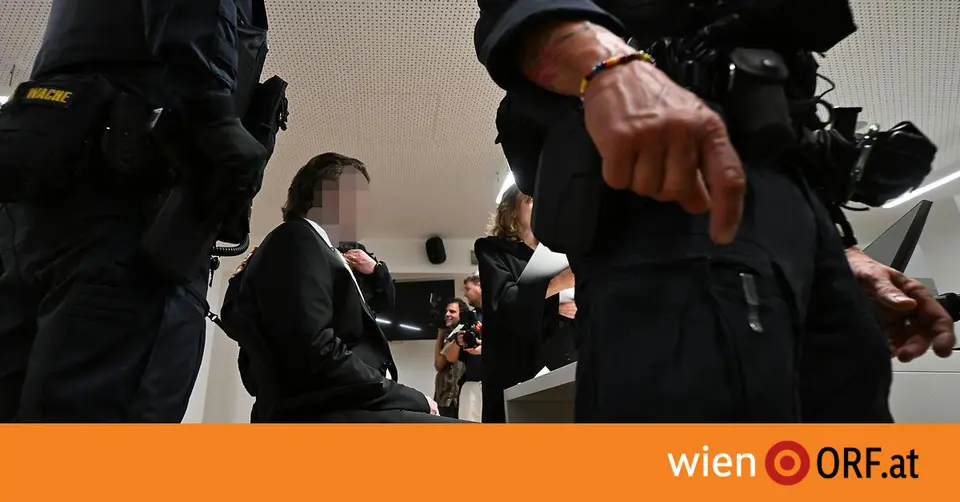
Jennifer Scharinger murder case: Life sentence for ex-partner after seven years
As Google News AT – Crime (de) reports, a verdict has been reached in the murder trial over the death of Jennifer Scharinger. The 33-year-old ex-partner of the law student who disappeared in 2018 was sentenced to life imprisonment on Thursday and also committed to a forensic therapeutic centre. The sentence is not final: defence counsel Astrid Wagner lodged a nullity complaint and an appeal.
In her sentencing remarks, the presiding judge cited several aggravating circumstances. The act was committed in the victim's home, where one would not ordinarily expect an attack. The defendant had strangled the woman "for several minutes" and "acted in a cruel manner out of rage". The mother of the deceased receives compensation for pain and suffering of €20,000, the sister €15,000. Further claims – such as for shock damage – were referred to civil proceedings.
"He strangled her in cold blood," the prosecutor stated at the start of the trial, "he could not accept her decision to leave him." She explicitly demanded the maximum sentence for a crime that had remained undetected for almost eight years. The defendant himself stated at the beginning of his interrogation: "I confess fully guilty to murder."
Eight years of uncertainty
Jennifer Scharinger, then 21 years old, had been missing since January 2018. She had argued with her life partner and separated from him before disappearing under "suspicious circumstances" from the shared flat in Vienna-Brigittenau, according to police. As emerged in 2025, the man had killed her in her flat "after she had definitively ended their relationship," as the prosecutor explained to the jury.
The two had been in a relationship for approximately one and a half years at that time. According to the indictment, the defendant had exercised "absolute control" over the woman whilst allowing himself "freedom" to make contact with other women via social networks. When Scharinger finally told him, "I should disappear," that was "too much," the defendant stated. "Then you made her disappear," the judge interjected.
After the act, the man denied any involvement in any possible violent crime. Criminal investigations against him on suspicion of unlawful detention were discontinued in April 2019.
Fake dating profile brought the breakthrough
In 2025, investigations took on new momentum – substantially driven forward by the mother of the deceased, who had never given up the search for her daughter. Together with an acquaintance, she created a fake profile on a dating platform and began chatting with the suspected murderer of her daughter. In the course of this, the defendant eventually described in detail how he would dispose of a corpse without leaving suspicious traces. This brought him back into the focus of the prosecution authorities.
In December 2025, he made a confession. According to his account, he killed Scharinger in her flat on the morning of 21 January 2018, subsequently placed the body in a box and transported it away. He initially buried her in the Großweikersdorf area in Tulln district, later moved the remains to the vicinity of the Allentsteig military training ground in Zwettl district. The body was discovered there following his confession.
Personality disorder diagnosed
Commitment to a forensic therapeutic centre was ordered at the request of the prosecutor. Psychiatric expert Peter Hofmann diagnosed the defendant with a serious and persistent personality disorder: whilst he was deemed criminally responsible, he displayed an emotionally unstable personality with strongly narcissistic tendencies and pronounced need for control. He reacted aggressively to rejection.
Legal representative Andreas Schweitzer, who represented the mother of the deceased, raised the family's years of uncertainty: "For eight years the mother searched for her daughter. With hundreds of police officers, with excavations that she financed herself." Schweitzer also criticised the fact that Jennifer Scharinger herself had received insufficient attention during the trial: "It was only about the defendant." The disappearance of the young woman had mentally "eroded" not only the mother but also the sister and niece and nephew. "She was successful in her studies. She was a person full of zest for life," he said.
Parallel to the verdict announcement, a vigil took place outside the court organised by the "Alliance against femicide and all forms of violence against women". The activists called for "just punishment for Jenni's murderer" and appropriate compensation for the bereaved. The alliance furthermore demands an independent investigative commission to analyse "why it took eight years before the perpetrator was finally arrested".
Source: Google News AT — Crime (de)