Argentine adviser Fernando Cerimedo transferred to maximum security prison in Bolivia
Political consultant Fernando Cerimedo has been taken to Chonchocoro in La Paz, where he will serve six months of preventive detention for illicit enrichment.
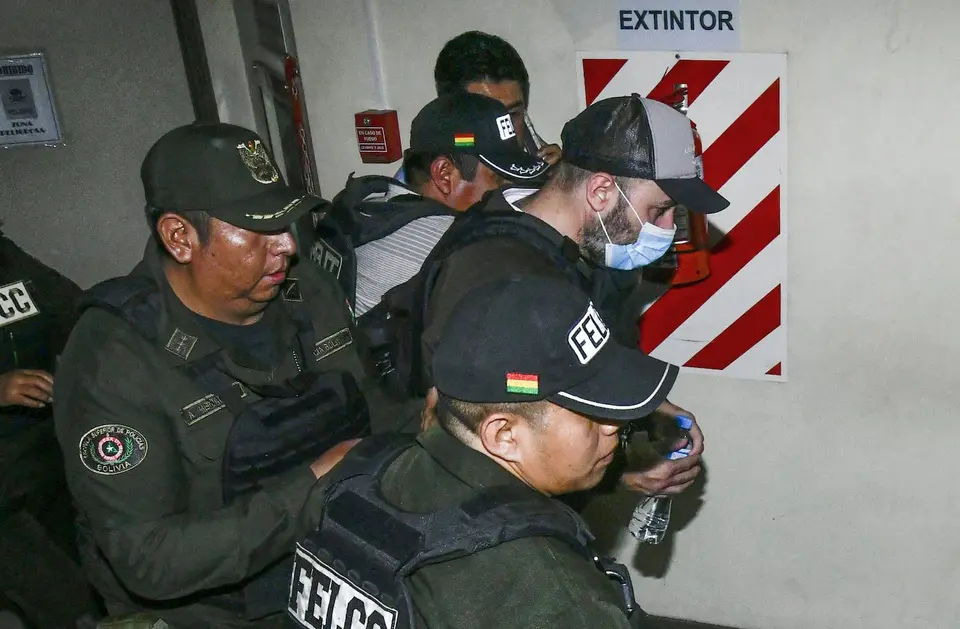
Cerimedo arrives handcuffed at Chonchocoro penal facility following overnight flight from Santa Cruz
Argentine political consultant Fernando Cerimedo entered the maximum security penal facility of Chonchocoro on the La Paz plateau in the municipality of Viacha, Bolivia, on Tuesday at approximately 07:30. According to nacion.com, the transfer took place during the early morning hours under a heavy police operation that departed from Palmasola prison in Santa Cruz de la Sierra.
Cerimedo boarded a commercial flight with Boliviana de Aviación (BoA) from Viru Viru international airport bound for El Alto, dressed in jeans, a grey jumper and trainers, and remained with his hood up and gaze lowered for much of the journey. From El Alto he was escorted by several police patrols to the penal facility.
A destination the defence sought to avoid
The transfer to Chonchocoro follows a ruling by Judge Douglas Borda issued on 29 August, following a virtual hearing lasting approximately six hours. The magistrate ordered six months of preventive detention as part of an investigation into alleged illicit enrichment of private individuals with damage to the Bolivian state. This is the second such precautionary measure against the Argentine.
Cerimedo's defence had sought to prevent that destination, arguing that his life could be "in danger" in the country's only maximum security prison.
Message to President Paz
During the transfer, in brief contact with Bolivian newspaper El Deber, Cerimedo directed a message to President Rodrigo Paz, of whom he was campaign adviser: "Forgive me for not having listened to you", he stated, without clarifying which recommendation or warning he was referring to.
The phrase takes on significance in a context of conflicting versions about the relationship between the two. In previous weeks, Paz sought to distance himself from the consultant and emphasised that there was no formal working relationship between them. However, Bolivian media published images showing Cerimedo alongside the president at various public events.
Cerimedo himself insisted on his innocence during the transfer. "What needs to be done is already being done and the truth will be known", he declared. And he added: "I am requesting justice, that justice be done and the truth be known".
The origin of the case: an attack at a Santa Cruz hotel
The case that led to the second preventive detention stems from an investigation initiated following an armed attack against Nadia Beller, Cerimedo's former partner, on 17 August at a hotel in Santa Cruz de la Sierra.
Beller identified Cerimedo as the alleged perpetrator of the attack and also accused him of being behind alleged "shady dealings" and other irregularities, among them operations linked to fuel and gold. Cerimedo was detained hours after the incident and on 21 August justice ordered 180 days of preventive detention at Palmasola in connection with the attempted feminicide case, accusations which the Argentine rejected.
Beller's complaints also opened a separate investigation into alleged illicit enrichment with damage to the state, which resulted in the second preventive detention order and his transfer to La Paz.
Raids and findings
As part of this second investigation, the Public Prosecutor's Office conducted raids at various properties linked to Cerimedo. Investigators found over half a million bolivianos—equivalent to approximately 39,700 dollars at the official exchange rate—as well as dollars, euros and documentation that forms part of the ongoing investigation.
Cerimedo is also known for having been an adviser to Argentine President Javier Milei and for his involvement in Rodrigo Paz's presidential campaign in Bolivia.
Source: Google News BO — Crime