Former Prosecutor Bravo Denounces Charges Imposed by Mariaca on Prosecutors in Bolivia
Former departmental prosecutor Joadel Bravo revealed that Roger Mariaca demanded money from subordinate prosecutors and called for reform of the Criminal Procedure Code.
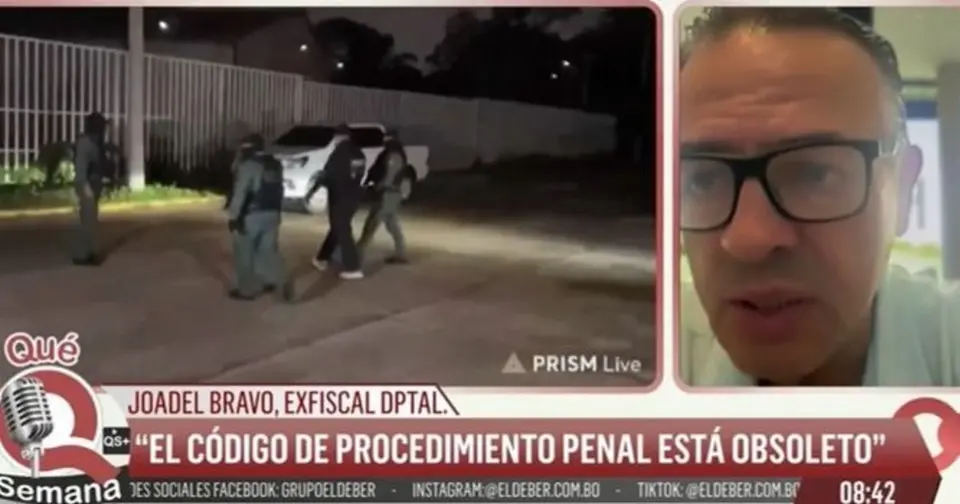
Bravo: prosecutors fear speaking publicly about corruption in the Public Ministry
Former departmental prosecutor of Santa Cruz, Joadel Bravo, revealed in an interview with EL DEBER RADIO that former Attorney General Roger Mariaca demanded cash payments from prosecutors under his command. "Mariaca demanded money from prosecutors. I have the statement from one of them: 'Roger Mariaca takes my monthly salary'. That is terrible," Bravo affirmed on the programme Qué semana.
According to Bravo, the practice was an open secret within the Public Ministry, but no prosecutor or official dared to denounce it publicly. "If you ask several prosecutors, off the record, they will tell you terrible stories," noted the former legal expert.
Urgent reform to the Penal Code
Bravo also raised the issue of an urgent review of the Bolivian Code of Criminal Procedure, which he described as obsolete for dealing with organised crime. "The Code of Criminal Procedure is designed to deal with ordinary citizens, and it is not prepared to deal with criminal organisations operating in the country," he stated to El Deber.
The former prosecutor considered that the current moment — marked by changes in the leadership of the Public Ministry — represents an opportunity to advance that reform. "Let us take advantage of this moment and make a change," he urged.
Detention of Mariaca and appointment of new authority
The 24 hours preceding the interview were turbulent for the Bolivian judicial system. The Legislative Assembly brought about the permanent suspension of Mariaca as Attorney General of the State and the appointment of José Armando Urioste Viera, a lawyer from Chuquisaca based in Beni, as interim authority.
These moves occur within the framework of an investigation which, according to the central Government, aims to dismantle an alleged "criminal organisation" that allegedly operated from within the Public Ministry in collusion with drug trafficking. In that context, Bravo made reference to a network that allegedly links Mariaca with drug trafficker Sebastián Marset.
Progressive deinstitutionalisation
When asked about when suspicions of irregularities in the Prosecutor's Office began, Bravo pointed to a gradual process of deinstitutionalisation. "This did not happen overnight. The same happened with the Judiciary, the same with the Police. When it was manipulated politically, crime began to take over the city," he explained.
The former prosecutor cited contract killing as an example of the deterioration of public security. "Nowadays it is very common, we are no longer alarmed by two, three, four crimes a day, and it happens routinely," he stated.
From the Government, officials affirmed that the detention of Mariaca and other former authorities of the Public Ministry, together with the changes introduced in the Law of the Public Ministry, mark the beginning of a transformation of the Bolivian judicial system.
Source: El Deber