Bolivia's Attorney General detained at airport over alleged drug trafficking links
Roger Mariaca, Bolivia's attorney general, was detained at Viru Viru airport after being removed from the US visa list due to alleged ties to drug trafficking.
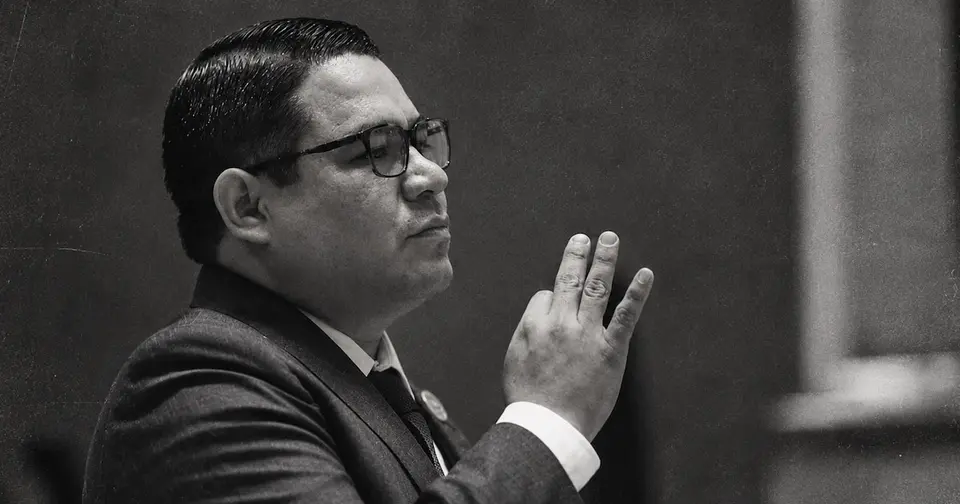
The rise and fall of Bolivia's most powerful prosecutor
Roger Rider Mariaca Montenegro was detained shortly before midnight on Wednesday upon his arrival in Santa Cruz de la Sierra at Viru Viru airport, following a flight from Sucre. Two days earlier, the United States State Department had revoked his visa over alleged links to drug trafficking. Mariaca, 38, was at that time Bolivia's attorney general, according to infobae.com.
From independent lawyer to the heights of judicial power
Mariaca's career was described as meteoric. A graduate of Santa Cruz's public university, he accumulated master's degrees and diplomas in Criminal Law, taught at university level and served as a judge on the Honour Court of the Attorneys' Association. He was also a judge for a Guaraní community and eventually became Regional Prosecutor for Santa Cruz, the country's most populous region and one with one of the heaviest caseloads.
His trajectory, however, was marked early on by controversial episodes. When working as an independent lawyer, he defended the Candia-Castedo family, accused of drug trafficking in a case linked to a small aircraft detained in Paraguay with 300 kilograms of cocaine.
The Marset case and the ties that compromised him
During his time as prosecutor for Santa Cruz, Mariaca oversaw investigations against Sebastián Marset, the Uruguayan drug trafficker who lived in Bolivia until this year, when he was captured and extradited to the United States. In 2023, with Mariaca heading the Santa Cruz Prosecutor's Office, Marset managed to escape from an operation against him. Three years later it was revealed that he had remained free in Bolivia, allegedly under protection from the prosecutor himself, who in a recorded video is heard referring to Marset as "a friend".
Mariaca also handled high-profile political cases, including those against former governor Luis Fernando Camacho and former mayor Angélica Sosa, accused of corruption in the "phantom items" case. A report from Fides News Agency also documented a series of drug-trafficking-related cases that remained open or without public verdict during his tenure.
A disputed election marked by vote-buying allegations
In 2024 Mariaca ran for the position of Attorney General of the State, which is elected by vote in the Legislative Assembly. Initially he was not among the favourites, but he surpassed all stages of the process. During the selection, five people challenged him over alleged irregularities and suspected failure to meet requirements.
Some deputies then denounced that Mariaca was buying votes through intermediaries. A source who was part of the Legislature at that time told infobae.com that "each deputy who voted for him was paid between five thousand and six thousand dollars" and that pens with erasable ink were distributed so that legislators could photograph their vote and then modify it in secret.
These allegations were never proven. The voting result, nevertheless, generated suspicion: Mariaca obtained 115 of 161 votes, exceeding the two-thirds required, with backing from legislators from all parties, from the ruling Movement Towards Socialism to the conservative Creemos.
"It is one of the most honourable challenges of my life," Mariaca declared, then 36 years old, upon taking office. "This position means an unwavering commitment to justice," he added.
Political positioning amid the MAS crisis
His election coincided with the internal fracture of the MAS and the dispute between then-president Luis Arce and Evo Morales. In December, a month after the first arrest warrant against Morales was issued on a human trafficking charge, Mariaca publicly announced that he would request six months of preventive detention against the former president once captured. The arrest warrant was never executed.
Distinctions and criticism in parallel
In the past two years, Mariaca received at least 25 tributes and distinctions and was named doctor honoris causa by two universities. Recognition came from the Senate, the Municipality of Santa Cruz, the Supreme Electoral Court and the Federation of Gold Mining Cooperatives, among other entities.
Daniel Valverde, former director of the Political Observatory at Gabriel René Moreno University, questioned the scope of those distinctions. "They are opportunistic and self-interested recognitions to obtain favours, make a good impression or gain some advantage. There are people with greater merits for recognition, but valuations are being distorted," he stated. According to Valverde, many of those gestures sought to ensure that Mariaca would "not forget that he was the architect of a decoration" when it came time for him to face justice from whoever had given it to him.
A judicial system under structural pressure
The Mariaca case is inscribed in a context of institutional fragility. The 2025 report of the World Justice Project places Bolivia in 131st place out of 143 countries in the Rule of Law Index, with serious deficiencies in judicial independence and absence of corruption. In that environment, the will of a key official can frequently impose itself over institutional frameworks.
According to infobae.com, the turning point in Mariaca's tenure came when he became an uncomfortable figure for the Rodrigo Paz Government, although the original article does not detail the complete outcome of that process at the time of publication.
Source: Google News BO — Crime